
Summary
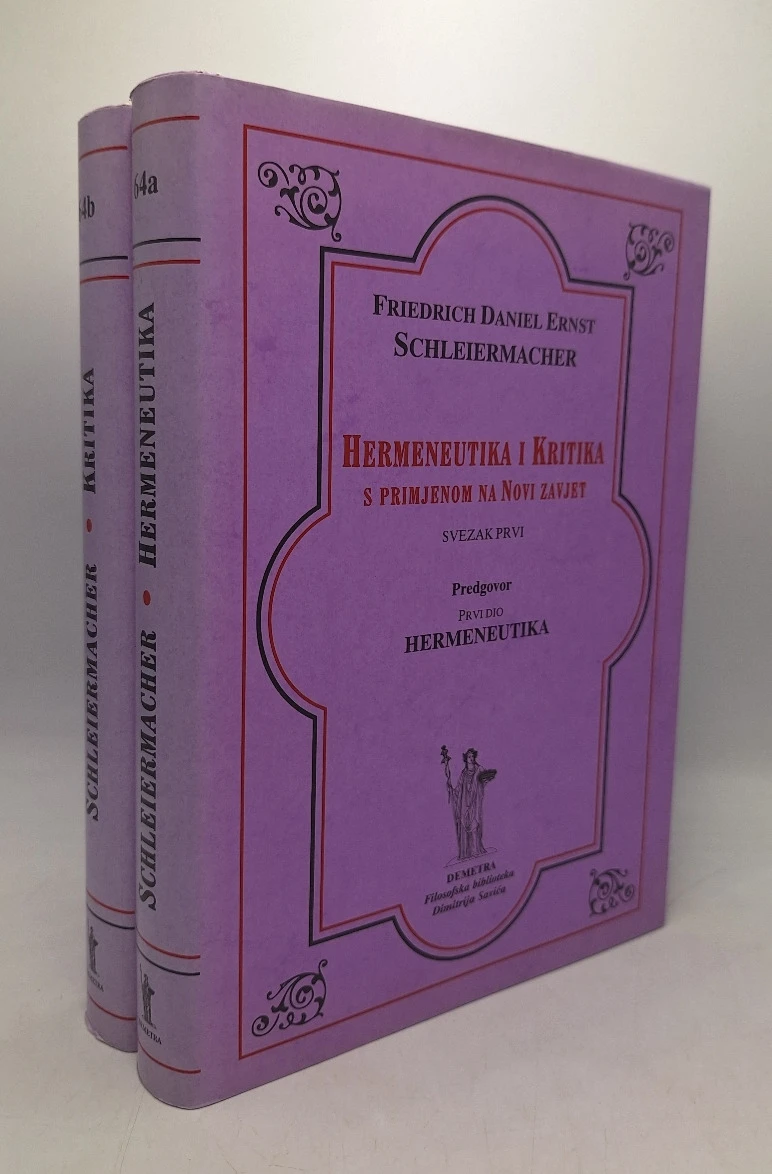
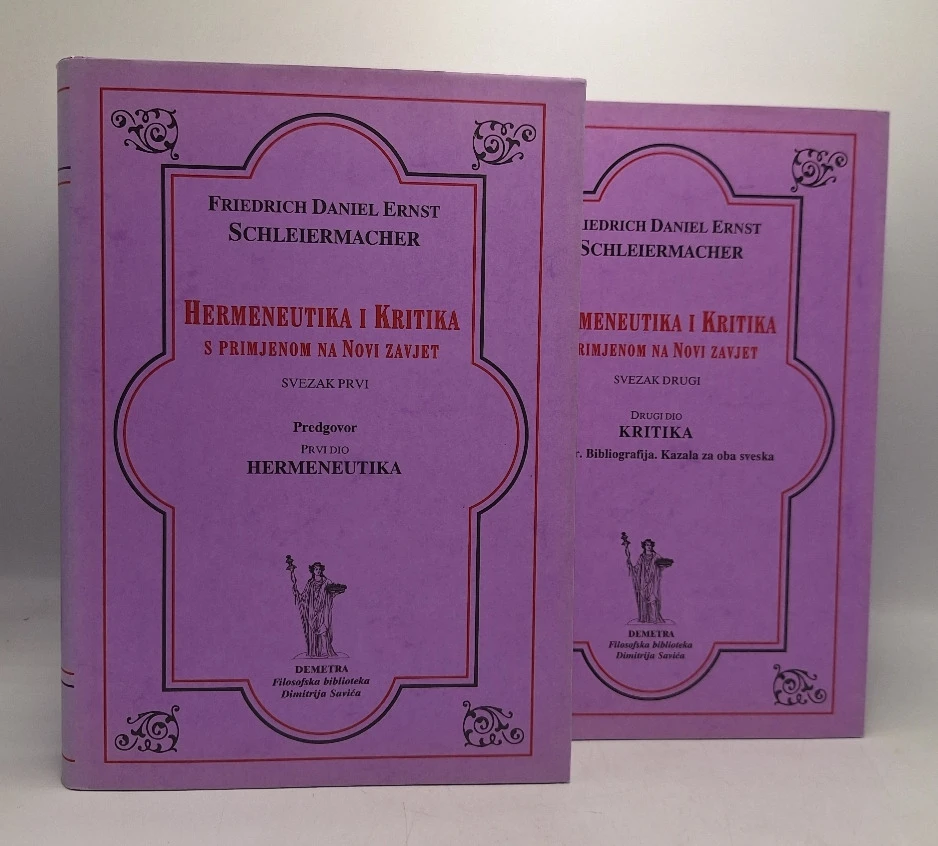
Friedrich Daniel Ernst Schleiermacher: Hermeneutics and criticism with application to the New Testament I - II
»Schleiermacher, regardless of his insistence on immediacy, is as much a thinker of mediation as his antipode Hegel. Only he aims at mediation from the point of view of Christianity, not like Hegel from the point of view of philosophy. This is the boldness of his opinion. Because mediation is not a Christian, but a philosophical category...
Precisely Schleiermacher's theological relevance lies in his philosophy, not in his theology. His philosophy, if it wants to show its relevance, must certainly stand out from its only pretended unity with theology.
Schleiermacher's philosophy fulfills at least one part of the tasks of mediation, which his theology is not up to, by, first, mediating truth with historicity and, second, dialectic with dialogic and also truly reflecting these mediations. In both relations, it can lead to the foundation, which is simply overplayed in Hegel's case. Schleiermacher takes historicity more seriously than Hegel since he unreducedly acknowledges experiences of contingency; and he discovers the dialogic at the heart of the dialectic itself because, unlike Hegel, he develops it in advance from the conversation.
Schleiermacher's dialogic dialectic was created from the spirit of Plato. His intra-philosophical meaning consists mainly in the fact that he initiated post-idealist thinking in the midst of idealism in the discussion with Plato. In this he is related to the Platonist Schelling and Schopenhauer. But in relation to them he has the advantage of hermeneutics which is united with dialectic in language as conversation. Every real philosophy moves today, consciously or unconsciously, towards such a hermeneutic. Schleiermacher previously gave her a goal.
(64a, 64b)
Biblos Newsletter
New titles, special copies and quiet recommendations from the antiquarian bookshop.