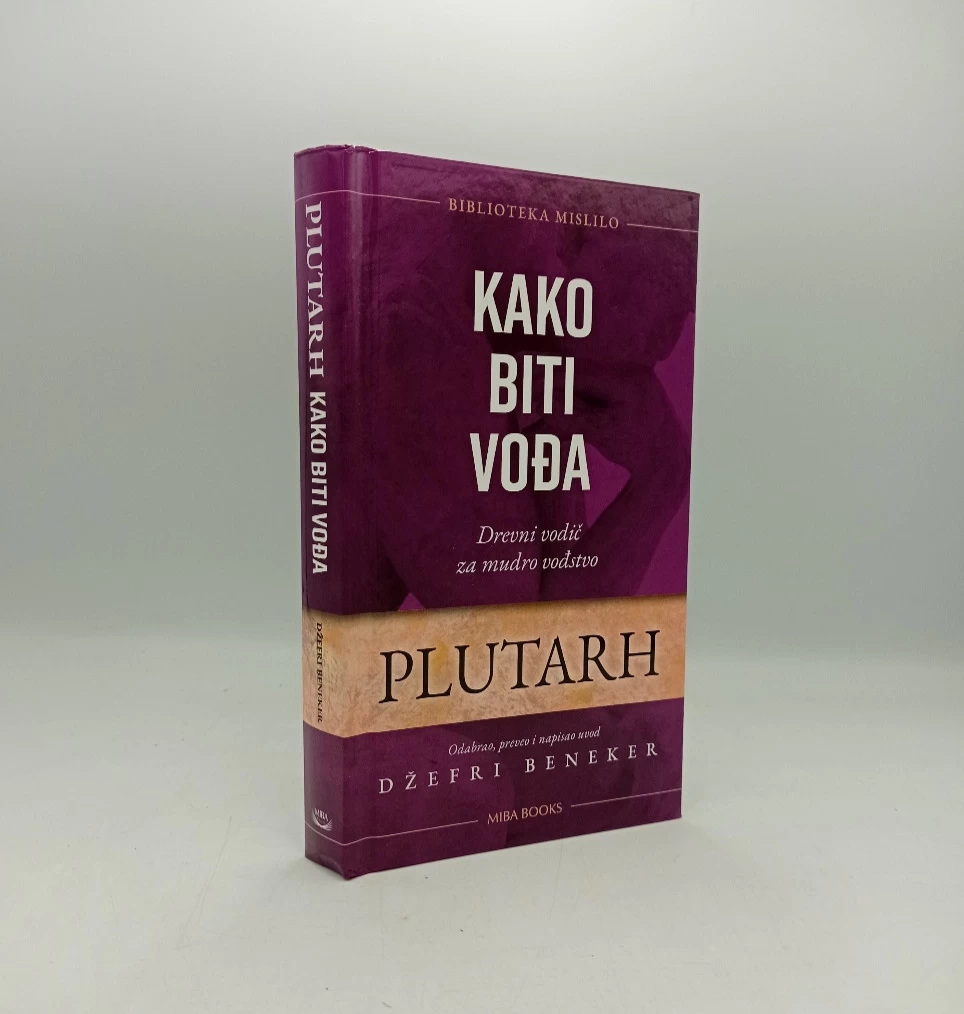

Plutarh: Kako biti vođa
€ 13,00
Free delivery in Croatia for orders over EUR 70
Basic information
- Author: Plutarh
- Publisher: Miba Books
- Availability: Available
- Condition: Nova knjiga
- Code: 65323
Shipping options
GLS Croatia
5€
Delivery
0€
Personal collection at the antique store
0€
GLS parcel machine
3€
Payment methods
Pay on pickup
CorvusPay
By general payment / Virman / Internet banking
Cash on delivery
Kako biti vođa
Plutarh
Summary
Plutarch: How to Be a Leader - An Ancient Guide to Wise Leadership
A biographer and essayist of classical antiquity, Plutarch focused extensively on the qualities of leaders among the prominent Greeks and Romans he described in his famous and comprehensive Comparative Biographies, including politicians and military leaders such as Pericles, Alexander the Great, Julius Caesar, and Mark Antony. Fortunately for us, Plutarch conveyed the essence of his knowledge of wise leadership in a small number of essays, which he filled with lessons of critical importance to both experienced leaders and those who aspire to become one today in any field. In How to Be a Leader, Jeffrey Benneker presents the most important of these essays in dynamic new translations, accompanied by an inspired introduction and informative notes, alongside the original Greek text.
In the essays The Untrained Leader, How to Be a Good Leader, and Should an Old Man Go in Politics? Plutarch explains the characteristics of successful leaders, from being guided by reason and self-control to being free from envy and the love of power, illustrating his point with memorable examples from Greco-Roman life. He also explains how to train as a leader, how to persuade and how to relate to colleagues, how to manage your career, and much more.
Writing at the height of the Roman Empire, Plutarch says that one should aspire to positions of power only if the motivation is "reason and sound judgment" and not "a hasty and vain pursuit of glory, a sense of rivalry, or a lack of other meaningful activities." His wise advice is as relevant today as it was then.
Additional information
- Author: Plutarh
- Publisher: Miba Books
- Year of publication:2021
- Place of publication:Beograd
- Pages:341
- Dimensions:12x20 cm
- Script:Latinica
- Condition:Nova knjiga
- Binding:Tvrdi
You may also like







Recently viewed

Biblos Newsletter
For book lovers who enjoy finding the rare
New titles, special copies and quiet recommendations from the antiquarian bookshop.