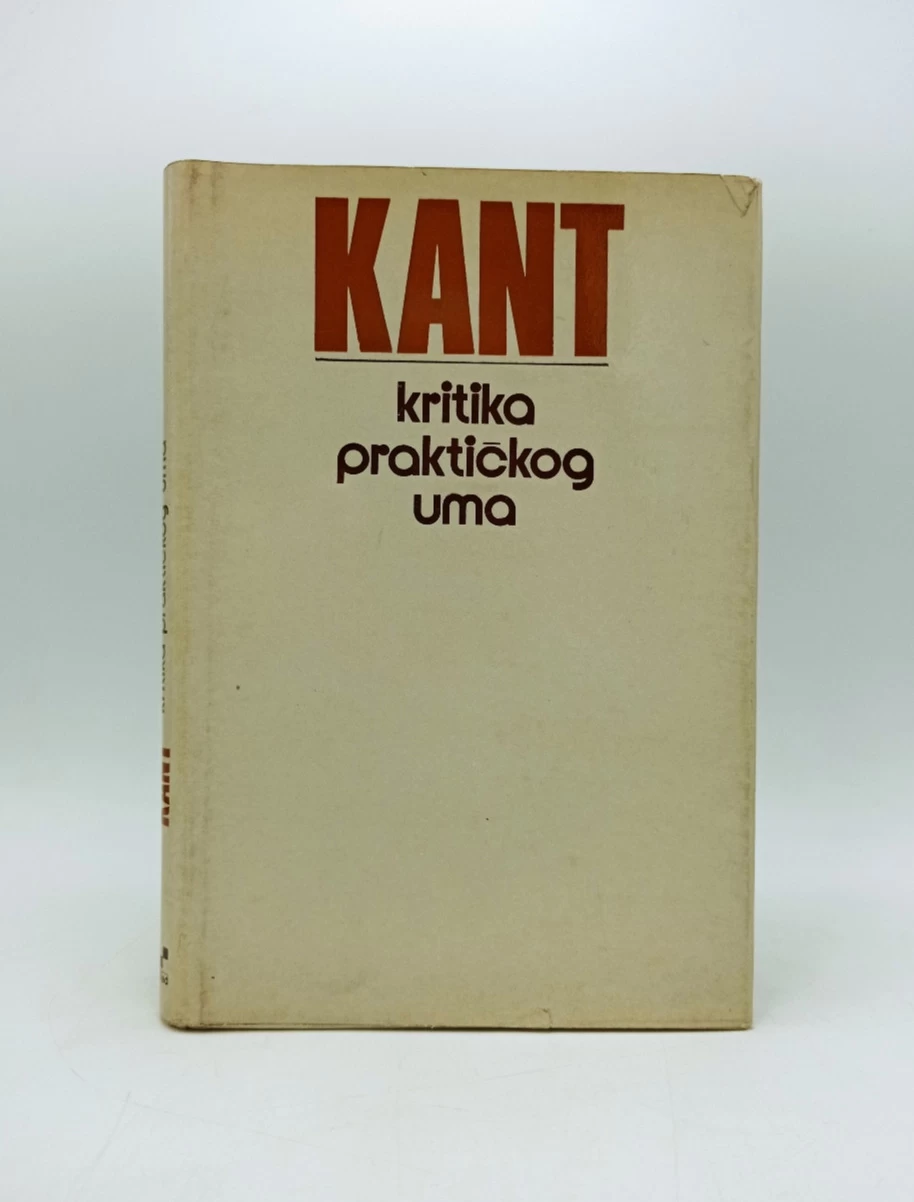

Kant Immanuel: Kritika praktičkog uma
€ 20,00
Free delivery in Croatia for orders over EUR 70
Basic information
- Author: Kant Immanuel
- Publisher: Naprijed
- Availability: Available
- Condition: Vrlo dobro
- Code: 63168
Shipping options
GLS Croatia
5€
Delivery
0€
Personal collection at the antique store
0€
GLS parcel machine
3€
Payment methods
Pay on pickup
CorvusPay
By general payment / Virman / Internet banking
Cash on delivery
Kritika praktičkog uma
Kant Immanuel
Summary
Immanuel Kant: Critique of the Practical Mind
Kant presented his ethical teaching in the Critique of the Practical Mind in 1788. In the interpretation of ethics, Kant starts from the concept of good will. For him, it is good in itself, without any restrictions, which has the sole purpose of fulfilling duties, i.e. respecting the law. Moral action is based on self-control because every human being already has an a priori law that tells us how to behave. Kant calls this moral law the categorical imperative. Kant gave several definitions of the categorical imperative. One of those is: "Work so that the principle of your work can become the principle of everyone else's work". Mada svaki čovjek ima u svojoj svijesti moralni zakon, od njegove volje zavisi hoće li ga poštovati ili ne. Thus, the moral law is a prerequisite for a "practical mind".
Additional information
- Author: Kant Immanuel
- Publisher: Naprijed
- Year of publication:1974
- Place of publication:Zagreb
- Pages:216
- Dimensions:13x20 cm
- Script:Latinica
- Condition:Vrlo dobro
- Binding:Tvrdi s ovitkom
You may also like







Biblos Newsletter
For book lovers who enjoy finding the rare
New titles, special copies and quiet recommendations from the antiquarian bookshop.