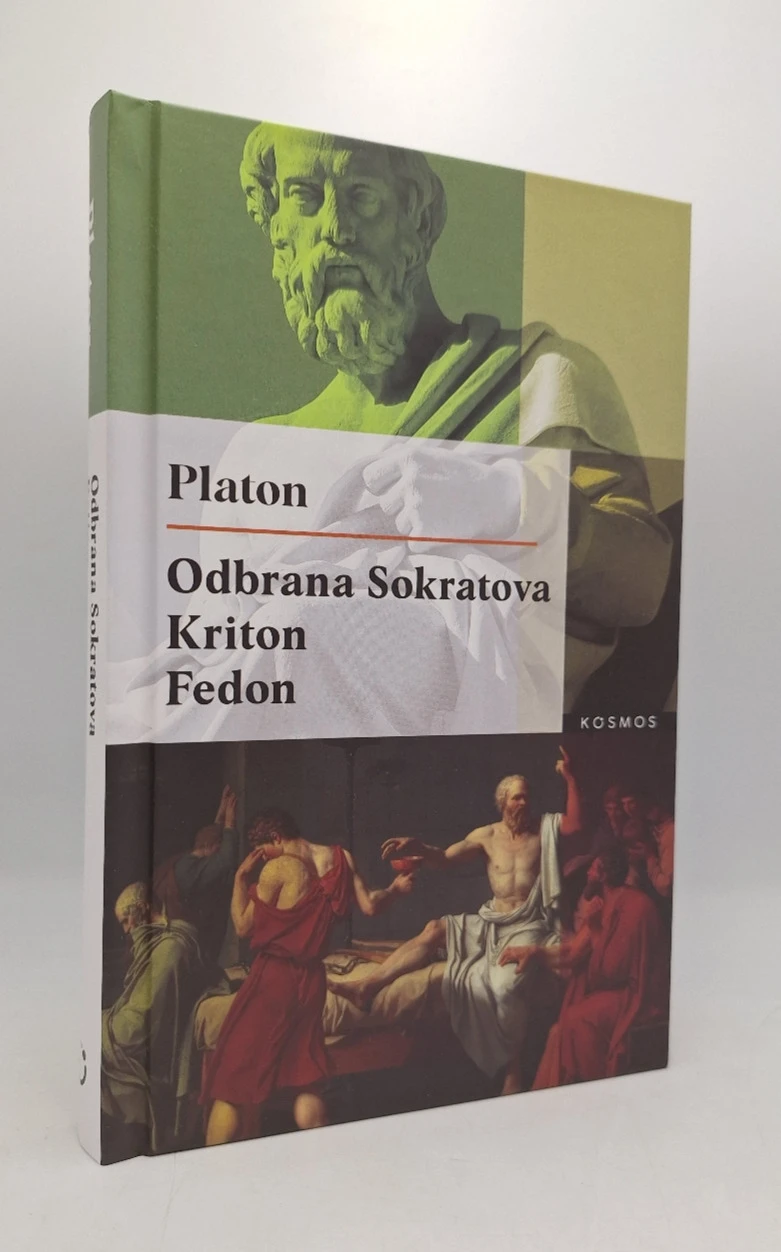

Platon: Odbrana Sokratova / Kriton / Fedon
€ 20,00
Free delivery in Croatia for orders over EUR 70
Basic information
- Author: Platon
- Publisher: Kosmos - Nova knjiga
- Availability: Available
- Condition: Nova knjiga
- Code: 83296
Shipping options
GLS Croatia
5€
Delivery
0€
Personal collection at the antique store
0€
GLS parcel machine
3€
Payment methods
Pay on pickup
CorvusPay
By general payment / Virman / Internet banking
Cash on delivery
Odbrana Sokratova / Kriton / Fedon
Platon
Summary
Plato: Defense of Socrates / Crito / Phaedo
Based on all studies so far, all of Plato's writings are considered authentic and can be divided into four groups, which correspond to the phases in his philosophical development. The first group includes youth writings: Ion, Defense, Crito, Hippias minor, Lahetus, Thrasymachus (a draft of what will become the first book of the State), Harmidus, Euthyphron, Lysidus. In the writings of this, first, phase, Plato moves completely on the territory of his teacher, but everywhere the hand of the great artist is felt and the latter creation of the great philosopher is clearly recognized. The content of these writings is a presentation of Socrates' life and destiny and a loyal examination of his teaching and method. The main goal of Plato's philosophizing in that phase is the determination of ethical concepts. Socrates' philosophy was epistemological and ethical, and therefore an exemplary teaching of the so-called anthropological period of ancient Greek philosophy, a period in which thought turned from questions about nature, which dominated the previous ("cosmological") period, to questions about man and his community.
Additional information
- Author: Platon
- Publisher: Kosmos - Nova knjiga
- Year of publication:2025
- Place of publication:Beograd
- Pages:279
- Dimensions:15.5x23.5 cm
- Script:Latinica
- Condition:Nova knjiga
- Binding:Tvrdi
You may also like








Recently viewed




Biblos Newsletter
For book lovers who enjoy finding the rare
New titles, special copies and quiet recommendations from the antiquarian bookshop.