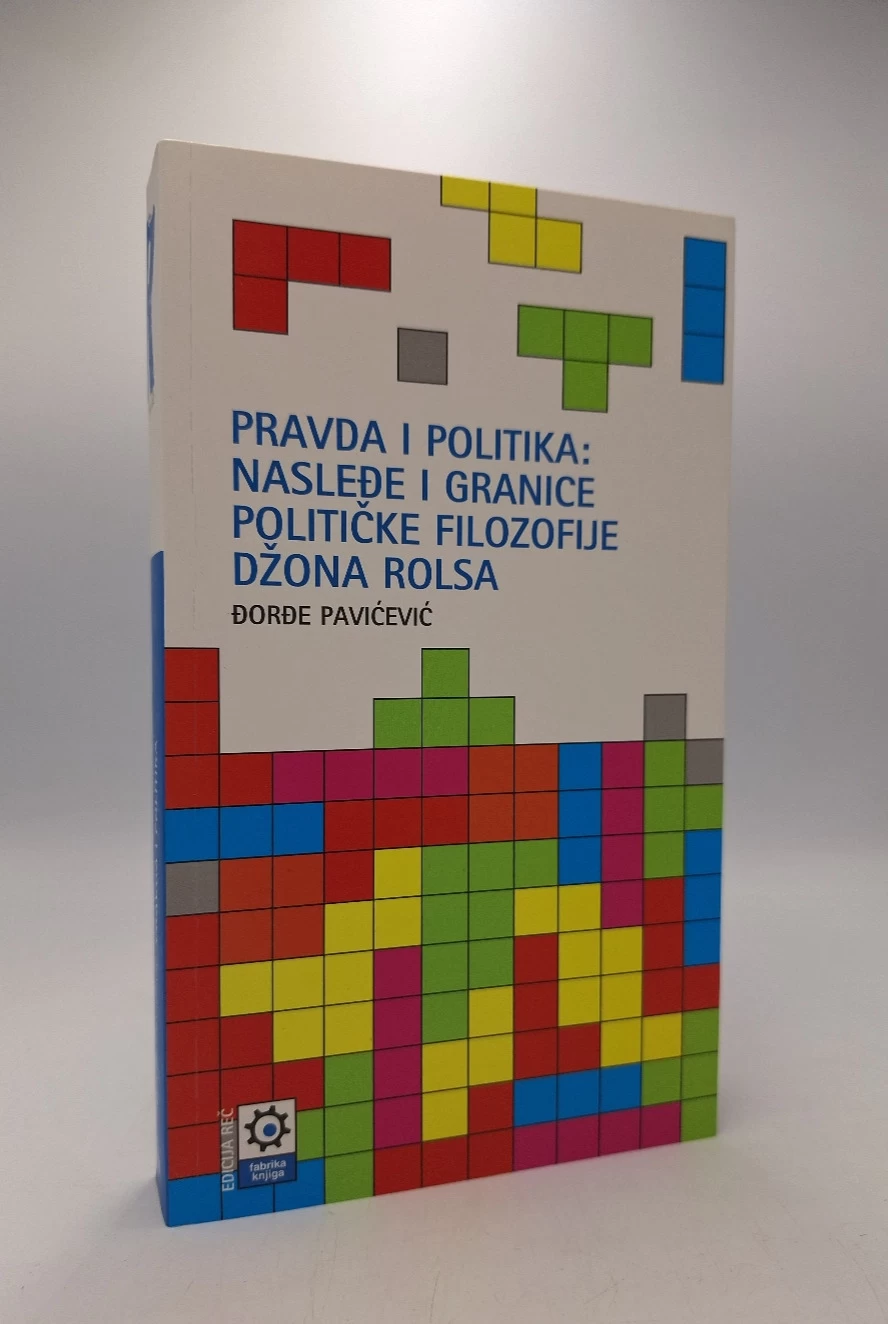

Pavićević Đorđe: Pravda i politika: nasleđe i granice političke filozofije Džpna Rolsa
€ 15,00
Free delivery in Croatia for orders over EUR 70
Basic information
- Author: Pavićević Đorđe
- Publisher: Fabrika knjiga
- Availability: Available
- Condition: Nova knjiga
- Code: 79175
Shipping options
GLS Croatia
5€
Delivery
0€
Personal collection at the antique store
0€
GLS parcel machine
3€
Payment methods
Pay on pickup
CorvusPay
By general payment / Virman / Internet banking
Cash on delivery
Pravda i politika: nasleđe i granice političke filozofije Džpna Rolsa
Pavićević Đorđe
Summary
Đorđe Pavićević: Justice and politics: the legacy and limits of the political philosophy of John Rawls
"Rawls' theory is almost impossible to follow if the 'premises and principles' of the theory itself are respected. It is focused on the problem and moves within the thing itself; it does not contain a set of truths to be followed and instructions on how to do political philosophy or political theory. Rawls's theory is not the lingua franca or Leibnizian mathesis universalis of political philosophy, as many have thought. It is more an attempt to decipher the deep grammatical rules of a special language - the language of constitutional democracy. Rawls emphasized the importance of justice for order, and this importance stands for everything even if we do not agree with him that justice is the first virtue of social institutions and that the reasons for justice override all other reasons. Although many thought that Rawls was dramatizing the problems of existing injustices, I would say that it was the other way around - Rawls underestimated them participation, identity and renewal of religious conflicts, unequal use of scarce resources, etc. - All this tells us that injustices seriously threaten the equal moral status of citizens. Rawls' theory is a good guide for what to do."
(Đorđe Pavićević)
Additional information
- Author: Pavićević Đorđe
- Publisher: Fabrika knjiga
- Year of publication:2011
- Place of publication:Beograd
- Pages:327
- Dimensions:13x22 cm
- Script:Latinica
- Condition:Nova knjiga
- Binding:Meki
You may also like




Biblos Newsletter
For book lovers who enjoy finding the rare
New titles, special copies and quiet recommendations from the antiquarian bookshop.