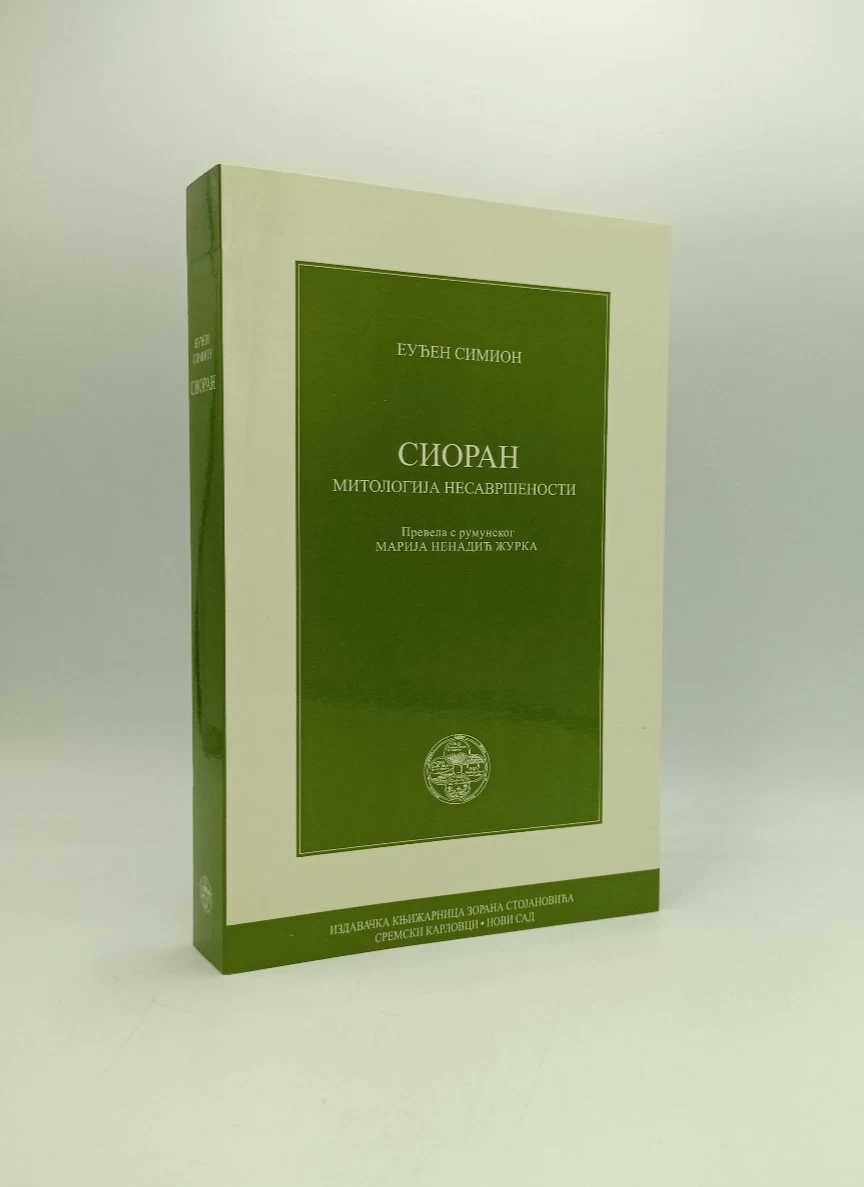

Simion Eugen: Sioran: mitologija nesavršenosti
€ 32,00
Free delivery in Croatia for orders over EUR 70
Basic information
- Author: Simion Eugen
- Publisher: Izdavačka knjižarnica Zorana Stojanovića
- Availability: Available
- Condition: Nova knjiga
- Code: 52597
Shipping options
GLS Croatia
5€
Delivery
0€
Personal collection at the antique store
0€
GLS parcel machine
3€
Payment methods
Pay on pickup
CorvusPay
By general payment / Virman / Internet banking
Cash on delivery
Sioran: mitologija nesavršenosti
Simion Eugen
Summary
Eugen Simion: Sioran: the mythology of imperfection
The study Cioran - the mythology of imperfection, authored by Eugene Simion, is a kind of ode to Emil Cioran, Romanian philosopher and essayist. The subtitle of this study refers us to the "real and wonderful mythology of ideas", which also builds literary mythology. In order to understand Ciorano's entire oeuvre, the author suggests that his correspondence after 1947 should also be published. He believes that it is "essential for a proper understanding of the man who wrote: complex, often confusing, almost always surprising, paradoxical and memorable". Cioran belongs to the generation that started to create under the influence of professor Nae Ionescu, but also under the influence of the new European ideological direction, existentialism. The themes and ways of creating philosophy were based on existential meditation, which would often imply subjective existential restlessness. "New subjectivity", advocated by Mircea Eliade and Mircea Vulcănescu, also represents the beginning of Romanian existentialism, which Cioran will follow up on.
Although Simion focused on Cioran's earlier works, on the period when he wrote in his mother tongue, he believes that essays written in French should certainly not be neglected, bearing in mind that his departure to France represents a turning point both ideologically and in a literary sense. Although the central themes in Ciorano's work are thoughts about absurdity, futility, decay, his philosophy should not be seen as a pure philosophy of pessimism - the opulence and wisdom with which his texts are showered make him a brilliant moralist whose stylistic brilliance today no one doubts.
Additional information
- Author: Simion Eugen
- Publisher: Izdavačka knjižarnica Zorana S...
- Year of publication:2019
- Place of publication:Novi Sad
- Pages:375
- Dimensions:15x23 cm
- Script:Ćirilica
- Condition:Nova knjiga
- Binding:Meki s ovitkom
You may also like




Recently viewed
Biblos Newsletter
For book lovers who enjoy finding the rare
New titles, special copies and quiet recommendations from the antiquarian bookshop.