
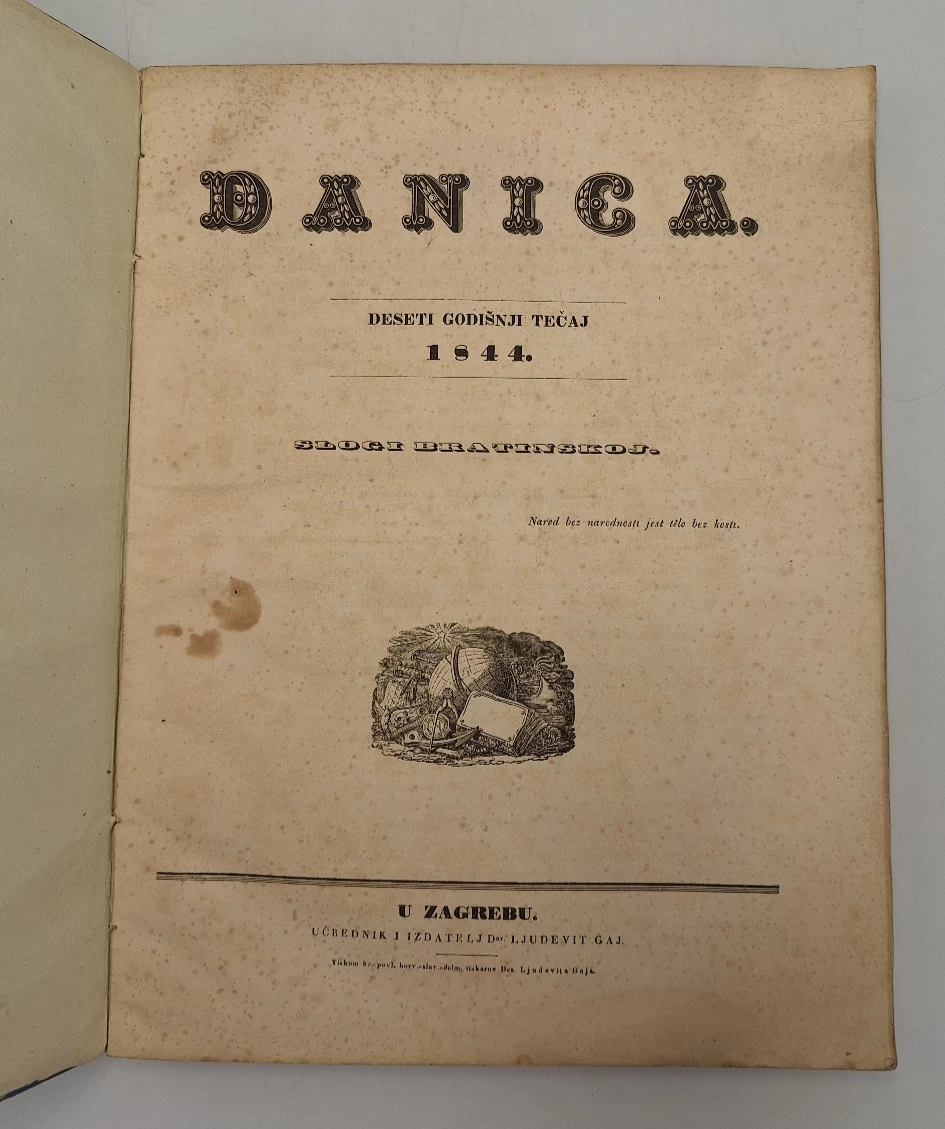
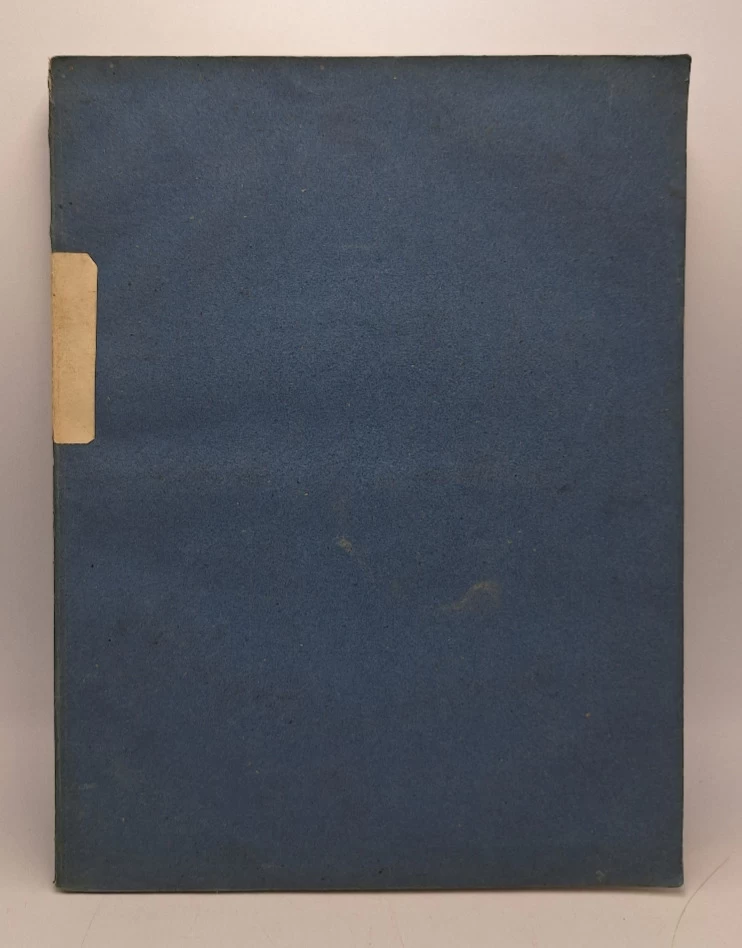
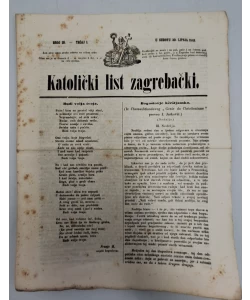
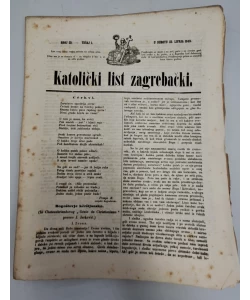
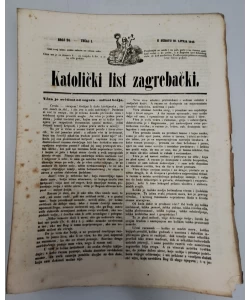
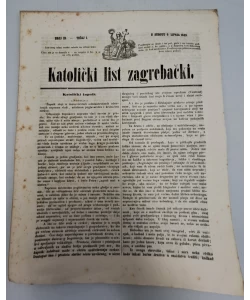
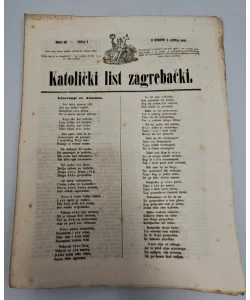
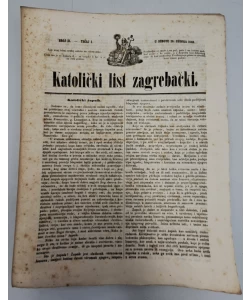
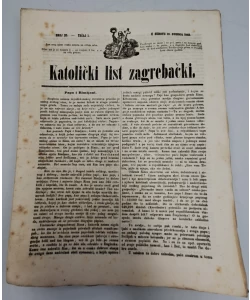
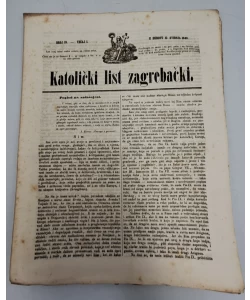
Danica 1844
Basic information
- Author: Gaj Ljudevit
- Publisher: Ljudevit Gaj
- Availability: Available
- Condition: Very good
- Code: 76119
Shipping options
Payment methods
Explore more
Danica 1844
Gaj Ljudevit
Summary
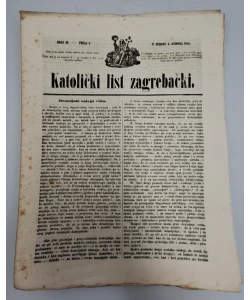
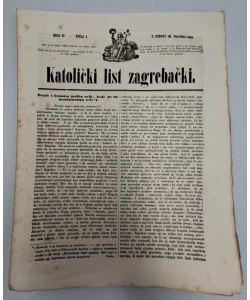
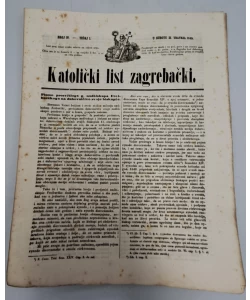
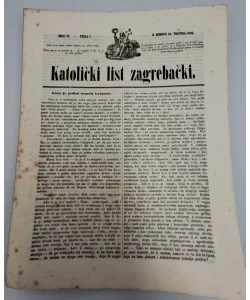
Danica 1844
Editor: Ljudevit Gaj
Danica ilirska, the first Croatian literary magazine, which was published as a weekly part of Novina horvatskih from January 10, 1835 to January 2, 1836 in Zagreb under the title Danicza horvatzka, slavonzka y dalmatinzka, and then under the name Danica ilirska. After the banning of the Illyrian name and symbol, from January 2, 1843 until the end of 1848, the magazine was again published under the original title, and from January 2 to June 30 In 1849, again under the title Danica Ilirska. Under the title Danica list, it appeared in 1853, but due to the weak response of the readership, it soon stopped publication. From 1863 to 1867, the magazine was again published under the title Danica ilirska.
The initiator, editor-in-chief and publisher of Danica in all stages of its development was Lj. Gaj, but in the 1860s the magazine was actually edited by his son Velimir Gaj, A. Mažuranić, D. Rakovac, V. Babukić, B. Šulek and D. Demeter. The reprint in five books, under the title Danica Ilirska 1835–49 (Zagreb 1970–72) was edited by I. Frangeš and M. Kuzmanović.
As Gajeve Novine did not have permission to independently shape and market political news, from the beginning of publication until 1848, Danica actually played the role of the central newspaper of the Croatian revival movement. In addition to the fact that, in the form of literary works (Budnica, Davorija, Poskočnica), Danica made it possible to market and spread the fundamental seeds of the ideology of Illyrianism, Danica significantly contributed to the affirmation of the Štokavian dialect as the Croatian language standard and Gaje's orthography from 1830. By the 28th issue, Štokavian, as the most widespread Croatian dialect, and the new orthography had completely supplanted Kajkavian and the old script. The first published contribution written in Štokavian and according to Gaje's spelling was A. Mihanović's vigil Horvatska domovina (No. 10 from 1835), which, when set to music, became the Croatian anthem.
Additional information
- Author: Gaj Ljudevit
- Publisher: Ljudevit Gaj
- Year of publication:1844
- Place of publication:Zagreb
- Pages:208
- Dimensions:22x28.5 cm
- Script:Latin script
- Condition:Very good
- Binding:Softcover
Reviews
0 reviewsWrite a review
Share your experience and help other readers choose.
This item has no reviews yet. Be the first to share your experience.
More books by Gaj Ljudevit
More books from Ljudevit Gaj

You may also like




Recently viewed