
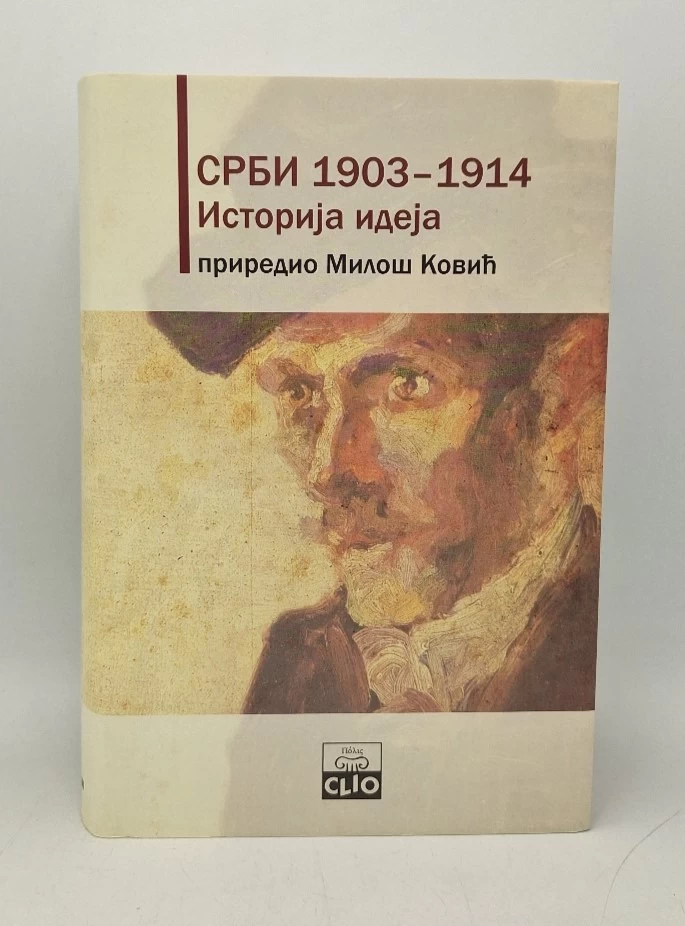
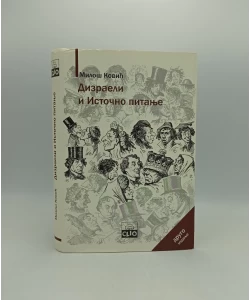
Srbi 1903 - 1914 Istorija ideja
Basic information
- Author: Ković Miloš
- Publisher: Clio
- Availability: Available
- Condition: Very good
- Code: 42912
Shipping options
Payment methods
Explore more
Srbi 1903 - 1914 Istorija ideja
Ković Miloš
Summary
Miloš Ković: Serbs 1903 - 1914 History of ideas
In discussions about the causes and motives of the First World War, the old theses about the guilt of Serbia for this world bloodshed are increasingly present in the world academic public. Therefore, there is a need for Serbian experts from various scientific fields to once again, from today's perspective, on the centenary of the beginning of the First World War, think about a series of questions related to the year 1914.
Serbian science, however, has long called the period from 1903 to 1914 the "golden age" of Serbian culture and politics. This assessment applies to Serbia as well as to the Serbs who then lived in the territory of Montenegro, the Habsburg Monarchy, the Ottoman Empire, and even those in the distant USA. It was the era of Milan Rakić, Jovan Dučić, Vladislav Petković Dis, Sima Pandurović, Bogdan Popović, Jovan Skerlić, Slobodan Jovanović, Stojan Novaković, Milutin Milanković, Mihajlo Pupin, Nikola Tesla, Jovan Cvijić, Branislav Petronijević, Nadežda Petrović, Kosta Miličević, Uroš Predić, Stevan Stojanović Mokranjec, Živojin Mišić, Radomir Putnik, Stepa Stepanović, Petar Bojović, King Petar I Karađorđević, Nikola Pašić, Milovan Milovanović, Ljubomir Stojanović.
Who were these people and how does today see their works? Who really were Gavrilo Princip and Dragutin Dimitrijević Apis? What did the Serbian political elites of that time believe, as well as "ordinary people"? What did the ideas of nation, democracy and human rights mean to them? What was the actual influence of the crown, parties, officers, peasant majority on the political life of the country? Who really were these peasant-soldiers, who won epic battles on the Kumanovo, Bitola, Bregalnica, Cer, Kolubara, Thessaloniki front? What was "Young Bosnia"? What was the role of the annexation crisis, the Balkan wars, the Sarajevo assassination in the Serbian and world history of that era?
In the three-volume critical dictionary Serbs 1903-1914, answers to these and many other questions are offered by a number of leading Serbian historians, literary historians, art historians, philosophers, sociologists, anthropologists, archaeologists, and musicologists. The form of an essay devoted to special determinants enables the modern reader to approach a large and complex topic in his own way, starting from the concepts and facts he considers the most important, in the order and path he chooses.
Additional information
- Author: Ković Miloš
- Publisher: Clio
- Year of publication:2015
- Place of publication:Beograd
- Pages:861
- Dimensions:17x24 cm
- Script:Cyrillic script
- Condition:Very good
- Binding:Hardcover with dust jacket
Reviews
0 reviewsWrite a review
Share your experience and help other readers choose.
This item has no reviews yet. Be the first to share your experience.
More books by Ković Miloš
More books from Clio



You may also like