
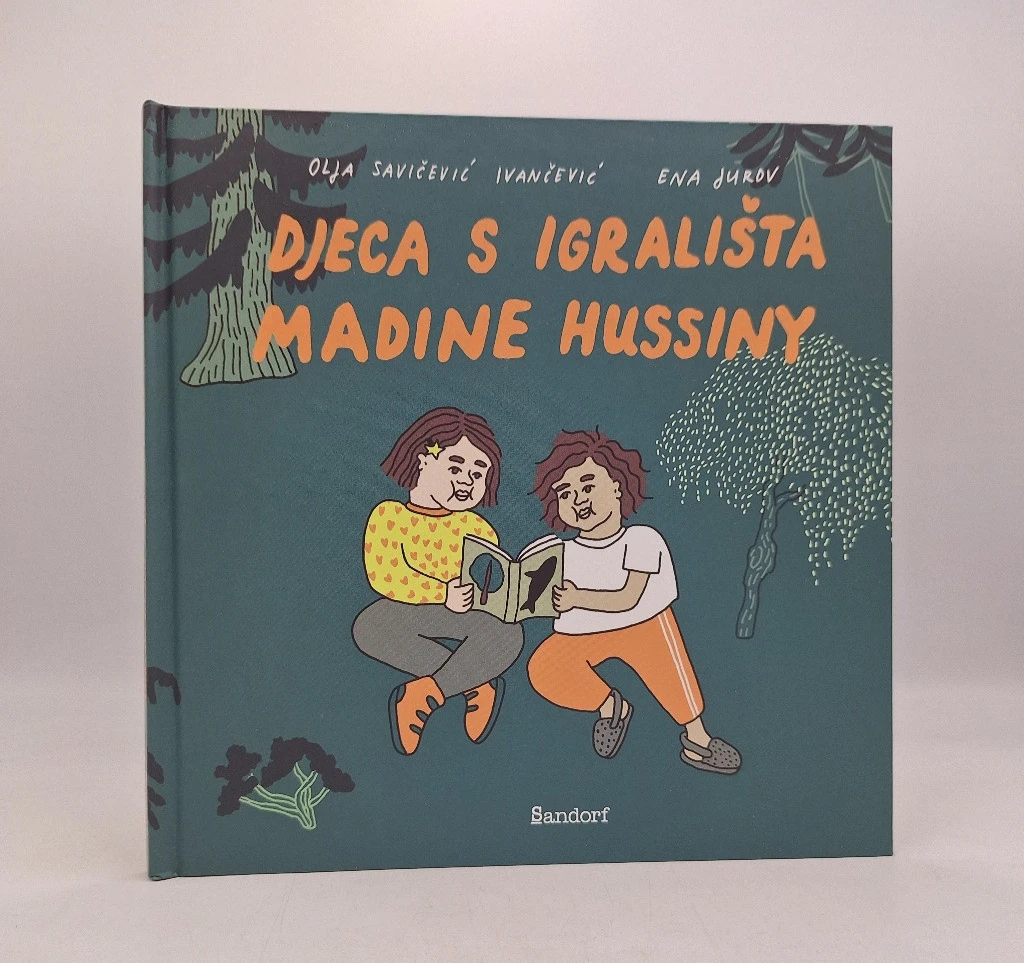
Djeca s igrališta Madine Hussiny
Basic information
- Author: Savičević Ivančević Olja I Jurov Ena
- Publisher: Sandorf
- Availability: Available
- Condition: New book
- Code: 80805
Shipping options
Payment methods
Explore more
Djeca s igrališta Madine Hussiny
Savičević Ivančević Olja I Jurov Ena
Summary
Olja Savičević Ivančević, Ena Jurov: Children from Madina Hussiny's playground
Madina Hussiny (Hosseini, Husseni) was a petite, beautiful girl, with a little freckles in her face, with a big smile and wonderful eyes, with curly hair, black and thick. Cheerful and curious, she always wanted to participate in everything, in all organized and spontaneous events in the refugee camps where she spent a large part of her short life. Those who saw and met her in those camps remember her as fearless and playful, in constant movement, surrounded by other children, often in the company of a younger brother or a slightly older sister. At the camp in Sofia, Bulgaria, Madina enjoyed playing with dolls, listening to stories and dressing up as a princess in the costume box. In the camp in Bogovađa, Serbia, she regretted that she could not keep the kittens, go on a trip, but also, according to those who knew her, happily frolicked around the camp.
Madina was five, at most six years old when, on November 21, 2017, she and her mother and five of her siblings entered Croatia secretly from Serbia across the green border. Originally from Afghanistan, she and her family could not even enter Croatia with their passports through the border crossing due to the visa system. An hour after they entered Croatia, they were intercepted by Croatian policemen who, despite the night and the cold - and despite the fact that, according to their mother, they had requested asylum - took them back to the border line, not far from the train station in Tovarnik. Like so many before, the police ordered them there to return to Serbia, following the railway tracks leading to Šid. Soon, during the pushback, a train came by and killed Madina. Madina's body was kept in Croatia and later handed over to her family in Serbia. Madina was buried in Šida, where she still rests today.
Responsibility for Madina's death was investigated and sought by various institutions and bodies. According to the judgment of the European Court of Human Rights in 2021, the Croatian police illegally expelled Madina and her family from Croatia, they treated Madina's brothers and sisters inhumanely, keeping them in detention, they illegally deprived the entire family of their freedom, denying them, among other things, access to a lawyer, and the Croatian authorities failed to conduct an effective investigation into Madina's death. In practice, the Croatian and European institutions, which are responsible for the current border control regime of which the deaths and the pushbacks are a part, have not yet taken responsibility for her death, nor have the culprits been punished. It is, however, also a symbol of persistent resistance to the policies that produce such deaths. In honor of Madina Hussiny, protest actions and interventions are held every year, within the framework of which an initiative was launched in 2023 to name the children's playground in the Ribnjak park in Zagreb after Madina. This picture book is part of that initiative. She is a call to remember Madina to build a future in which there will be no differences between people, in which there will be no borders and violence, a future built on freedom, love and togetherness, freedom on the Madina Hussiny Playground.
-Marijana Hameršak
Additional information
- Author: Savičević Ivančević Olja I Jur...
- Publisher: Sandorf
- Year of publication:2025
- Place of publication:Zagreb
- Pages:28
- Dimensions:21.5x21.5 cm
- Script:Latin script
- Condition:New book
- Binding:Hardcover
Reviews
0 reviewsWrite a review
Share your experience and help other readers choose.
This item has no reviews yet. Be the first to share your experience.
More books from Sandorf



You may also like