

Historija dubrovačke drame
Basic information
- Author: Pavić Armin
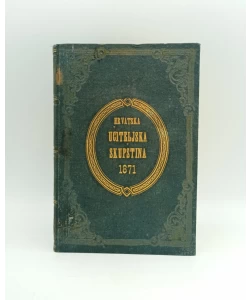
- Publisher: Albrecht
- Availability: Available
- Condition: Very good
- Code: 15299
Shipping options
Payment methods
Explore more
Historija dubrovačke drame
Pavić Armin
Summary
Armin Pavić: The History of Dubrovnik Drama
ex libris Mladen Trnski
Pavić, Armin, Croatian literary historian and translator (Požega, March 29, 1844 – Zagreb, February 12, 1914). He completed his studies in classical philology and Slavic studies in Vienna in 1864. He worked as a high school teacher, and from 1877 he was a professor of Croatian language and literature at the Faculty of Philosophy in Zagreb, of which he was also dean (1882–83 and 1894–95). He was also rector of the University (1896–97), a regular member of JAZU (from 1874) and a member of parliament (1884–1906). He published theater and literary reviews in many magazines, most often in Vienna, and for the edition Stari pisci hrvatski he edited the works of I. Gundulić and J. Palmotić. He is known for having joined the debate about the origin of Gundulić's Osman. At first, he claimed that it was written by two writers, and later he came to the point of view of the existence of two smaller songs that were only later combined into one. He advocated a similar thesis in discussions about the origin of songs about color in Kosovo, arguing that they are excerpts from a larger textual unit, probably an epic. Pavić's theses were certainly influenced by Wolf's assumptions about the genesis of Homer's epic. One of his first works, History of Dubrovnik Drama (1871), together with monographic discussions on I. Gundulić (Aesthetic evaluation of Gundulićev Osman, 1879; Postanje Gundulićev Osman, 1913) and J. Palmotić (Junije Palmotić, 1883), are an interesting literary and historical contribution to the research of Croatian early modern literature. He is one of the most important literary historians of the older generation, who moved away from a narrowly philological approach to literary material and embarked on a more systematic literary-historical research. Of his translation work, the translations of Anacreon's lyrics in Vienna and a fine translation of Aristotle's Poetics with exhaustive comments should be highlighted.
Additional information
- Author: Pavić Armin
- Publisher: Albrecht
- Year of publication:1871
- Place of publication:Zagreb
- Pages:3 200
- Dimensions:16.5x23 cm
- Script:Latin script
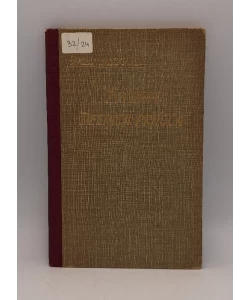
- Condition:Very good
- Binding:Hardcover
Reviews
0 reviewsWrite a review
Share your experience and help other readers choose.
This item has no reviews yet. Be the first to share your experience.
More books from Albrecht