
Erich Fromm and his psychological theories
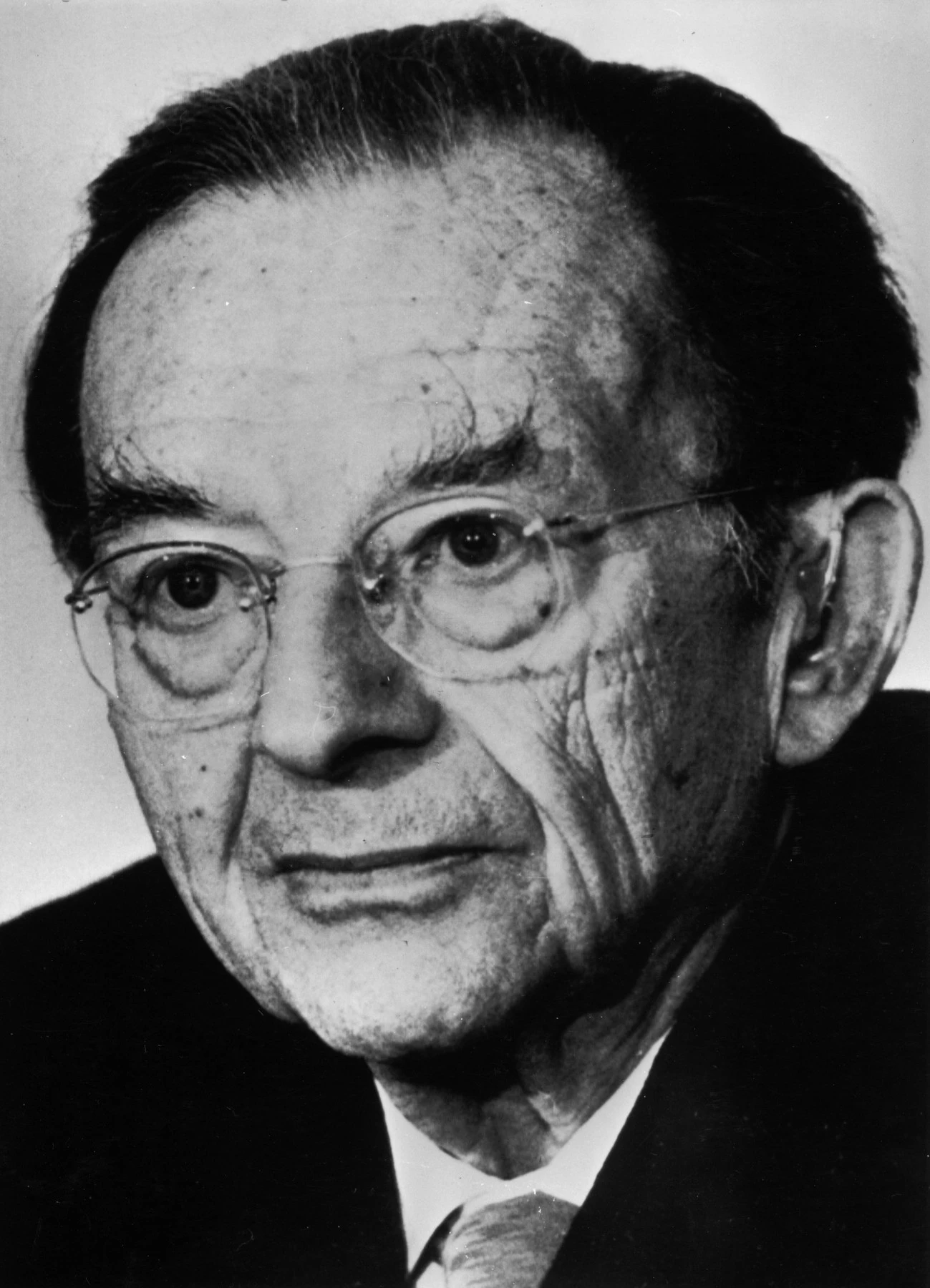
This exceptional writer was an American psychoanalyst of German origin, social philosopher and humanist thinker, whose works had a profound impact on psychology, sociology and philosophy. His ideas about freedom, love, authority and social structures shaped the modern understanding of the human psyche and relationships in society.
"My sense of the world was that of a pre-modern man. This attitude was strengthened by studying the Talmud, reading a lot of the Bible and listening to many stories about my ancestors, who all lived in a world that preceded the bourgeois world. - I remained a stranger in business or bourgeois culture and this explains why I developed such a sharply critical attitude towards
bourgeois society and capitalism. I became a socialist."
Overview of Erich Fromm's life
Erich Fromm was born during the German Empire, on March 23, 1900, in Frankfurt am Main, and was active until March 18, 1980, when he died in Muralt near Locarno, Switzerland. He comes from an orthodox Jewish family, which led him to a deep exposure to religious traditions.
He studied sociology and philosophy at the University of Frankfurt and was strongly influenced by the thoughts of Karl Marx and Sigmund Freud. During the rise of Nazism, he emigrated to the United States, where he pursued an academic career and worked as a professor at prestigious universities.
"I was exposed to the same influences as any other young German at the time. But I had to deal with them in my own way. Not only because one always had an exceptional - not necessarily unpleasant - position for Jews in Germany, but also because I did not feel quite at home in the world in which I lived, nor in the old world of tradition."
What literary style did Erich Fromm write in?
Fromm wrote in the form of essays and debates, in which he methodically presented his views, using a logical sequence of arguments. His analysis often included historical, philosophical and psychological examples. Although he dealt with deep topics, Fromm avoided overly technical language. He made sure that his concepts were comprehensible to laymen, not just academics. He guided the reader through thoughts and conclusions, encouraging introspection and critical thinking.
He often emphasized the importance of moral and ethical values, criticizing social systems that stifle human creativity and freedom. Through his works, Fromm not only included theoretical discussions, but also sought to provide concrete guidelines for the improvement of the individual and society.
How did Erich Fromm shape contemporary thought?
Today, Erich Fromm is widely regarded as one of the most important psychoanalysts of the 20th century. His ideas had a great influence on the inspiration not only of many psychologists and philosophers, but also of political activists, therapists and people searching for a deeper understanding of interpersonal relationships and social phenomena.
As one of the pioneers of humanistic psychoanalysis, Fromm distanced himself from the classic Freudian theory of drives and the unconscious, which emphasized internal psychological conflicts. However, Fromm believed that social systems and economic structures also play a key role in shaping human character.
Humanistic psychoanalysis and Erich Fromm
By combining Freud's psychoanalysis and Marx's social theory and humanistic religion, he created an interdisciplinary style that reconstructs human nature, analyzes the human condition and judges the meaning of his existence.
This unique intellectual approach enabled him to gain a deeper understanding of man's inner needs, as well as the way in which social institutions shape an individual's personality. He argued that social systems make it difficult or impossible to simultaneously satisfy different needs, thus creating individual psychological and social conflicts.
Fromm's analysis of human nature and social structures
Fromm is d studied in detail the types of social character, that is, the behavior patterns of individuals that arise under the influence of certain social and economic conditions. His work includes an analysis of how society dominates the individual through the family. Fromm considers the family to be an instrument by which social norms and values are passed on to the next generation, and he called it the "psychic agency of society".
The influence of Erich Fromm's literary works
We highlight five works by Erich Fromm:
Escape from Freedom

Fromm in his book „Escape from Freedom“ analyzes why people, despite striving for freedom, often choose authoritarian systems and submission. He explains how individuals can feel existential anxiety due to too much freedom, which prompts them to seek security in totalitarian ideologies.
The art of love

Fromm believes that „The art of love” is not an emotion, but an interpersonal creative ability. He says that without true humility, courage, belief and discipline, one cannot achieve satisfaction in individual love. This is a book that explains how love is an art that needs to be learned and developed, not just a feeling that comes naturally.
To have or to be?

Fromm invites us to a deeper understanding of human existence.
The key theme of the work „To have or to be?” is consumerism or authentic existence. Once again, Fromm reveals his criticism, but this time not only towards socialism and bureaucracy, but towards the consumer mentality. Through this book, the values of materialism are questioned, where society becomes obsessed with possessions, power and status instead of authentic living through creativity, love and self-realization.
Anatomy of human destructiveness

By analyzing historical figures like Hitler and Stalin, Fromm through the work „Anatomy of human destructiveness” tries to understand: what drives people to evil, destruction and violence.
"The condition of the human race today is too serious for us to allow ourselves to listen to demagogues - least of all those demagogues who are bent on destruction - or even leaders who use only their brains and whose hearts have hardened. Critical radical thought will be fruitful only if it is mixed with the most precious quality with which man is endowed - love of life."
Man for self
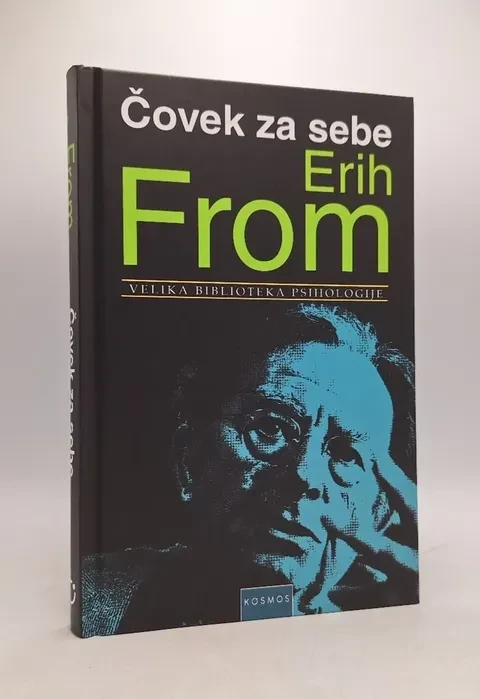
In his book „Man for himself“, Fromm engages in psychoanalytic research of ethics beyond traditional, religious and social norms. He advocates humanistic ethics, where the criterion of moral action is whether it promotes personal growth and the well-being of the individual and society, and rejects views on morality based on obedience to authority team.
Enrich your knowledge with the works of Erich Fromm
If you want to understand how society shapes the individual and how to find authentic happiness, Erich Fromm will not disappoint you. Check out our offer of Erich Fromm's works and get your copy today!
Biblos Newsletter
For book lovers who enjoy finding the rare
New titles, special copies and quiet recommendations from the antiquarian bookshop.