
Croatian incunabula - monuments of cultural life
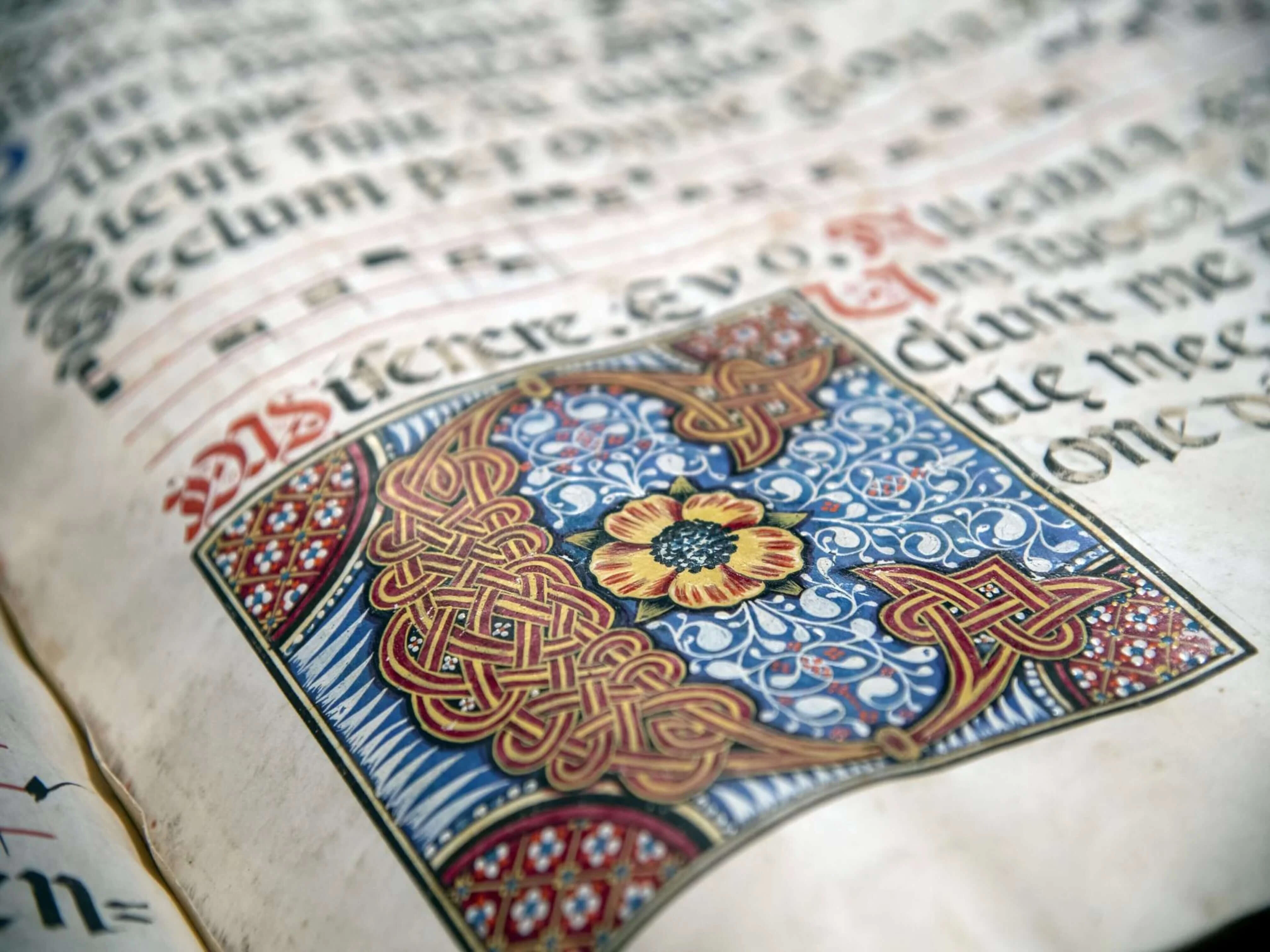
Did you know that during the 15th century, when the first books were printed, Croats were part of the European cultural circle in which they, we can say, participated equally?
This is supported by the fact that a large number of incunabula have been found on the soil of Croatia, and only 3 decades after the first printed book in the world, Gutenberg's Bible, 1483. The Glagolitic "Missal", the first book in the Croatian language, was also printed in 2008.
This indicates the social, economic and cultural potential of our country in the second half of the 15th century. century.
What are incunabula?

Photo: Gutenberg's printing press Source: Internet
Incunabula were the first books printed in Europe until 1500. year.
Until the advent of printing, books were written by hand, which actually meant that each book was unique.
The invention of the printing press in 1440 led to a cultural revolution in the most cultural part of the world at that time, i.e. in Europe. Book printing developed, which led to the advancement of science and art. Namely, an increasing number of writers could publish their works, which became available to a wide audience.
Also, incunabula covered a large number of interests of an educated European in the second half of the 15th century. There you could find everything from religious and church books to educational, entertaining and business ones.
According to data from 2016, about 30 thousand copies of incunabula were found in the world.
Croatian incunabula

Photo: Library of Male Brače in Dubrovnik Source: Internet
Incunabula occupy an extremely important place in our cultural and scientific heritage. These are monuments of cultural life that give us an insight into social conditions in our area during that important historical turning point - at the end of the Middle Ages and the transition to the period of humanism and the Renaissance.
The largest number of incunabula, preserved in Croatia, are found in monastic libraries in Istria and Dalmatia. This information is not unusual considering that the area was most connected to Venice in terms of traffic and economy.
Also, the Church acquired a significant number of books since it was the organization that had the greatest purchasing power, as well as the most educated individuals.
Types of incunabula
It is interesting to note that only four Slavic nations have incunabula - Czechs with more than 60, Croats with 9, and Ukrainians and Montenegrins with 5 titles. Of course, we are talking here about incunabula that are not in the Latin language but in one of the Slavic language idioms.
It should be pointed out that the Croats are actually the only nation that has incunabula printed in two scripts, namely we have 6 Glagolitic and 3 Latin incunabula.
Croatian incunabula can be divided into 3 categories:
- Incunabula by Croatian authors written in Croatian language printed in Glagolitic or Latin
- Incunabula of Croatian authors published in other foreign languages (Juraj Dragišić, Ivan Bunić)
- Incunabula printed or published by Croatian publishers (Andrija Paltašić, Dobrić Dobričević)
Cultural independence and printing of the first book in Croatia

Photograph: A map of Europe showing the places where the incunabula printers were located. In Croatia, these are Kosinj and Senj. Source: Internet
In the 15th century voices those Croatian publishers Andrija Paltašić and Dobrić Dobričević from Kotor and Lastovo, respectively, go to Venice and establish printing houses there. We are talking about pioneers of printing in Europe who belong to the very top of world publishing of that time.
In Italy, they published a number of important, classic Roman and Greek works by authors such as Cicero, Virgil and Catullus, and Dobričević was one of the first, back in 1487, to print Dante's "Divine Comedy".
On the other hand, a few Croatian publishers concluded that it did not exist cultural and national independence without establishing a printing press on the territory of Croatia.
That is why Anž (Ivan) VIII Frankapan Brinjskifounded the first Croatian printing house in the city of Kosinj. In 1483. was printed inGlagoljski misal, the oldest Croatian printed book. It is probably the most brilliant moment in our history.
The second printing house in Croatia was founded by Glagoliticians from Senj Silvestar Bedričić and Gašpar Turčić in 1494. year in the ancient city of Senja.
First Croatian incunabula

Photo: Internet
Misal according to the law of the Roman court = Missale Romanum Glagolitic, is the first incunabula printed in the Croatian language.
The book says that it was published in 1483, however, not the place where it was printed. It is assumed that it is about Kosinj.
Until today, 11 copies of the Missal have been preserved in the world, but none of them are complete. Two copies are kept in the National and University Library in Zagreb.
Structure of our incunabula collection
It is especially important to mention the research work of Josip Badalić, who in his book "Incunabula in the National Republic of Croatia" made a catalog of all our incunabula.
We are really talking about a pioneering undertaking in which the author visited almost all monasteries in Croatia in order to collect reliable data.
Furthermore, according to Badalić, there are 1124 incunabula in Croatia. Most are from the fields of philosophy, fine literature, philology, law and art.
A smaller but significant part of our collection of incunabula belongs to the field of natural sciences; physics, medicine, architecture and the like.
The book that had the most editions, since the advent of the printing press, is certainly the Bible. Namely, the inventor Gutenberg himself first tried his hand at printing these sacred texts.
Therefore, the largest number of incunabula, which have been preserved in Croatia, refer specifically to the Bible.
However, it should be kept in mind that the Bible was used daily during religious ceremonies, which is why many copies from the 15th century were damaged very quickly.
Generally, the largest number of Croatian incunabula are kept in libraries on the Adriatic coast. We can highlight those in Dubrovnik, Šibenik, Krk, Split and Zadar.
List of all 9 incunabula which are written in Croatian
- Missal according to the law of the Roman court, printed on 22.02.1483. in Kosinj?, Glagolitic.
- Office of the Blessed Virgin Mary (prayer book), place of printing unknown, 1490?, Latin.
- Office of the Holy Karst (prayer book), place of printing unknown, 1490?, Latin.
- Breviary according to the law of the Roman court, printed in 1491. in Kosinj, Glagolitic.
- Confession that every Christian is kept in imitation (some authors call it the General Confession or the Lost Incunabula), printed on 16 July 1492, place of printing Venice?, Glagolitic?. We know about the incunabula from a note in the Tkon anthology, 1520.
- Brevi jar hrvatski (Baromić's breviary), printed on March 13, 1493. in Venice, Glagolitic.
- Missal, printed on August 7, 1494. in Senj, Glagolitic. The printing house in Senj starts working with it.
- The Evangelist of Bernandino Splicanin, printed in Venice in 1495, Latin (although the initial letters are mostly Gothic).
- Spovid Općen, printed on April 25, 1496. in Senj, Glagolitic. The book is a translation of Michael Carcano's general confession manual: Confessionale generale.
Prepared by: Marijana Matijević
Biblos Newsletter
For book lovers who enjoy finding the rare
New titles, special copies and quiet recommendations from the antiquarian bookshop.