
Jon Fosse winner of the Nobel Prize for Literature in 2023
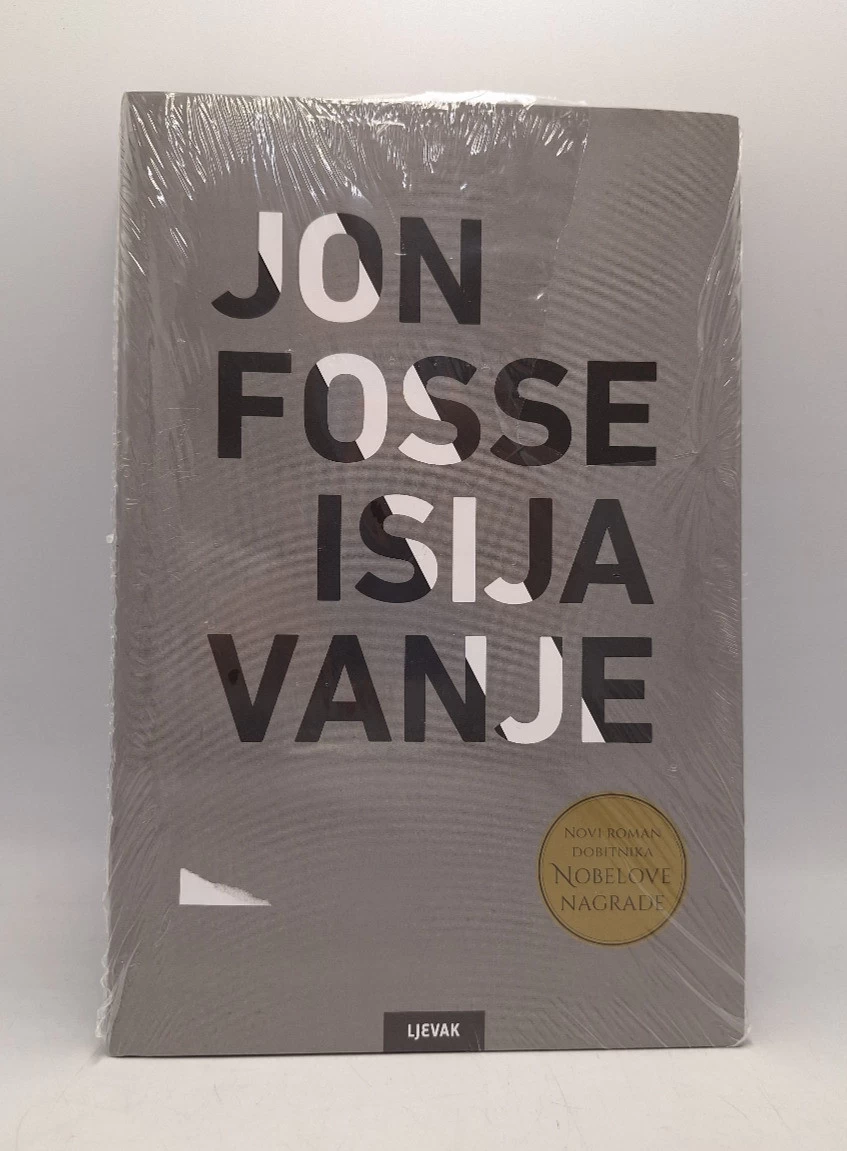
Jon Fosse is a Norwegian writer, translator and playwright. He was born in 1959 and grew up on a rural farm together with his parents and two sisters.
His father was the manager of a local grocery store, and his mother was a nurse. Fosse was raised as a Protestant, which shaped his outlook on life.
At the age of just seven, Jon experienced a serious accident that brought him to the brink of death, and this experience had a great influence on his writing later in adulthood.
As a teenager, he rebelled against existing social norms, became an atheist and joined a rock band. He wanted to become a rock guitarist, and after he gave up playing music seriously, he devoted himself more to writing.
According to his own words, he started writing when he was about twelve years old.
During his upbringing, he was under the influence of communism and anarchism, and he described himself as a hippie.
"When I write, it's as if someone else is speaking to me. I write down what I hear."
Jon Fosse
The writer initially refused to become a playwright, but relented. in 1992 because he needed money.
Encouraged by the great success of his works in theaters across Europe, Fosse focused primarily on writing plays.
Literary style
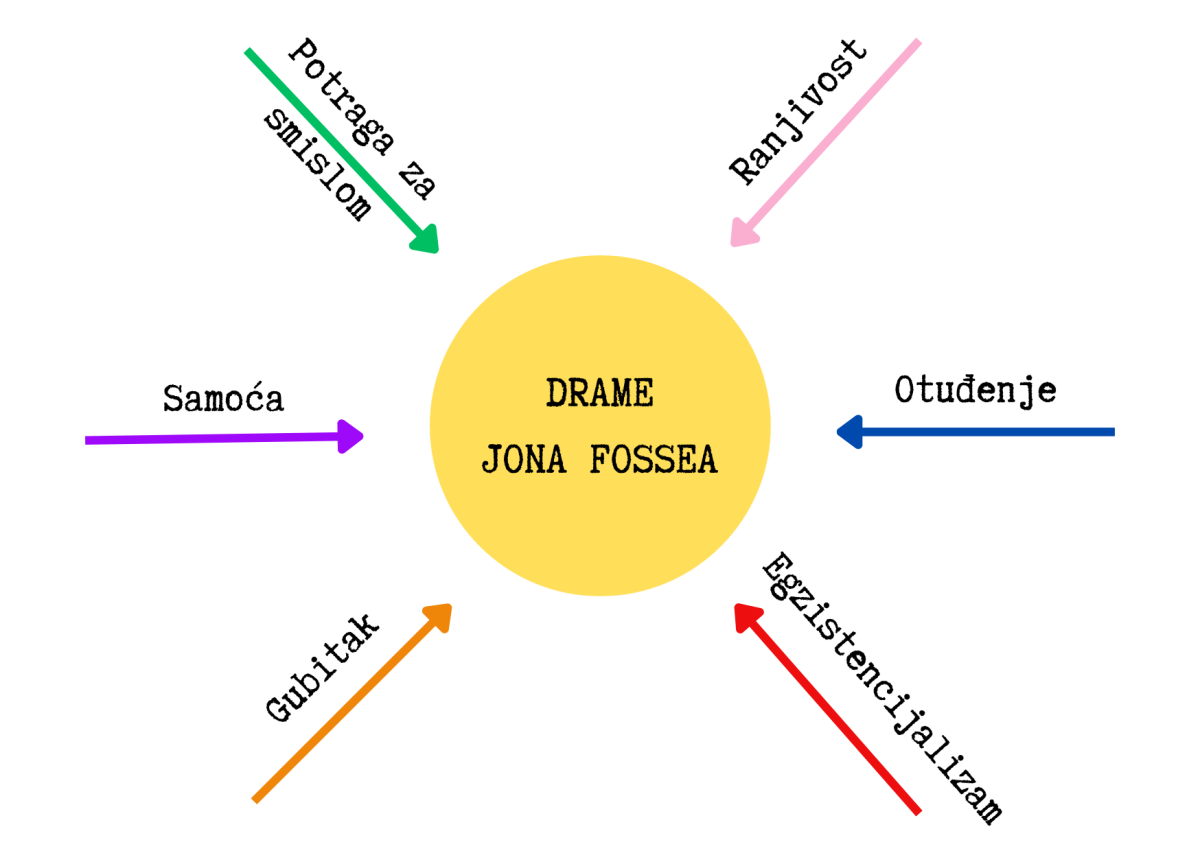
Photo: The themes Jon Fosse deals with in his plays, Antiquariat Biblos
Fosse's plays are minimalistic and deeply introspective, and the language he uses often borders on lyrical prose and poetry.
Due to his storytelling style, Jon Fosse has the ability to evoke deep emotions in his readers allowing him to immerse himself in the depths of the human psyche.
His life and work were influenced by; Samuel Beckett href="https://www.antikvarijat-biblos.hr/autor/faulkner-william">William Faulkner and Virginia Woolf.
The literary work of the Norwegian literary giant is often placed in the tradition of post-dramatic theater.
The writer received the Nobel Prize for Literature in 2023 "for his innovative plays and prose that gives voice to the unspeakable." right."
Jon Fosse Many say that Fosse found a unique theatrical a language, a language of muted intensity and rhythm, which is like music and with which "the void takes shape".
They call him a genius, a living classic and a new Ibsen.
Literary works
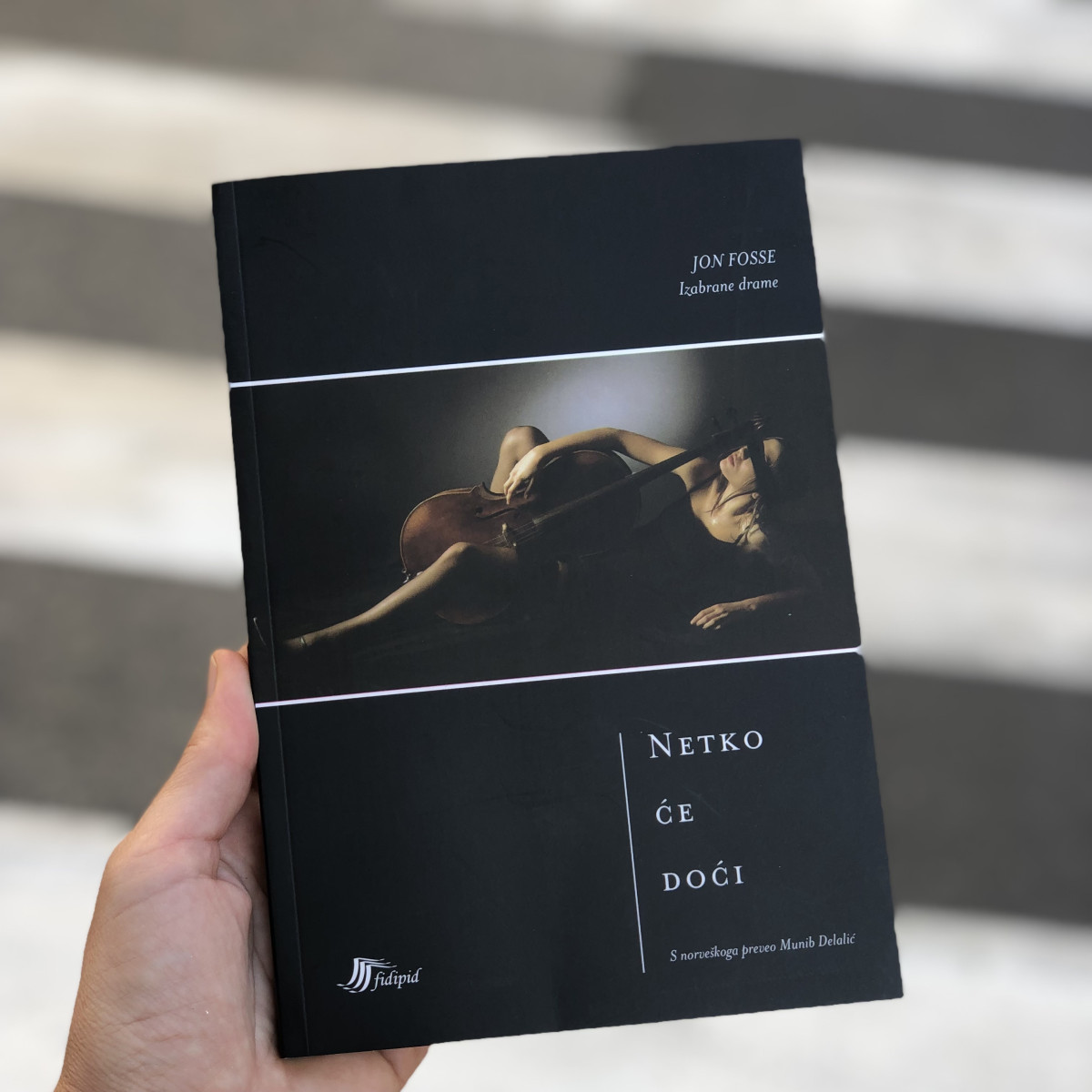
Photo: Antikvarijat Biblos
Someone will come
The book contains four plays by the Norwegian writer; "Someone Will Come", "Name", "Autumn Dream" and "Winter".
Someone Will Come
This is Fosse's first dramatic work, which he wrote in 1992. It is one of his most poetic dramas on the theme of love and jealousy. These two themes will mark many of his other plays.
It was an introduction to a dramatic work unparalleled in the history of modern Norwegian theater, because after his debut, Fosse has, until today, written 25 more plays.
Autumn Dream
One of Fosse's typical plays in which a lot is packed into a relatively small space. Moving through the borderland between dream and waking, which is his favorite procedure, the play talks, first of all, about the different phases of love.
With an intertwined time plane and a marvelous "event in non-event", with a characteristic "art of repetition", with characters who search and are searched for, Dream of Autumn certainly occupies one of the central places in Fosse's dramatic work so far. work.
Name
The story is about a young couple expecting a child. The young man and the girl go to live with her parents, which causes major communication problems between them.
The play was awarded the Norwegian Ibsen Prize.
Winter
A businessman meets a disheveled young woman in a park. It is about an event that will change their lives forever.
The drama is about the relationship between two people who, in their own way, try to influence each other.
Interesting facts from the life of Jon Fosse
1. In recognition of his contribution to Norwegian culture, Fosse received the use of an honorary residence in the courtyard of the Royal Palace in Oslo.
2. He studied comparative literature.
3. In 2007, the Daily Telegraph ranked him 83rd on the list of "100 living geniuses".
4. He started writing because of his failed music career.
5. Jon Fosse became the fourth Norwegian writer to receive the Nobel Prize.
6. His works have been translated into more than 50 languages.
7. He converted to Catholicism.
8. He struggled with alcoholism.
9. He is a great lover of nature.
10. He was married three times, has three children.
11. Jon Fosse is the most performed Norwegian playwright after Henrik Ibsen.
Prepared by: Marijana Matijević
Biblos Newsletter
For book lovers who enjoy finding the rare
New titles, special copies and quiet recommendations from the antiquarian bookshop.