


At a time when there is a lot of talk about emotional addiction, childhood traumas and "toxic relationships", Hurricane Heights (Wuthering Heights), sounds almost prophetic.
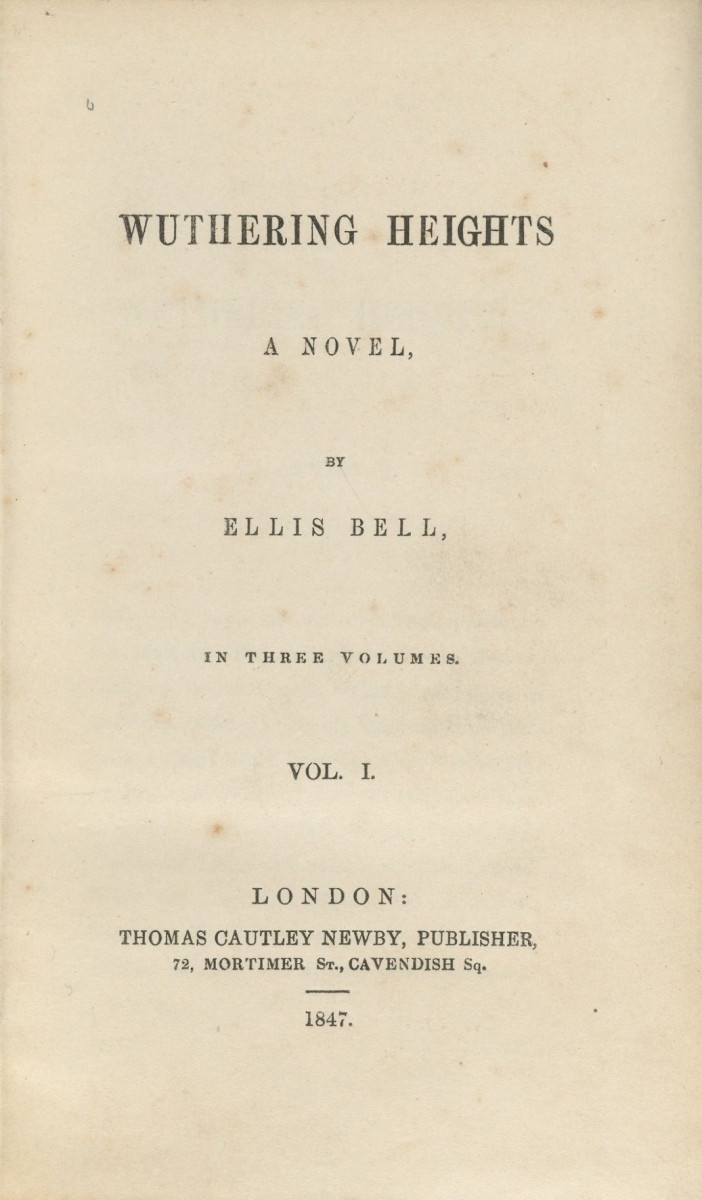
The English author Emily Brontë described almost two centuries ago what we now call psychological patterns: how a wound can become an identity, how love can turn into an obsession, and how to break the destructive cycle a new generation is needed that chooses differently. in 1847 under the male pseudonym Ellis Bell — so did her sister Charlotte (as Currer Bell) due to fear of prejudice against female authors in the Victorian era.
The novel is considered a masterpiece of English and world literature — unique in the intensity of emotions, the psychological complexity of the characters and the dark, almost surreal depiction of the relationship between people and their nature. That's why this novel is not just a school reading or a historical artifact. He is still alive, because he speaks of what has not changed in human nature. In the storms of Hurricane Heights we still recognize our own inner winds – and in their calming the possibility of hope.
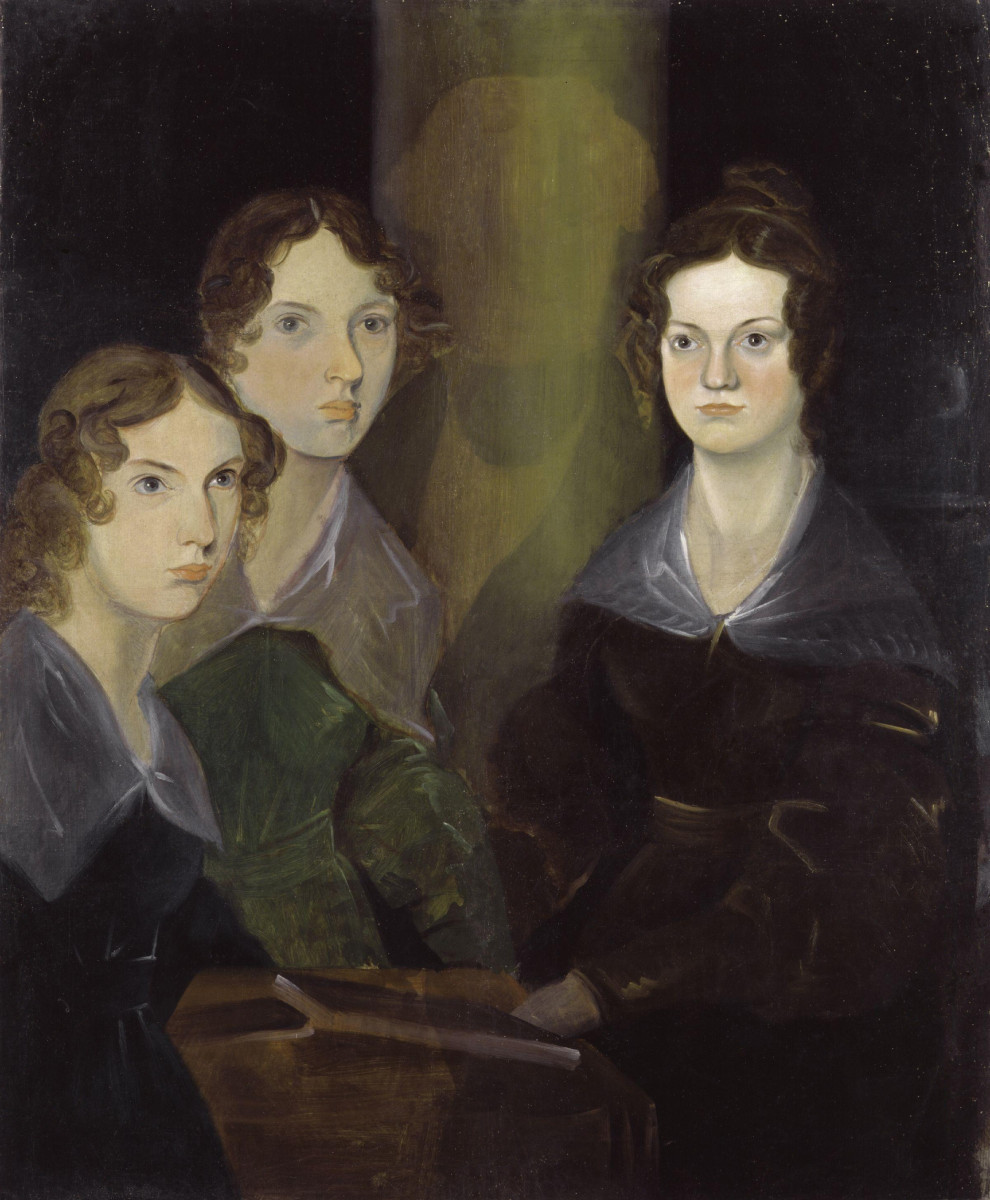
Emily Brontë and her sisters
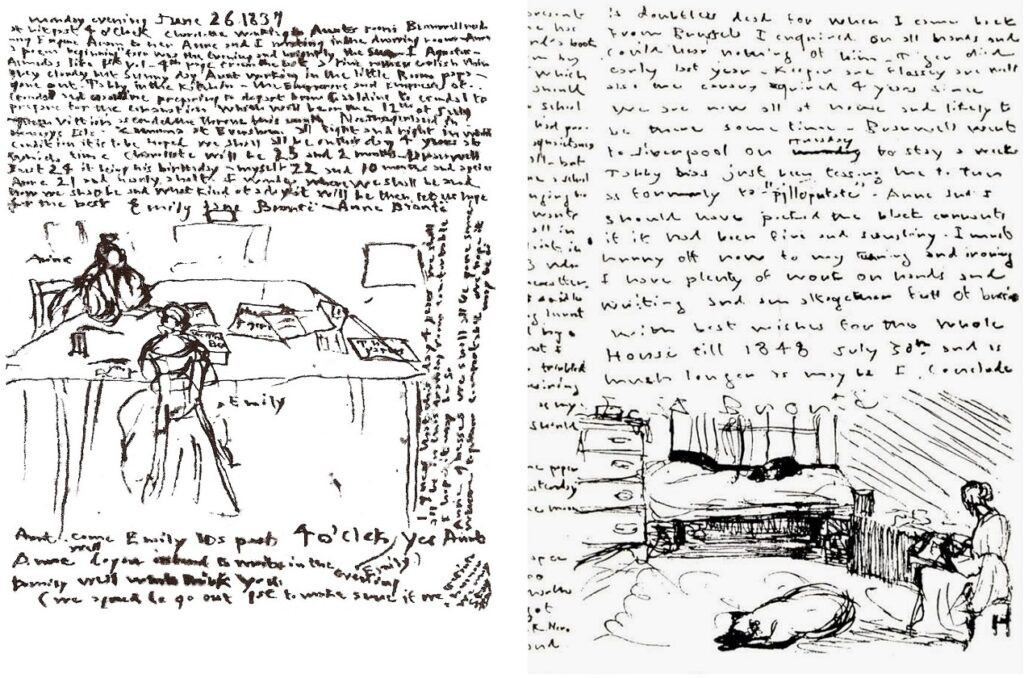
The author of the novel, Emily Brontë, was the middle of three literary gifted sisters. Together with her, Charlotte Brontë and Anne Brontë created. All three grew up in the village of Haworth, a parsonage on the edge of the windswept Yorkshire moors. Their mother died when they were children, and their two older sisters died after a difficult stay at a boarding school. That early encounter with illness and death left a strong impression on the whole family.
Their father, an Anglican priest, encouraged education, but the sisters lived in relative isolation. Their rich imaginary world emerged from this isolation. From childhood, they created fictional kingdoms and wrote stories and poems. Emily was particularly withdrawn and attached to nature. Unlike Charlotte, who sought social contacts and literary affirmation, Emily was introverted and almost ascetically focused on the inner world.
All three sisters published their works under male pseudonyms, because they knew that female authorship could be underestimated. Charlotte achieved great success with the novel Jane Eyre, Anne wrote socially critical novels, while Emily created a unique work that remains her only novel. She died in 1848 of tuberculosis, at the age of only thirty.
About the work and its internal structure
The novel Hurricane Heights was published in 1847 and immediately stood out from the Victorian prose of the time due to its atmosphere, structure and emotional force. It is not a novel that linearly tells the story of love and moral maturation; on the contrary, it is a complex narrative construction in which we learn the story indirectly. The main narrator is Mr. Lockwood, an outsider who comes to the isolated Yorkshire landscape and becomes a witness to an unusual family history. The real core of the story is conveyed to him by housekeeper Nelly Dean, whose memory shapes the reader's perception of the characters. That multi-layered pers pective creates distance and at the same time heightens the sense of secrecy and unreliability.
The action spans two generations and takes place between two estates – the harsh Hurricane Heights and the cultivated Thrushcross Grange. Those two spaces are not just places of events, but symbols of two opposing forces: wild nature and social civilization. In this tense space, a story of passion that crosses the boundaries of social norms and rational behavior develops.
Key characters and their mutual relationships
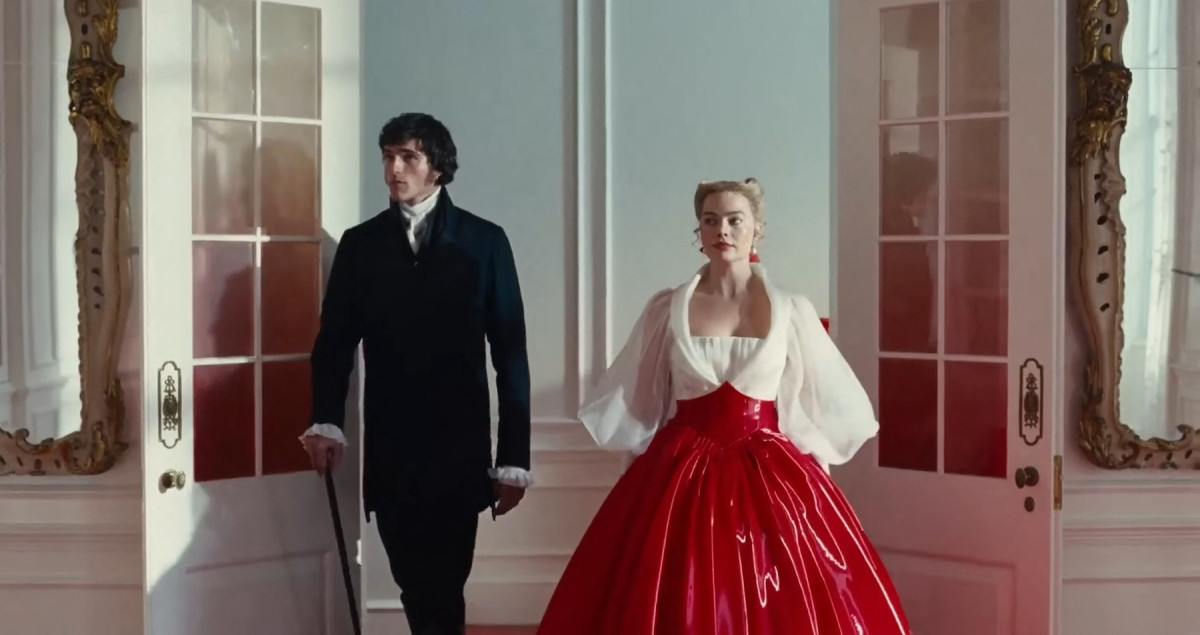
The center of the novel is the relationship between Heathcliff and Catherine Earnshaw. Heathcliff comes to the Earnshaw family as an abandoned child of unknown origin. From the very beginning he is a stranger - in class, appearance and temperament. His position in the house oscillates between privileged favorite of old Mr. Earnshaw and humiliated servant under the rule of Hindley, Catherine's brother. These early experiences leave a deep mark on his character and shape his permanent sensitivity to humiliation and social exclusion.
Catherine grows up with Heathcliff and their connection goes beyond the usual childhood affection. She perceives him as an extension of herself, as part of her own essence. But Catherine is at the same time aware of the social hierarchy and her own desire for prestige and security. When she decides to marry Edgar Linton, she chooses stability and social standing, although she admits that Heathcliff is a deeper part of her identity. That decision sets off a tragic chain of events.
Edgar Linton is the opposite of Heathcliff. He is educated, gentle and belongs to a higher social class. In his character we see the Victorian ideal of a civilized man. However, it is precisely his calmness and conventionality that emphasize the depth of Catherine's inner duality. She never finds complete balance in her marriage to Edgar.
Heathcliff's return after a mysterious absence marks the novel's turning point. He returns rich and determined to take revenge. His revenge is not only directed against individuals, but against the entire system that marginalized him. Through manipulations and marriages, he gradually gains control over both estates, thereby symbolically destroying the social structure that rejected him.
In the second generation, relationships are transformed. Cathy Linton, Catherine's daughter, and Hareton Earnshaw, Hindley's son, despite inherited hatred and manipulation, manage to establish a relationship based on learning and mutual respect. Their connection shows that it is possible to break the cycle of revenge and trauma that characterized their parents' lives.
Symbolism of space: two houses, two worlds
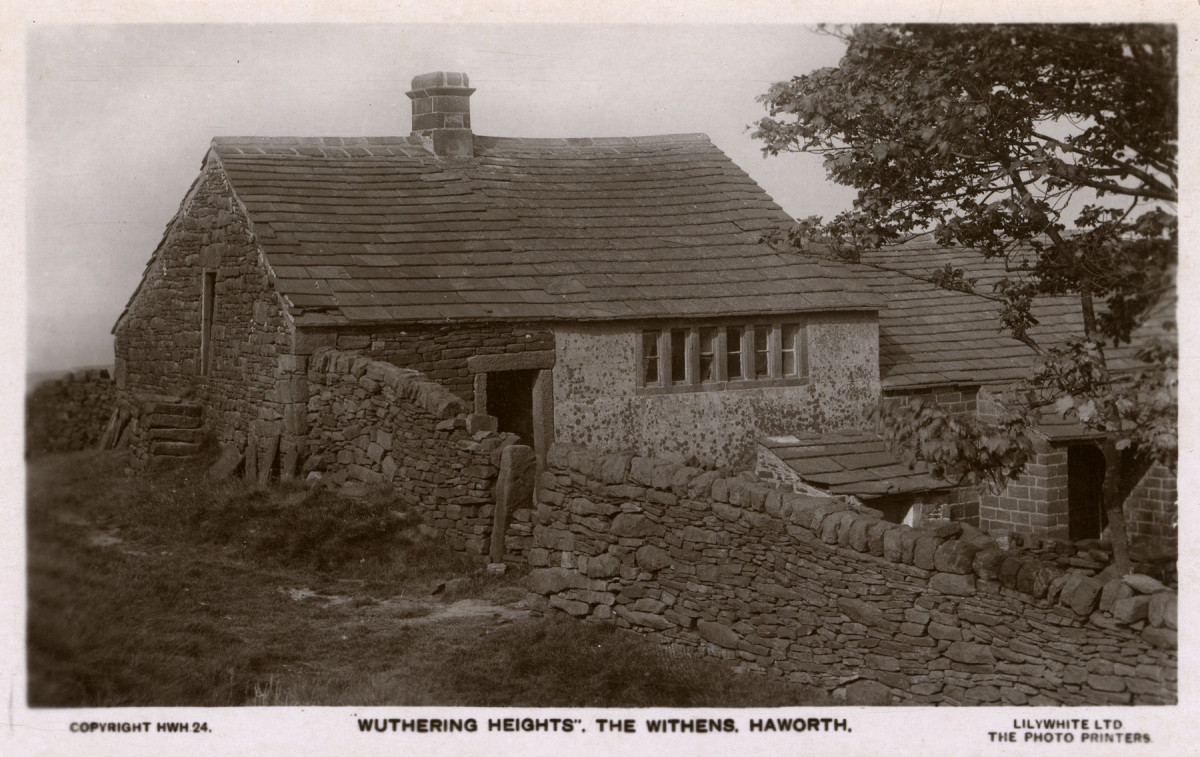
One of the most important elements of the novel is space. It is not only about the place of the action, but about the symbolic stage on which the conflict of characters and values is played out. The very name of the estate – Hurricane Heights – evokes wind, storm and cruelty. The house is exposed to the elements, isolated and dark. The walls are thick, the interior is rough, the atmosphere heavy. It is not a home in the classical sense, but a fortress. Characters who are driven by instinct, pride and untamed emotions live in that space. Hurricane heights symbolize the wild, unfiltered side of human nature. Impulses, revenge, possessiveness and unbridled passion dominate here. Heathcliff is almost organically connected to that space; he pri falls to wind, earth and stone. As if he is part of the landscape, not just its inhabitant. Opposite Hurricane Heights stands Thrushcross Grange. It is a brighter, more decorated, warmer property. It symbolizes social culture, education, manners and security. In this space lives the Linton family, who represent social acceptance and emotional control.
Catherine's transition from Hurricane Heights to Thrushcross Grange is a symbolic transition from natural spontaneity to social convention. But this transition is not without consequences. She never fully fits into any world. In it, there is a constant conflict between wildness and order, between inner identity and external expectations.
Marshes - a symbol of freedom and boundlessness
Between the two houses stretch the Yorkshire marshes. They are perhaps the most poetic symbol of the novel. Open, endless and often dangerous, swamps represent freedom, but also loneliness. This is where Catherine and Heathcliff were closest in childhood – outside social norms, outside the walls of houses.
The swamp is a space without boundaries, just like their love. But this freedom has no structure or protection. She is both sublime and menacing. Nature in the novel is never neutral; it reflects the inner state of the characters. Storms follow emotional climaxes, silence follows death and reconciliation.

Interior spaces as a mirror of the psyche
Closed rooms, locked doors, windows through which the wind comes in - all these are symbols of inner states. characters. Catherine's psychological breakdown occurs within an enclosed space, almost as if the walls are closing in on her. Heathcliff's later wandering around the house and summoning Catherine shows his inability to get out of the past.
Space, then, is an extension of the psyche. Houses are not just buildings; they are emotional landscapes.
Symbolism of cycles and inheritance
Two estates, two generations, two Catherines – the novel is structured like a mirror. What ended in tragedy in the first generation, gets a chance for healing in the second. This gives the space a new dimension. Hurricane Heights, which was a symbol of resentment, eventually becomes a place of possible restoration. The house does not change physically, but the energy that reigns in it changes.
Why is the symbolism still strong today?
Today's readers recognize their own divisions in this symbolism: between the private and public self, between passion and reason, between the desire for freedom and the need for security. The novel shows that the space in which we live - family, society, relationships - shapes our identity as strongly as our personal decisions.
Changing reception of the novel through the 19th, 20th and 21st centuries
When the novel was published in 1847, signed under a pseudonym, the author was Emily Brontë, then almost unknown. Reactions were mixed, but mostly negative. Victorian-era critics found the novel crude, morally problematic, and excessively dark. Audiences were used to novels with clear moral lessons and social order, while Hurricane Heights featured violence, emotional obsession, and characters who did not show classic remorse. Heathcliff was perceived as an almost monstrous figure, and Catherine as a hysterical and inappropriate heroine.
After the untimely death of Emily Brontë in 1848, her sister Charlotte Brontë wrote a preface to the second edition of the novel, trying to explain her sister's personality and literary genius. This started the process of rehabilitating the work.
During the late 19th century, the novel was gradually recognized as an exceptional, albeit unusual, work. In the 20th century, a real reinterpretation took place. Modernist and psychoanalytic critics began to see Heathcliff and Catherine as complex psychological figures, not just morally problematic. characters. Freudian and Jungian readings emphasized repressed drives, trauma, and archetypal patterns. The novel began to be understood as a study of destructive passion and identity fragmentation.
In the middle and late 20th century, feminist criticism highlighted Catherine as a torn character between social restrictions and inner freedom. In this context, the novel became a text about the position of women in Victorian society, where marriage often means a compromise of identity.
In the 21st century, the reception is even more complex. Heathcliff is viewed through the lens of trauma, class exclusion, and even postcolonial theories that emphasize his "otherness" and uncertain origins. Readers today recognize in the novel themes that are extremely contemporary: toxic relationships, emotional dependence, generational traumas and the question of whether the destructive pattern can be broken. translations. Each generation finds in it its own theme: the Victorians saw in it a threat to the moral order, the modernists saw psychological depth in it, and today's readers recognize the story of emotional wounds that are transmitted - or finally healed.
***
Hurricane Heights is not just a love story — it is a history of obsession, revenge and questions of identity and belonging. at the time it caused negative reception, but over time it established itself as a classic work. It is valuable today for its complex human emotions, social insights and literary influence.
Read this iconic work by Emily Brontë - you will find it easily in Biblos Antiquarian at a good price and with fast delivery: