

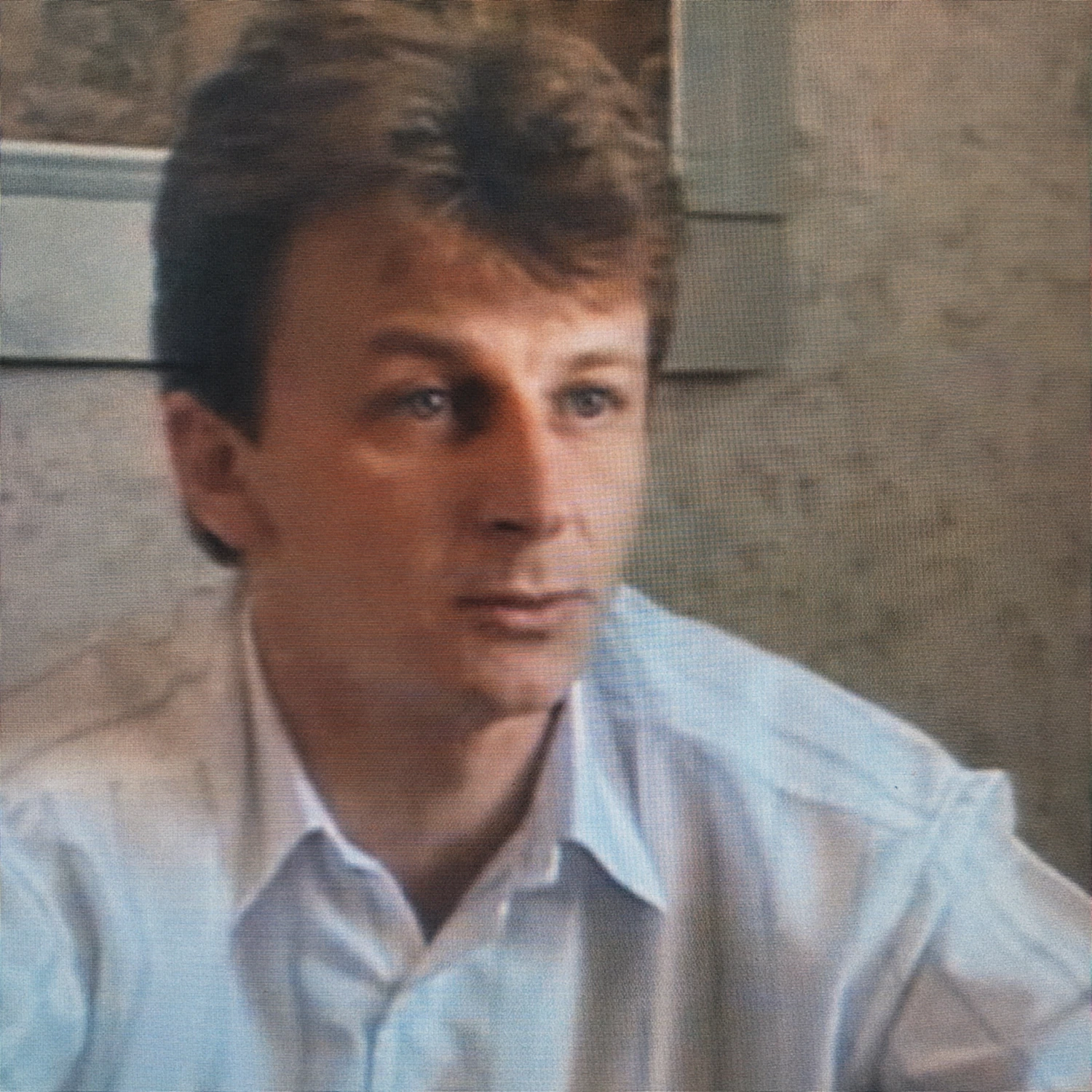
Siniša Glavašević (1960–1991) was a Croatian journalist and war reporter from Vukovar, known for his quiet but extremely powerful radio broadcasts during the siege of the city in 1991. His voice became a symbol of resistance that remained humane and defiant in the midst of destruction. poetic, humane meditations on the city, togetherness, fear and love, told in the quiet voice of a man trying to preserve dignity in the midst of destruction. This is precisely why the book has a strong effect on new generations: it does not impose politics, but universal values - empathy, responsibility, connection with home and people. For all generations Stories from Vukovar remain precious because they do not only talk about war but about how to remain human. They encourage understanding of the past, but also reflection on one's own role in the world - how to love one's city, one's people, one's community, regardless of the time in which we live. In a city that was sinking into darkness, he shone with words. His radio broadcasts were not just news; they were a support, they were a sign that dignity can survive even where almost everything else has been destroyed. While Vukovar was disappearing under the ruins, Siniša guarded his soul.
"The most difficult thing is to guard a man within himself."
That thought of his became the meaning of the entire defense of Vukovar. He did not speak of hatred, nor did he ever call for revenge. He talked about schoolyards, about mothers quietly waiting, about children's dreams, about the streets where he grew up. He spoke of the city as a living being, of a home that is loved even when it is hardly recognized.
Siniša stayed in Vukovar until the end. He didn't hide, he didn't give up. He stayed with the people, with his city, with the microphone that became his only way of fighting that summer and fall of 1991. And when Vukovar fell, he was taken from the hospital together with the wounded and civilians. He was killed at Ovčara.
But his voice - that calm, human voice - could no longer be silenced.

His Stories from Vukovar are still read today as a testimony not only of suffering. generations, but about unshakable faith in man. They are a lesson about love for home, about courage without weapons, about pride that does not threaten anyone, about resilience that is not based on hatred but on dignity.
Getting to know Siniša Glavašević means getting closer to Vukovar not through historical data, but through emotion, through life, through the eyes of a man who remained faithful to his city and his ideals until the last moment.
And that is why, when we read his stories today, perhaps the most important question he leaves behind is reads:
How can I be a person who carries light, even when there is darkness around me?
Glavašević tells us: "The city is in me, and when I don't see it, I carry it like the smell of childhood." It conveys to us tenderness towards the space from which it originates, the awareness that home is not just a place but an emotional memory, and the need to preserve humanity even when everything around us is collapsing. When he says: "A man is worth as much as his word", he tells us about his sense of responsibility. "The hardest thing is to keep the man inside" - the message is that war first attacks humanity, and the greatest resistance is to remain moral. We find the idea that home exists through people, relationships and memories in his sentence "The city was more than walls - it was our common story.". Glavašević hopes and believes in the return of humanity when he says : "Hope is silent, but it carries the loudest." and "By morning we will be people again."
Glavašević
he did not write about ideologies but about values: humanity, community, memory, responsibility, courage that does not shout but remains. His style is calm and full of empathy. That is why his words can still provide inspiration today - they remind us that dignity is not measured by circumstances, but by inner choice. His work has a special power precisely because his story transcends the historical moment and becomes a moral compass for understanding both past and present times. His voice speaks not only about Vukovar in 1991, but also about fundamental human values that remain important in every crisis and every generation.

The story of Vukovar from the perspective of an ordinary man and the preservation of humanity in the most difficult times circumstances
Glavašević tells us about the war from the perspective of an ordinary person, without using harsh words.
His stories describe everyday life under siege - fear, silence, togetherness, caring for each other. This helps us to understand that Vukovar was first and foremost a city of people. His way of speaking - calm, dignified and unobtrusive - shows what the spirit of the defense of Vukovar was like: resistance that does not offend, but protects; courage that does not shout, but stays. A sentence like: "The city was more than walls - it was our common story" allows us to feel what Vukovar meant to the people who defended it and who lived in it. Thus, the experience of the siege becomes comprehensible even to today's generations. One of his key messages:"The most difficult thing is to keep the man inside" - is also valid outside the context of war. Glavaševićmakes you aware of the importance of togetherness,becausehis stories often talk about ordinary people who carry each other water, share the last piece of bread, support each other in uncertainty. In the age of individualism, it reminds us that the hardest moments are overcome together. Hegives us a moral framework for understanding conflicts:whether it is about social disagreements, political tensions or personal relationships, Glavašević's voice brings us back to the fundamental questions:
- What is right?
- What is fair?
The answer may not come immediately. But his words show the way.
Readers of all generations find in Sinisa's texts not only history, but beliefs that are still needed today: courage, empathy, responsibility towards the community, sensitivity to the people around them. Glavašević's Vukovar is not only a place of suffering, but also a symbol of how to love one's home, one's city and one's people in a way that does not exclude anyone. His short stories, written in the darkest moment, remain an incentive to stop, listen, and ask ourselves in our own crises: How can I be a better person? How can I contribute to my city and the people around me?
