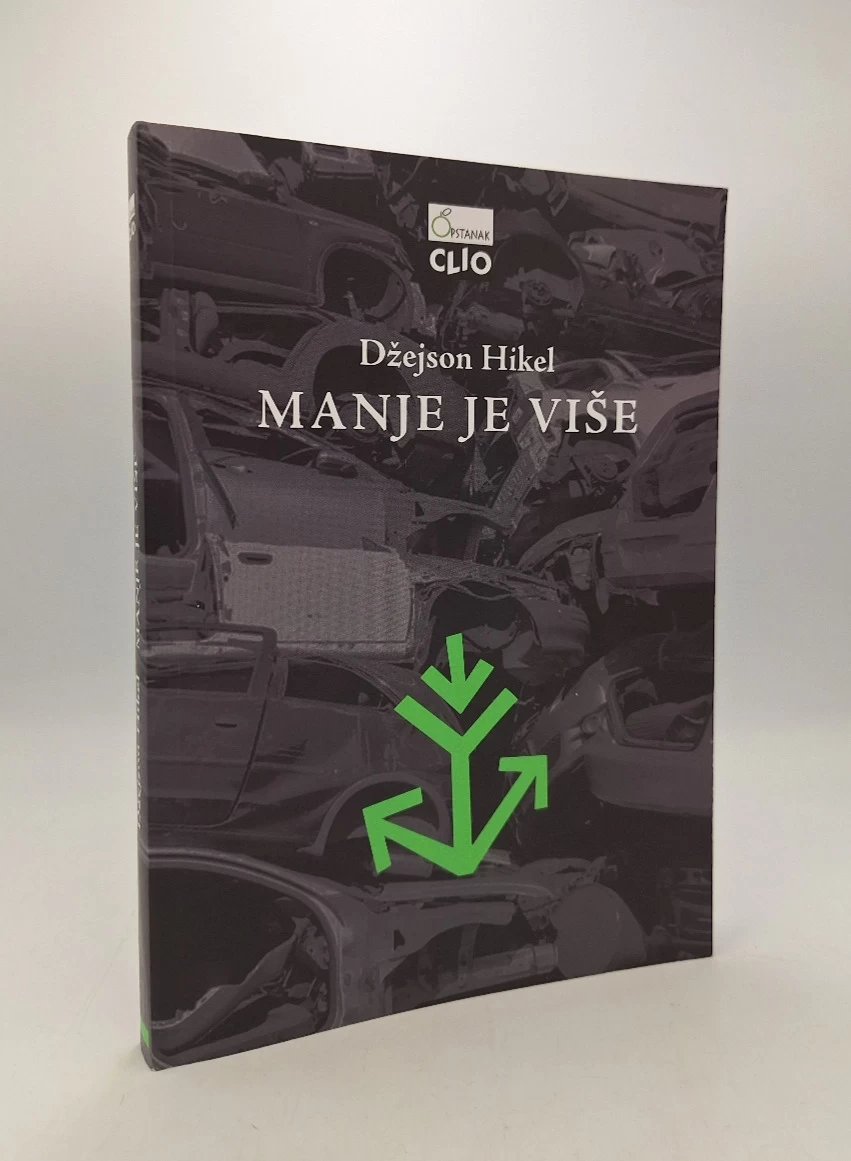
Manje je više
Basic information
- Author: Hickel Jason
- Publisher: Clio
- Availability: Available
- Condition: New book
- Code: 79004
Shipping options
Payment methods
Explore more
Manje je više
Hickel Jason
Summary
Jason Hickel: Less is more
Unlimited economic growth is not possible on a planet with limited resources. Capitalism requires constant expansion that destroys the living world. Less presented the theory of degrowth in a more systematic and well-argued manner, according to which, if we want to avoid ecological collapse and reduce inequalities in society, we must abandon the capitalist obsession with economic growth. Encompassing knowledge from economics, ecology, sociology, anthropology, philosophy and other disciplines, this book establishes a connection between different social movements, institutions and all individuals who want life at the center of the economy, and not the economy at the center of life.
In an era from which utopias have been banished, it is easier to imagine the collapse of the world than capitalism, even though there is nothing natural in that system, much less inevitable. Less is more, the world's most widely read book about growing up, offers a receptive and convincing idea of an economy that can restore people's sense of connection with the world. By taking less, we can become something more.
Growing up raises the question of the ultimate goal: it is not and cannot be in the preservation of production, if it becomes harmful to people and nature. It is not and cannot be in income, if we pay more and more by depleting it. He is not and cannot be at work, if he becomes redundant. The topic of change must be expanded because the stakes are also higher. That's why growth addresses everyone who is exhausted and threatened, not just workers. There is no work on a dead planet.
Additional information
- Author: Hickel Jason
- Publisher: Clio
- Year of publication:2024
- Place of publication:Beograd
- Pages:274
- Dimensions:16x22 cm
- Script:Latin script
- Condition:New book
- Binding:Softcover
Reviews
0 reviewsWrite a review
Share your experience and help other readers choose.
This item has no reviews yet. Be the first to share your experience.
More books from Clio








You may also like