
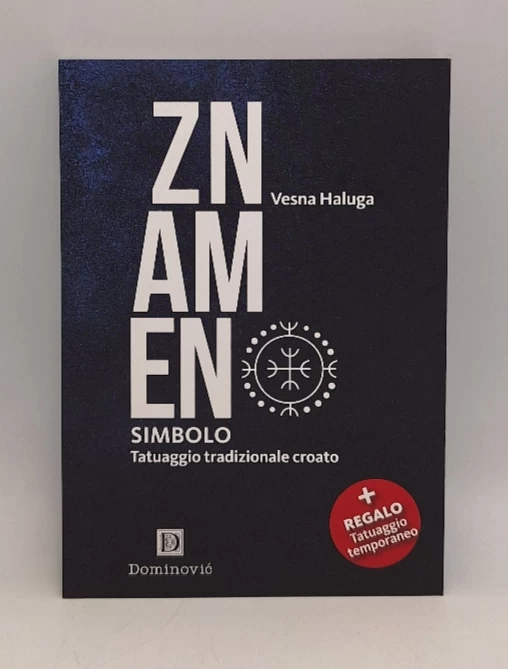
Znamen
Basic information
- Author: Haluga Vesna
- Publisher: Dominović
- Availability: Available
- Condition: Excellent
- Code: 73533
Shipping options
Payment methods
Explore more
Znamen
Haluga Vesna
Summary
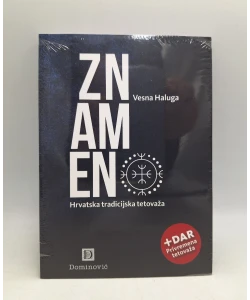
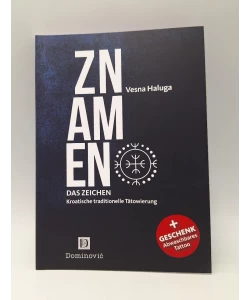
Vesna Haluga: Znamen
The book is written in Italian.
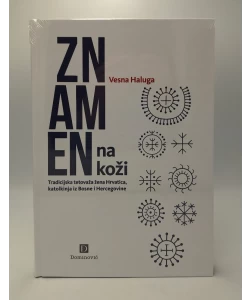
The tattooing of Catholic women is very important in the cultural and historical understanding of the whole of Bosnia and Herzegovina, especially central Bosnia, where it is an ethnological rarity unique in the whole world. Traditional tattooing of women had the greatest significance during the Ottoman period, between 1463 and 1878, when the tattooing of the cross on women's arms as a symbol of Christianity had primarily a protective function (preventing abduction and rape). The custom of tattooing women was most widespread among Croats in Bosnia and Herzegovina, in the area of central Bosnia and western Herzegovina, and to a lesser extent in the Dalmatian hinterland of the Republic of Croatia. Researchers recorded as many as 317 different tattoo motifs, the basis of which is the sign of the cross. The book "Znamen na koži" thematizes the semiotic aspects of tattoos of Catholic women in Bosnia and Herzegovina, the function of traditional tattoos primarily as a means of visual communication, and sheds light on its contemporary communicative meaning. The goal of the author's research is to contribute to the preservation and popularization of Croatian traditional cultural heritage and, in a scientific sense, to advance existing and generate new knowledge about this unique phenomenon. The author of the book is strongly advocating for the inclusion of the Croatian traditional tattoo on the UNESCO list of the Intangible Cultural Heritage of Humanity, which would be a great contribution to its preservation, popularization and recognition as a rare ethnological specific.
Additional information
- Author: Haluga Vesna
- Publisher: Dominović
- Year of publication:2023
- Place of publication:Zagreb
- Pages:85
- Dimensions:12x17 cm
- Script:Latin script
- Condition:Excellent
- Binding:Softcover
Reviews
0 reviewsWrite a review
Share your experience and help other readers choose.
This item has no reviews yet. Be the first to share your experience.
More books by Haluga Vesna
More books from Dominović


You may also like