
Summary
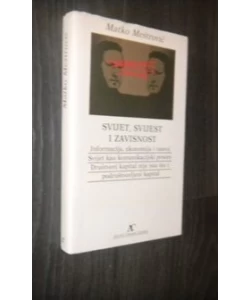
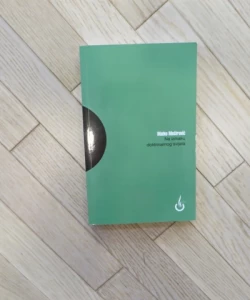
Matko Meštrović: At the end of the doctrinal world
If we could get to the metaphysical foundation on which science as a modern phenomenon rests, we would also get to the essence of the modern age, it would be revealed to us from that very foundation. Heidegger's attempt to develop this position is immediately distanced from valid scientific practice with a warning: If we engage in such reflection, we must find the strength to question the truth of our own assumptions and the scope of our goals. Who is the man? Science cannot even ask that question. As a theory of the real, it assumed to deal only with the area bounded by objectivity. In recent atomic physics, the subject has completely disappeared, and the subject-object relationship itself, as a pure relation, has gained priority over both the subject and the object. In evolutionary viewing, on the other hand, the observer becomes one with the observed. Evolution is a whole unfolding, it is realized through the morphogenetic chain, using energy in numerous ways through positive feedback, and the action of its internal, coordinating factors. This view assigns humanity a significant role in the context of cosmic evolution, especially the manifestation of human abilities of apperception and conscious foundation (Erich Jantsch). In his approach to the antinomies of contemporary thought and ideology, Fredric Jameson tends to suggest an unrepresentable externality to many of the crucial issues. The future rests entangled in that external like linked genetic messages. Today, he says, it is easier for us to imagine the complete ruin of the country and nature than the collapse of late capitalism. Capitalism cannot be reconciled with the historical and anthropological meaning of techno-scientific transformation. Man-as-the-most-valuable-capital is valued as a man only if he can function as capital. The global political transformation advocated by Gorz implies that society, politics and the economy cannot develop without a profound change in mentality. The main goal of human activities becomes a new subjectivity, which will create a new sociality beyond the power of the state and money.
Matko Meštrović is a scientific advisor at the Institute of Economics, Zagreb, now in the status of meritorious scientist (Emeritus). He was a professor of design theory at the inter-faculty study at the Faculty of Architecture of the University of Zagreb, director of the Croatian Institute of Culture (1987-1992), and before that, advisor to the general director of Radio-television Zagreb. As an art critic and theoretician, he gained a significant reputation in the early 60s, participating in the organization of the international New Tendencies movement. He was a member of the Gorgona group, editor-in-chief of Dizajn magazine, Bit-International magazine and a member of the advisory board of the international journal Journal of Communication. In addition to his first book From the individual to the general (1967), he also published the following: Outlines without Pattern (1978), Design Theory and Environmental Problems (1980), World, Consciousness and Dependence (1983), Goods and Freedom (1995), Real Time (2002), Dispersion of Meaning (2007), Towards a New Direction (2011). The research projects he led at the Institute of Economics resulted in the collections Socio-cultural capital and transition in Croatia (1998) and Globalization and its reflections in Croatia (2001) and the poetry book Razaznanja (2011).
Biblos Newsletter
New titles, special copies and quiet recommendations from the antiquarian bookshop.