
Summary
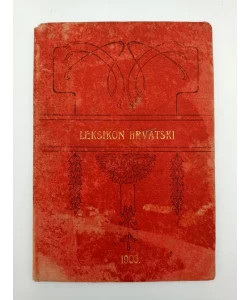
Mažuranić Ivan: German - Ilirski Slovar
Mažuranić, Ivan, Croatian writer, politician and lawyer (Novi Vinodolski, August 11, 1814 – Zagreb, August 4, 1890). He studied philosophy, started in Zagreb, finished in Szombathely, Hungary in 1835, and graduated in law at the Royal Academy of Sciences in Zagreb in 1837. He worked as a high school teacher in Zagreb, and then as a lawyer in Karlovac, where he wrote the most important literary and journalistic works. From 1850, he held the highest political positions related to Croatia in Vienna: deputy procurator general and state attorney general, president of the Temporary Court Dicastery for Croatia and Slavonia, president of the Croatian Court Chancellery. He is responsible for founding the Table of Seven in 1862. He was active in the work of the Croatian Parliament in 1861. As a ban in 1873–80. he encouraged lively reform activity, which introduced numerous modern institutes to Croatia, mostly adopted from the Austrian legislation. Then the responsibility of the ban (government) to the Parliament, the division of the judiciary and the administration and the independence of judges, a modern administrative organization, a more rational judicial organization and a more rational criminal procedure, a more modern penological system, freedom of the press and jury trials were introduced, the right to public assembly was regulated, a law on native affiliation was passed, the electoral procedure was liberalized, some public services were introduced (statistical service, public health, improvement of agriculture), the people's was laicized and improved. education and the established University of Zagreb. Mažuranić's reforms have no equal in terms of intensity and significance in the period up to 1918, but they were disabled or deadened during the reign of Ban K. Khuen-Héderváry (1883).
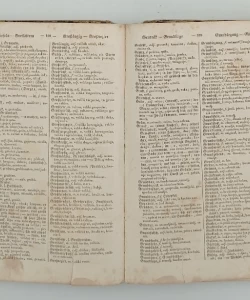
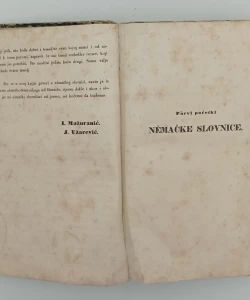
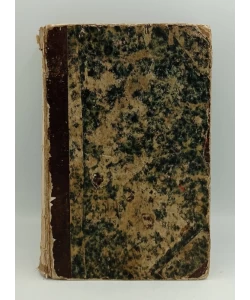
Mažuranić was a very educated man, conversant in classical and modern European languages. He wrote the first verses, in the spirit of Kačić, as a high school student (Vinodolski dolce, da si zdrovo!). Year In 1835, Mažuranić from Čakava welcomed the release of Danica in Shtokava with the song Primorac Danici, in an ecstatic tone and in a classicist manner, and at the beginning of 1837 he published the poem Danica Iliro, written in Gundulić's verse Osmana. As a respected poet, Matica Illyria entrusted him with writing a supplement to Osman (cantos XIV and XV), which he did, and critics declared his composition "congenial". Classical education and excellent knowledge of contemporary literature influenced Mažuranić's poetry. He was close to A. de Lamartine, G. G. Byron, A. S. Pushkin, A. Mickiewicz and other poets, especially Italian and German, some of whom he translated, and he also started translating Tasso's Liberated Jerusalem. Together with Jakov Užarević, he compiled Deutsch-ilirisches Wörterbuch/German-Illyrian dictionary (1842). He was also the president of Matica Ilirska (1858–72). He manifested an advanced civic enlightenment view by advocating "equality, freedom and fraternity", and these ideas were particularly expressed in the political writing Hrvati Mađarom (1848) as a concluding renaissance programmatic text and at the same time one of our more successful prose texts of the time.
Mažuranić's main literary work The Death of Smile-age Čengić, which he published 1846 in the almanac Iskra under the title Death of Čengić-age. It is made up of 1134 ten-eight verses divided into five unequal cantos, in which the crimes of the Turkish soldier Smail-age Čengić against the captured Montenegrins are shown (Agovanje), their preparation for revenge (Noćnik), the gathering of a revenge squad (Companion), the attack on the criminal and his death (Harač), the accident after the death of the soldier. (Kob). The violence of Smail-age is the basis of the modest plot of the whole song, and the central place in the speech is held by the old priest in Četa for heroes with the key motif of the homeland as the place where the ancestors lived and freedom as the only form of a happy life. The battle of the famous Herzegovinian hero Smailage Čengić and the Montenegrins on Grahovo 18 36. Mažuranić only took it as an occasion to describe the suffering of his own people. Departing from the truth and real events and turning historical figures into prototypes for his literary characters, the event served as an illustration of his own romantic ideas about the national struggle "for the honorable cross and golden freedom" and hatred for all force and oppression, but also as a warning to Europe at the time about the negligence of the events in its Slavic south. The epic significance of the story in Smail-aga Čengić is undermined not only by the choice of a contemporary event as a theme, its insufficient length and elaboration, but also by the emphasized lyricism, lapidaryness and choice of characters and situations that are non-epic, i.e. unheroic. The modest plot is punctuated by descriptions, reflections and associations, exclamations, aphorisms and rhetorical questions, the characters are without distinct individual features, there is no main character, the collective, its mood and aspirations are described, and some scenes outline only the most important aspects of the event. On the other hand, Smail-aga is not even a poem because it lacks its essential features, such as seeing the action from the perspective of one of the characters and the sameness of the time of narration and the time of the action, and both possible genre affiliations are most clearly refuted by the emphasized perspective of the author himself, i.e. the writer's attitude towards the action and the theme. Achieving continuity at the same time with the national literary tradition and with European modernity, Smrt Smail-age Čengić is the most mature work of Croatian romanticism, the first classic work of renewed and since then unique Croatian literature, and still one of the most translated.
Biblos Newsletter
New titles, special copies and quiet recommendations from the antiquarian bookshop.