
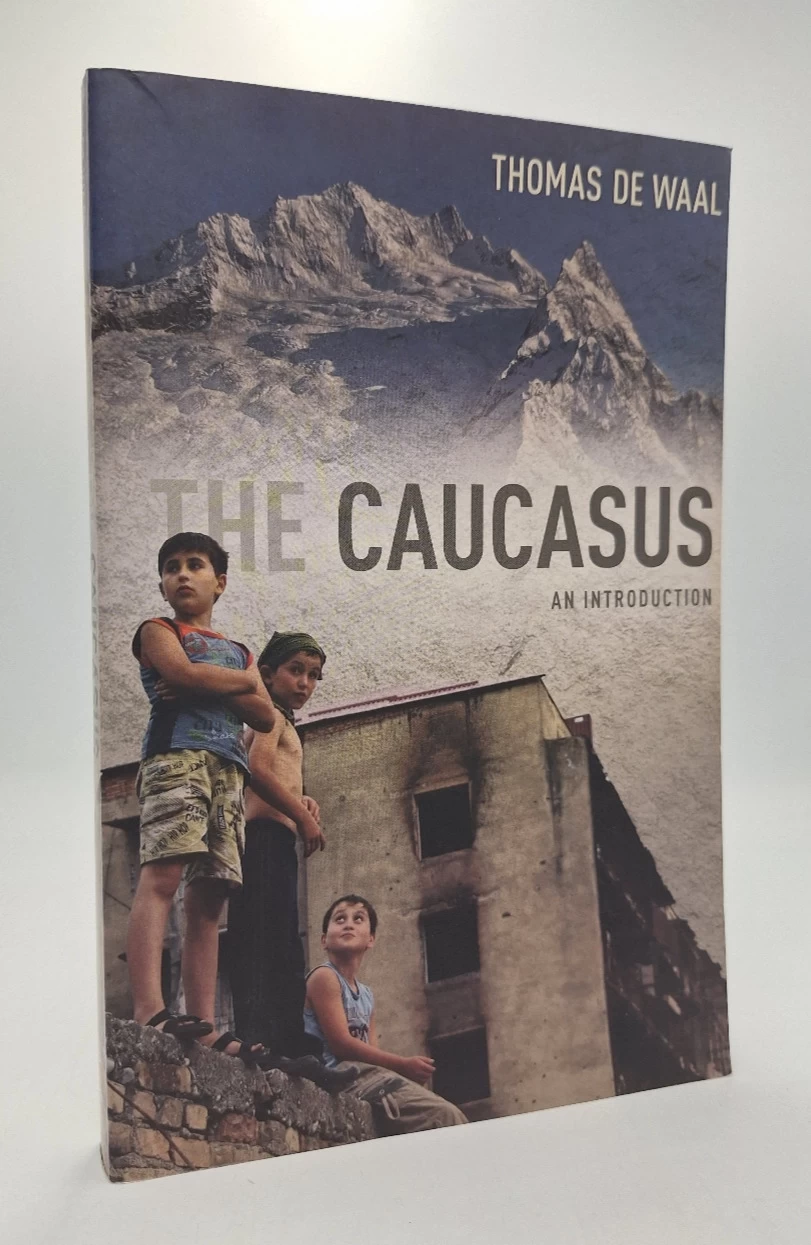
The caucasus: An introduction
Basic information
- Author: de Waal Thomas
- Publisher: Oxford University Press
- Availability: Available
- Condition: Excellent
- Code: 73952
Shipping options
Payment methods
Explore more
The caucasus: An introduction
de Waal Thomas
Summary
Thomas de Waal: The caucasus: An introduction
In this fascinating book, prominent journalist Thomas de Waal - author of the highly acclaimed Black Garden - argues that, although the Caucasus is often treated as a subplot in Russian history, or as a mere gateway to Asia, the five-day war in Georgia, which erupted into a major international crisis in 2008, proves that it is still a combustible region, whose internal dynamics and history deserve a much more complex assessment wider world. In The Caucasus, de Waal provides this richer, deeper, and much-needed appreciation, one that reveals that the South Caucasus—Armenia, Azerbaijan, and Georgia, and their many smaller regions, enclaves, and breakaway entities—is a fascinating and distinct world unto itself. Providing both historical background and insightful analysis of the post-1991 period, de Waal sheds light on how the region was scarred by the tumultuous struggles for independence and the three major conflicts that erupted with the end of the Soviet Union - Nagorno-Karabakh, Abkhazia and South Ossetia. The book examines the region as a major producer and exporter of energy; offers a compelling account of Georgia's Rose Revolution, the rise of Mikheil Saakashvili, and the August 2008 war; and considers the failure of the South Caucasus, so far, to become a single viable region. In addition, the book contains a dozen "boxes" that give snapshots of such fascinating secondary topics as the Kurds, Turkish-Armenian rapprochement, the promotion of the region as "Soviet Florida" and, most famous of all Georgians, Stalin. The Caucasus provides a vivid and timely account of this turbulent region, which will prove indispensable to anyone involved in world politics. It is also a stimulating read for armchair travelers and for anyone who is curious about the far corners of the world.
Additional information
- Author: de Waal Thomas
- Publisher: Oxford University Press
- Year of publication:2010
- Place of publication:New York
- Pages:259
- Dimensions:15.5x23.5 cm
- Script:Latin script
- Condition:Excellent
- Binding:Softcover
Reviews
0 reviewsWrite a review
Share your experience and help other readers choose.
This item has no reviews yet. Be the first to share your experience.
More books from Oxford University Press


You may also like