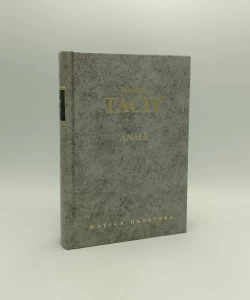


Republika na samrti
Basic information
- Author: Watts Edward
- Publisher: Sandorf
- Availability: Available
- Condition: New book
- Code: 58109
Shipping options
Payment methods
Explore more
Republika na samrti
Watts Edward
Summary
Edward Watts: The dying Republic
Ever since Plutarch, historians have tried to point out the similarities of individual world events in different historical periods, but also the necessity of looking at the overall picture of human history, as the only way to realize the Hegelian ideal of freedom. The author of this sharp insight into the social and economic structure of the Roman Republic, Edward J. Watts, deftly points out the weaknesses of the republican system as well as the causes of its final collapse, after which dictatorship (Caesar) and, finally, divinizing despotism (Augustus) entered the world scene. This interesting work of contemporary historiography presents and explains the causes and consequences of the Punic Wars, Roman military campaigns from the third to the first century BC in an unusually clear and logical way. n. e., Allied war, agrarian reforms and other important moments for the Republic. Watts ultimately asks what republican values are the basis of most of today's western democracies and why they served as a model for reforming and democratizing societies from the eighteenth to the twentieth century, and whether they carry within themselves the germ of ruin and the transition to the tyranny of a few or just one man?
Edward J. Watts, professor of history at the Department of Byzantology at the University of California in San Diego. He is the author and editor of several award-winning books, such as City and School in Late Antique Athens and Alexandria, The Final Pagan Generation or Hypatia: The Life and Legend of an Ancient Philosopher. He lives in Carlsbad, California.
Additional information
- Author: Watts Edward
- Publisher: Sandorf
- Year of publication:2020
- Place of publication:Zagreb
- Pages:314
- Dimensions:16x24 cm
- Script:Latin script
- Condition:New book
- Binding:Hardcover
Reviews
0 reviewsWrite a review
Share your experience and help other readers choose.
This item has no reviews yet. Be the first to share your experience.
More books from Sandorf