
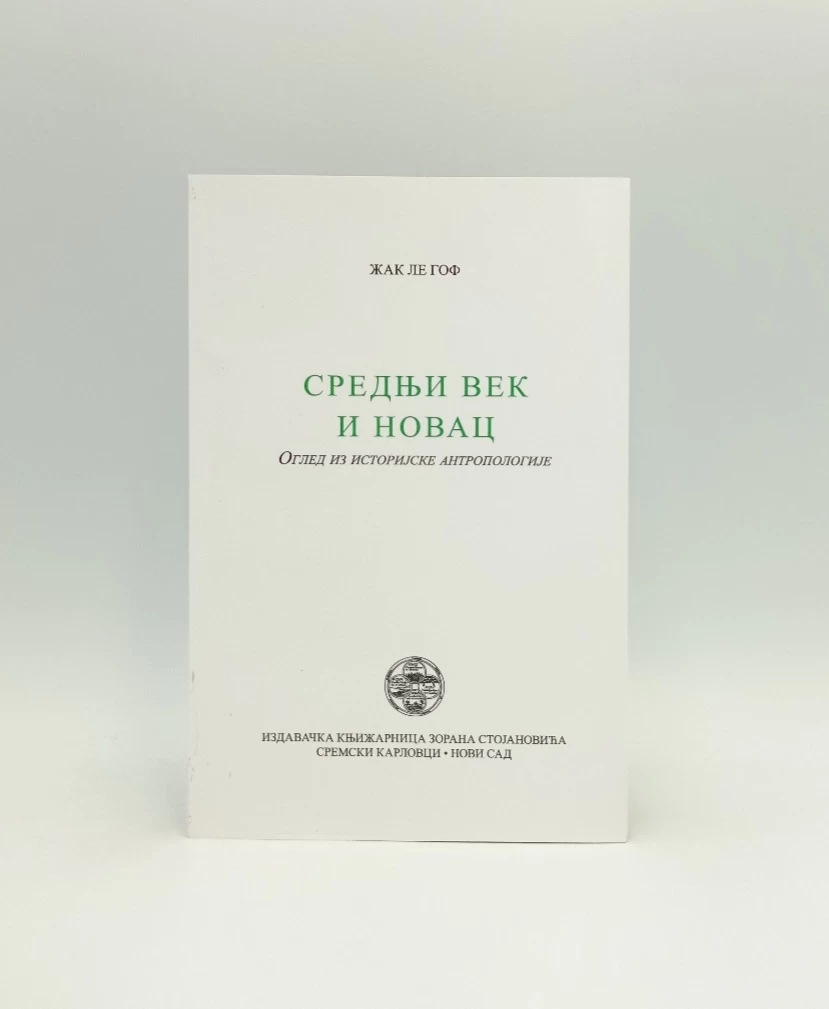
Srednji vek i novac: ogled iz istorijske antropologije
Basic information
- Author: Le Goff Jacques
- Publisher: Izdavačka knjižarnica Zorana Stojanovića
- Availability: Available
- Condition: New book
- Code: 50400
Shipping options
Payment methods
Explore more
Srednji vek i novac: ogled iz istorijske antropologije
Le Goff Jacques
Summary
Jacques Le Goff: The Middle Ages and money: an essay in historical anthropology
Money, which will be discussed here, in the Middle Ages was not denoted by a single word, neither in Latin nor in vernacular languages. As we understand it today, and as stated in the title of this essay, money is a product of the modern age. This already announces that money does not play a significant role in the Middle Ages, neither economically, nor politically, nor psychologically, nor ethically. What we would call "money" today did not mean substantial wealth back then. If a Japanese medievalist could claim that a rich man was born in the Middle Ages, which is not certain, that rich man was, in any case, richer in land, people and power than in minted money. As far as money is concerned, the Middle Ages represent a long historical period of regression. Money was then less important, less present than in the Roman Empire, and especially less important than it will be in the 16th, and especially in the 18th century. If money is indeed a reality that medieval society will increasingly have to pay attention to and which is beginning to take on the appearance it will have in the modern age, medieval people, including merchants, clerics and theologians, never had a clear and unique conception of what we mean by this term today.
Additional information
- Author: Le Goff Jacques
- Publisher: Izdavačka knjižarnica Zorana S...
- Year of publication:2019
- Place of publication:Novi Sad
- Pages:252
- Dimensions:12x18 cm
- Script:Cyrillic script
- Condition:New book
- Binding:Softcover with dust jacket
Reviews
0 reviewsWrite a review
Share your experience and help other readers choose.
This item has no reviews yet. Be the first to share your experience.
More books by Le Goff Jacques


More books from Izdavačka knjižarnica Zorana Stojanovića
You may also like


Recently viewed