

Summary
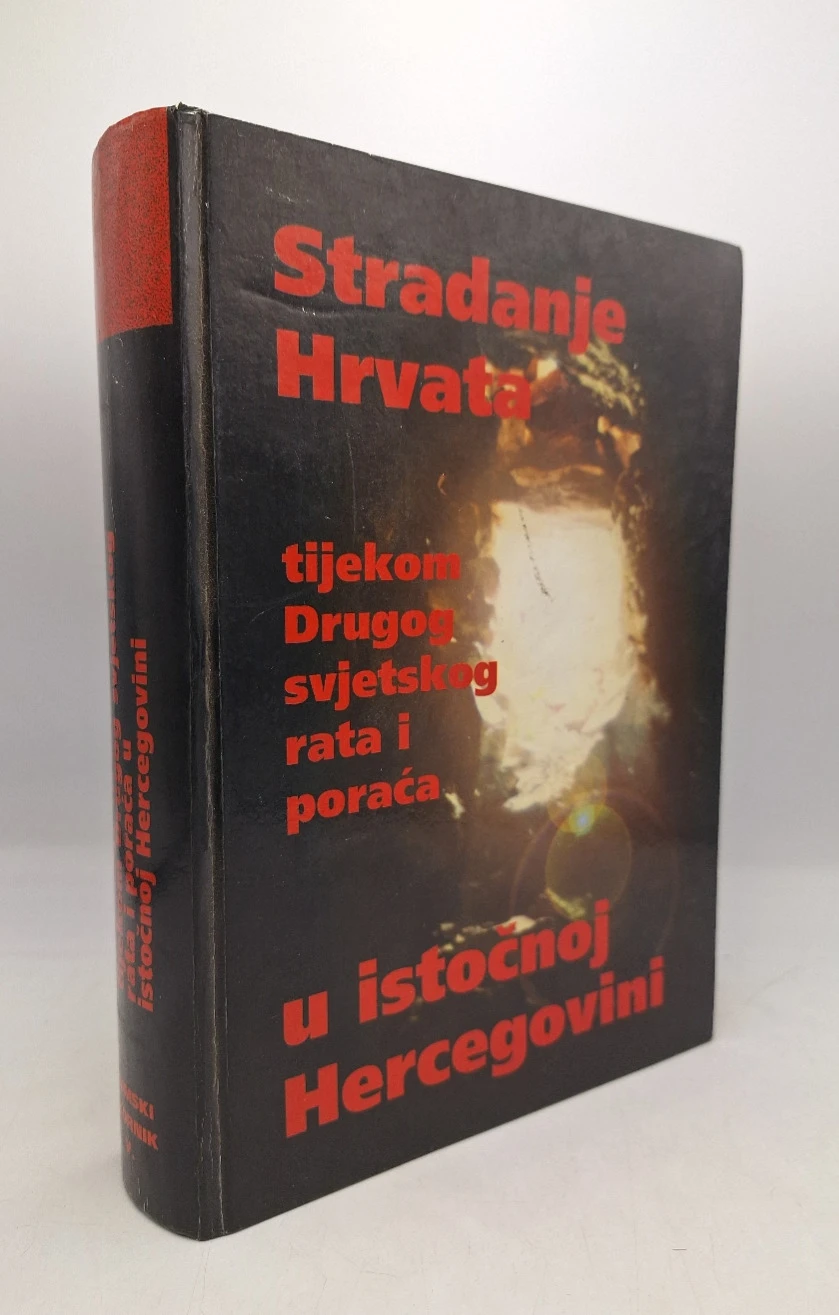
Ivica Puljić, Stanislav Vukorep, Đuro Bender: Suffering of Croats during the Second World War and the aftermath in Eastern Herzegovina
Book Sufferers of Eastern Herzegovina during II. World War II and in Porać, it comes to light in the Humski zbornik series as volume number 5. It deals with one of the most difficult periods of Croatian existence in this area, so it is no wonder that the most effort was invested in it, that it was created by the largest number of people of the widest range of professions based on the most diverse historical material and that it was created for more than a whole decade! This says enough that it is a book of great importance for this region and people, as well as for all those who have the desire to delve into the depth of war events during World War II. world war and finally get to know the real historical truth, which for so long has been persistently suppressed by all means, including at the cost of many lives! The then bishop mons. Pavao Žanić asked the pastors to very carefully collect information about the Croats who died during World War II. of the World War and in Porac: to leaf through the parish registers, discreetly ask the closest and most confidential relatives of the victims, and submit the collected information to the diocesan archives in Mostar.1 The parish priests approached the task with the utmost care. They started from the parish books and created the first list of victims with the information they found there, and discreetly checked and filled out that list for months. These lists were carefully stored in the diocesan archives. A lot has been done in this first pioneering work, knowing the conditions under which it was created. First of all, this was an illegal 'job' for the communist authorities, and then there was still a simmering fear in the Croatian regiment from the war days: anyone who knew anything about the crimes against Croats in this region paid for that knowledge by spending many years in prisons in the south, and liquidations were not rare either. The criminals, in fact, almost all of them were in high positions, holders of high military awards and recipients of high compensation "for war merits" that they resolutely defended at all costs and with all means - and all were available to them! So the relatives, for the sake of the living, regularly remained silent about the victims!
New possibilities in the creation of this book were provided by the collapse of communist Yugoslavia, which also disintegrated the carefully maintained
truth management apparatus. Masses for the victims of war began to be shown publicly in freedom, lists were completed with the information of relatives, the list of victims and places of execution grew rapidly. Monuments to the victims for the people and their own homeland also began to be erected. Along with the list of (then known) martyrs on the monument in the shrine of Queen of Peace in Hrasno, the victims of other parishes of the Diocese of Trebinje are represented numerically. On the occasion of the blessing of the monument, Bishop Mons. Dr. Ratko encouraged the preparation of this book.
The Homeland War and the struggle for bare life and survival resembled a kind of replay of those terrible days for this nation, so work on the book gave way to efforts to save the lives and bare existence of this nation.
After the end of the Homeland War, the idea came to life again. A narrow committee of organizers was created who worked day and night on this big job. Mr. Stanislav Vukorep accepted an extensive and almost impossible task: checking and supplementing the list, expanding it to include all those who actually died in any way in the aforementioned war and destruction. The initiative was integrated into the collection of data on the victims of the Parliamentary Commission for the Determination of War and Post-War Victims II. of the World War on a national level and their storage in the archives of the Croatian capital.
The work was complicated by new circumstances: during the Homeland War, many people left their hearths all over the homeland and even the whole world, that is why it was difficult for a large number of victims to find their next of kin... However, far more was done than was realistically expected! Extensive material was created: the original entry
so many carefully guarded documents, photographs, statements supported by the signatures of credible, still living witnesses have now joined the parish registers... We also went to the scene, to the execution grounds, where evidence of the crime was easily found. The material is really large, it provides enough material for several such anthologies and we are convinced that it is only the first in a series, in fact that it is only a kind of index, content pre-written for future editions and a guide for further research.
Extensive material of text and photographs collected by Mr. Vukorep, for years, in addition to all his work, the parish priest of Dracula, Don Đuro Bender, has been diligently entering the computer and thus he himself has done the lion's share of the work. Photographs of the martyrs are mostly from family albums, and those of memorials, execution grounds and cemeteries have been redone and stored in the Archives of the Collection.
The final editing of the text was entrusted to M.Sc. Don Ivica Puljić, historian and pastor of Neum. As it is a very serious topic, the collection was written with the utmost care. Based on extensive material, the writer compiled the first text, a kind of concept for each parish separately. These concepts with the most necessary data were returned to the source, to the researcher Mr. Vukorep, all pastors and everyone who dealt with this topic to rigorously check data according to parish books and credible statements of witnesses. The pastors mostly very diligently checked it in the villages for months and made the necessary additions, corrections to the first lists, compiled statistics, supplemented the photo fund... After persistent and demanding work, the texts again passed through the hands of the first compilers who tried to harmonize them to the highest possible extent, although this is impossible in some perfect form because the war in each of our regions was specific, which was also reflected in the form of suffering. That's why only a less skilled reader will object to the kind of "uneven" entries and descriptions in this book!
We want to emphasize that this book breaks the unsustainable tradition of "combatant" editions that included lists of only "victims of fascism". Does it matter to the multitude of victims of war and destruction, mostly infirm old people, women, children, disabled people... whether they are victims of fascists or anti-fascists, Italians, Germans, Chetniks, Ustashas, partisans, "people's" authorities, bullets or knives, hunger, cold or the plagues of war...? It is simply about victims! The book provides for each sufferer all known circumstances of his or her suffering. In addition, there are attached statistics of inestimable value both for the entire area and for each parish and village separately. Both of these will sufficiently enable each reader to be able to easily establish not only who is the real victim, but also to what extent and in what way!
It is necessary to emphasize the main goal of the book: it is an act of gratitude and unforgettable towards those who invested their blood and lives in the survival of their people and their own homeland. It is not an indictment, whoever decides to research in the sense of an indictment, will have to make an effort on their own and look for materials for that in the aforementioned huge collection. The goal of the book is not even revenge on criminals, considering it, they will continue to be left without human justice and condemnation and face the unavoidable and incorruptible judgment of the only Justice! That is why in this book the perpetrators of the crime are only exceptionally mentioned, usually in the notes and only when it was necessary for some more important reason.
About II. During the World War in the territory of Herzegovina, a great number of "combatant" memories, retellings, "historical" accounts have been written... This in itself says enough that the need for "a lot of water" was felt to wash the blood off the hands! A non-existent "truth" was created, the criminals declared the victims criminals as winners and called their crimes "merits" and rewarded them with "honours". There, they imposed their "truth" for decades with always new books and articles, they tried to make even the youngest "history lessons" with it... But the same
she always rises in the end, there is no stone that will not roll away from her! After this book, the history of these regions in the time of II. of the World War must be written in a completely different way, it provides enough material for that, and especially the very extensive collected material from which, as we hope, new discussion articles and books will follow, perhaps even more comprehensive than this one!
Finally, we express our due gratitude to all those who so willingly provided their help in the creation of this book in any way, there are so many of them that we cannot even list them individually! The authors of the Collection also waived their fees in favor of further research.
Biblos Newsletter
New titles, special copies and quiet recommendations from the antiquarian bookshop.