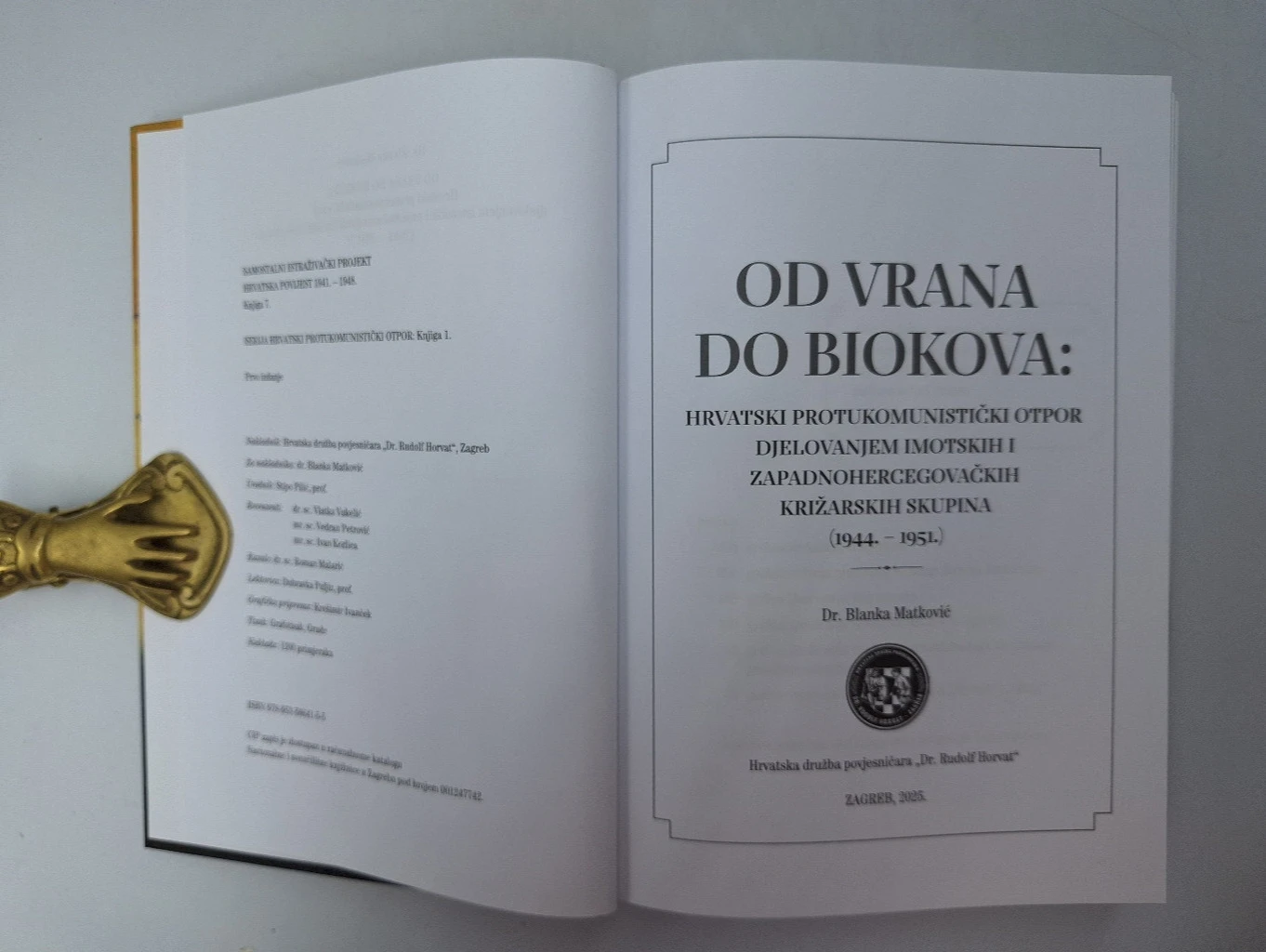


Od Vrana do Biokova: hrvatski protukomunistički otpor djelovanjem imotskih i zapadnohercegovačkih križarskih skupina (1944. - 1951.)
Basic information
- Author: Matković Blanka
- Publisher: Hrvatska družba povjesničara "Dr. Rudolf Horvat"
- Availability: Available
- Condition: New book
- Code: 83350
Shipping options
Payment methods
Explore more
Od Vrana do Biokova: hrvatski protukomunistički otpor djelovanjem imotskih i zapadnohercegovačkih križarskih skupina (1944. - 1951.)
Matković Blanka
Summary
Blanka Matković: From Vran to Biokovo - Croatian anti-communist resistance through the activities of Imotski and Western Herzegovina crusader groups (1944 - 1951)
"From Vran to Biokovo" covers over a thousand pages the activities of crusader groups, crusader organizations and informal slaughtering networks in the area from the line Vran - Posušje - Imotski - Biokovo towards Kamešnica, Cetinje, Tomislavgrad, Kupres to Rama.
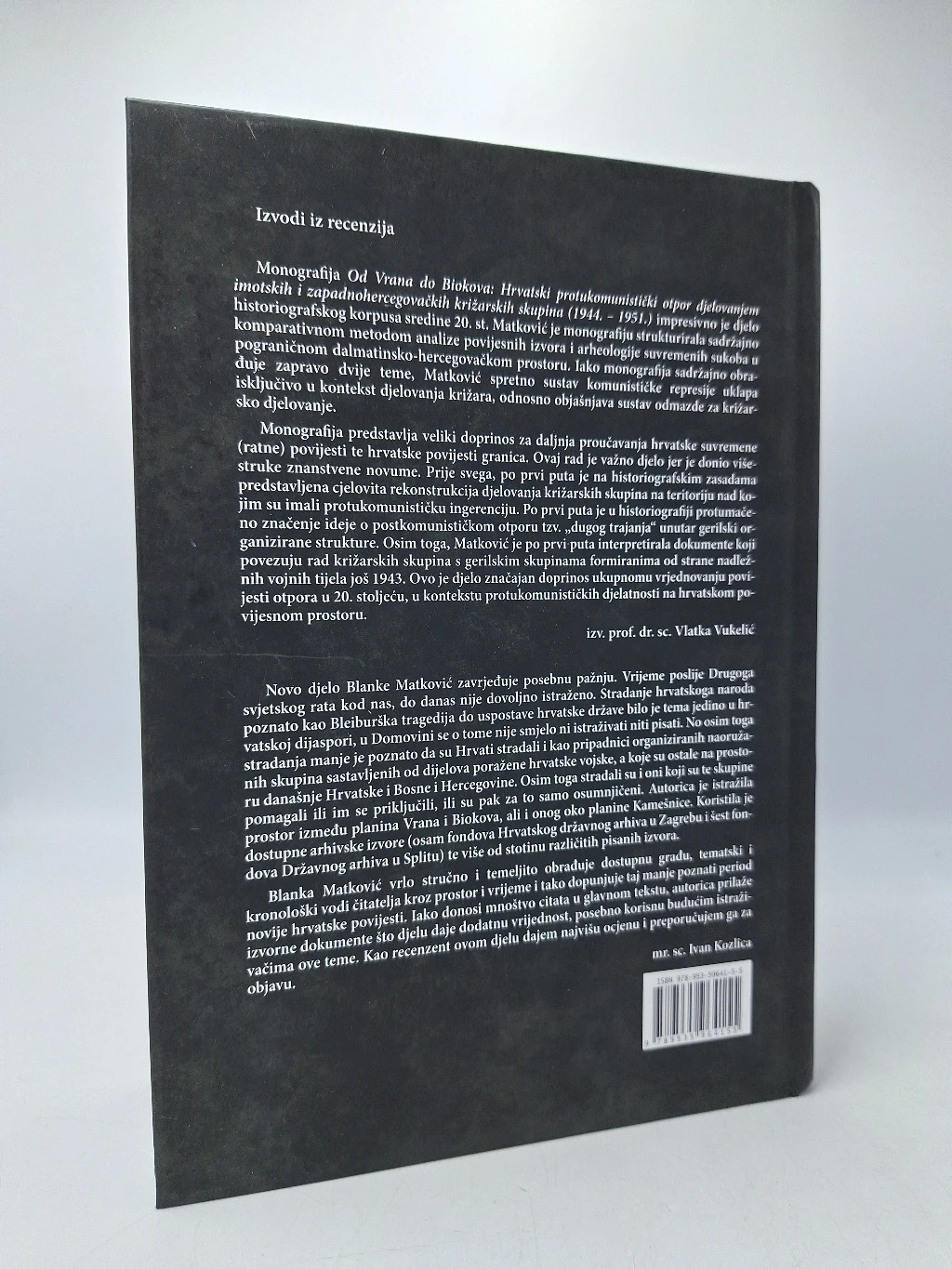
The monograph From Vran to Biokovo: Croatian anti-communist resistance through the activities of Imot and Western Herzegovina crusader groups (1944 - 1951) is an impressive work of the historiographic corpus of the middle of the 20th century. Matković structured the monograph in terms of content using a comparative method of analysis of historical sources and the archeology of contemporary conflicts in the Dalmatian-Herzegovina border area. Although the monograph covers two topics, Matković deftly fits the system of communist repression exclusively into the context of crusaders' actions, that is, explains the system of retribution for crusaders' actions.
The monograph represents a great contribution to further studies of Croatian contemporary (wartime) history and the history of Croatian borders. This work is an important work because it brought multiple scientific novelties. First of all, for the first time, a complete reconstruction of the activities of the crusading groups on the territory over which they had anti-communist authority was presented at the historiographical sessions. For the first time in historiography, the meaning of the idea of the so-called post-communist resistance was interpreted. of "long duration" within the guerilla organized structure.
In addition, for the first time, Matković interpreted documents that connect the work of crusader groups with guerrilla groups formed by the competent military authorities as early as 1943. This work is a significant contribution to the overall evaluation of the history of resistance in the 20th century, in the context of anti-communist activities in the Croatian historical space.
- associate professor Ph.D. Vlatka Vukelić
Blanka Matković's new work deserves special attention. The time after the Second World War in our country has not been sufficiently researched to this day. The suffering of the Croatian people known as the Bleiburg tragedy until the establishment of the Croatian state was a topic only in the Croatian diaspora, it was not allowed to be researched or written about in the homeland. But apart from that suffering, it is less known that Croats also died as members of organized armed groups composed of parts of the defeated Croatian army, which remained in the area of today's Croatia and Bosnia and Herzegovina. In addition, those who helped those groups or joined them, or were just suspected of it, were also killed. The author explored the area between the Vrana and Biokovo mountains, but also the area around the Kamešnica mountain. She used available archival sources (eight funds of the Croatian State Archives in Zagreb and six funds of the State Archives in Split) and more than a hundred different written sources.
Blanka Matković very expertly and thoroughly processes the available material, thematically and chronologically guides the reader through space and time and thus complements this lesser-known period of recent Croatian history. Although she provides many quotations in the main text, the author attaches original documents, which gives the work additional value, especially useful for future researchers of this topic. As a reviewer, I give this work the highest rating and recommend it for publication.
- M.Sc. sc. Ivan Kozlica
Additional information
- Author: Matković Blanka
- Publisher: Hrvatska družba povjesničara "...
- Year of publication:2025
- Place of publication:Zagreb
- Pages:1055
- Dimensions:17.5x24 cm
- Script:Latin script
- Condition:New book
- Binding:Hardcover
Reviews
0 reviewsWrite a review
Share your experience and help other readers choose.
This item has no reviews yet. Be the first to share your experience.
More books by Matković Blanka

More books from Hrvatska družba povjesničara "Dr. Rudolf Horvat"
You may also like