

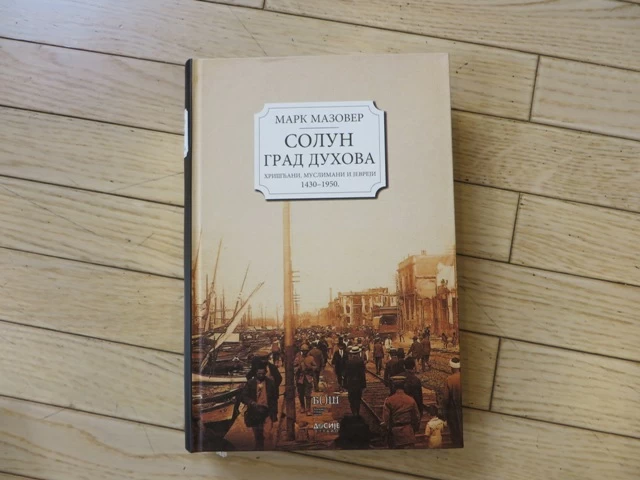
Solun grad duhova
Basic information
- Author: Mazower Mark
- Publisher: Dosije
- Availability: Available
- Condition: New book
- Code: 57130
Shipping options
Payment methods
Explore more
Solun grad duhova
Mazower Mark
Summary
Mark Mazower: Thessaloniki, a ghost town
Mark Mazower is one of the most important and influential contemporary world historians. He is a professor of history at Columbia University (USA). He is the winner of a number of the world's most important awards for historiography: the Stephen Ransiman Award, the Duff Cooper Award, the Wolfson Award for historiography and the Longman Award for the best historiographical book of the year.
In Thessaloniki, the city of ghosts, he shows that, as soon as he enters the period before mass nationalism (which for the Balkan states is the beginning of the 20th century), the picture becomes complex. The spirits of those cultures that disappeared or became invisible are revealed. The subject of his research is a case exceptional for the Balkans, a case that united the three Abrahamic religions in a special and unique way in early modernity. He researches the history of Thessaloniki, from 1430 to 1950. The core of his endeavor is to present three comparative narratives about the city left by its inhabitants of three religions: Orthodox Christians, Muslims and Jews.
Mazower is a first-rate scientist and writer; Thessaloniki is his masterpiece. Few historical works display such skill in managing resources - from censuses to memoirs, consular correspondence to bundles of letters - with an excellent synthesis of cultural, political, economic, spiritual and social history, as well as outstanding descriptions of the ethnic and religious subcultures of Thessaloniki.
Additional information
- Author: Mazower Mark
- Publisher: Dosije
- Year of publication:2017
- Place of publication:Beograd
- Pages:446
- Dimensions:17x25 cm
- Script:Cyrillic script
- Condition:New book
- Binding:Hardcover
Reviews
0 reviewsWrite a review
Share your experience and help other readers choose.
This item has no reviews yet. Be the first to share your experience.
More books by Mazower Mark

More books from Dosije



You may also like




Recently viewed