
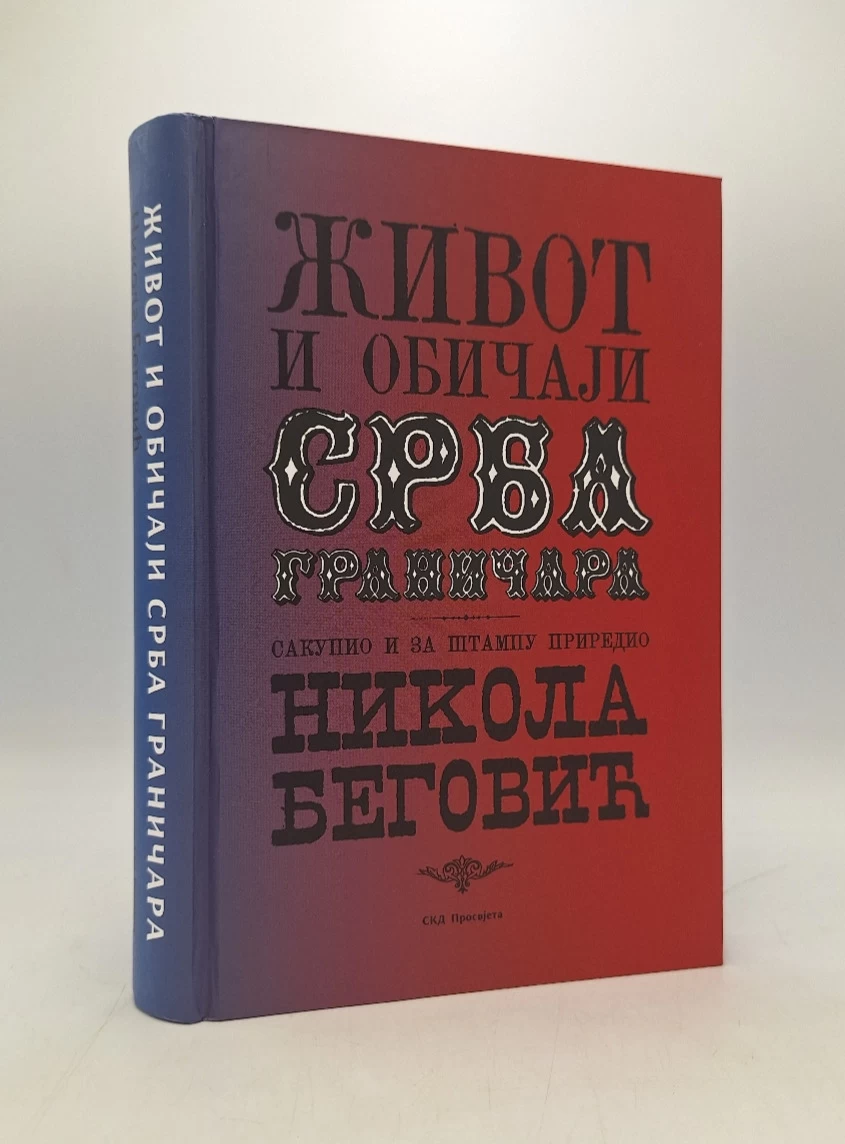
Život i običaji Srba Graničara
Basic information
- Author: Begović Nikola
- Publisher: SKD Prosvjeta
- Availability: Available
- Condition: New book
- Code: 77936
Shipping options
Payment methods
Explore more
Život i običaji Srba Graničara
Begović Nikola
Summary
Nikola Begović: The Life and Customs of the Serbian Border Guards
"The Life and Customs of the Serbian Border Guards" is the most famous work of proto Nikola Begović, published in 1887. year in Zagreb. This book represents one of the most important ethnographic and historical testimonies about the daily life, traditions, beliefs and mentality of the Serbian people in the area of the former Military Border (Border).
Granicars (border guards) were a specific social class within the Habsburg Monarchy that for centuries combined the role of permanent soldiers-warriors and free peasants
Key aspects of the life of border guards through Begović's work1. Social arrangement and household cooperatives
The life of border guards was based on house cooperatives - large family communities in which several dozen members lived under one roof (or in the same yard).
- Strict hierarchy: The cooperative was managed by the oldest or most capable man (host or master), and women's affairs were managed is a housewife.
- Collective ownership: Land, cattle and tools were shared, which enabled the family to survive while grown men were on the battlefields across Europe.
2. Constant military obligation and mentality
Border life was completely subordinated to militarism. From childhood to old age, every man was a soldier.
- The price of freedom: Unlike the peasants in the civilian part of Croatia (serfs), the border guards were free peasants who did not pay feudal levies, but paid for this freedom with blood.
- Warrior ethos: They developed pronounced pride, courage, discipline, but also constant tension because the call to mobilization (through bells or gunshots) could arrive at any moment.
3. Folk customs and religion
Orthodox religion and folk customs were the basis for preserving the national identity of border guards. Begović describes in detail:
- Krsna slava: The most important family and religious holiday, celebrated with a candle, a slavish cake, a manger and hosting relatives and neighbors.
- Annual customs: Rich rituals related to Christmas (Christmas Eve, Christmas Day), Easter, St. George's Day and other major holidays.
- Life cycle: Detailed views wedding customs (which often had elements of military discipline and heroism), the birth of a child (baptism) and specific funeral rituals (laments).
4. Oral creativity and entertainment
Due to constant warfare, epic folk poetry was extremely alive.
- Fiddles: Heroic songs about battles with the Ottomans were sung by the hearth, thus passing down history from generation to generation and maintaining the fighting spirit.
- Spinning machines and seats: In winter, women gathered on spinning machines and weaving, where lyrical songs were sung, folk tales, riddles and beliefs in supernatural beings (fairies, witches, werewolves) were recounted.
5. Material culture (Costume and food)
- National costume: It was practical, made of local wool and linen (cloth), often with military elements (vests with metal studs, red caps, opanki).
- Diet: Very simple and humble, based on corn bread (proja), polenta, dairy products (cheese, cream, basso), cabbage, beans and dried meat in the winter months.
Prota Nikola Begović (1821 – 1895) was an Orthodox priest, religious teacher, poet and historian who knew his people deeply because he himself lived in the area of Kordun and Lika.
Additional information
- Author: Begović Nikola
- Publisher: SKD Prosvjeta
- Year of publication:2009
- Place of publication:Zagreb
- Pages:360
- Dimensions:14x20.5 cm
- Script:Cyrillic script
- Condition:New book
- Binding:Hardcover
Reviews
0 reviewsWrite a review
Share your experience and help other readers choose.
This item has no reviews yet. Be the first to share your experience.
More books from SKD Prosvjeta




You may also like




Recently viewed