
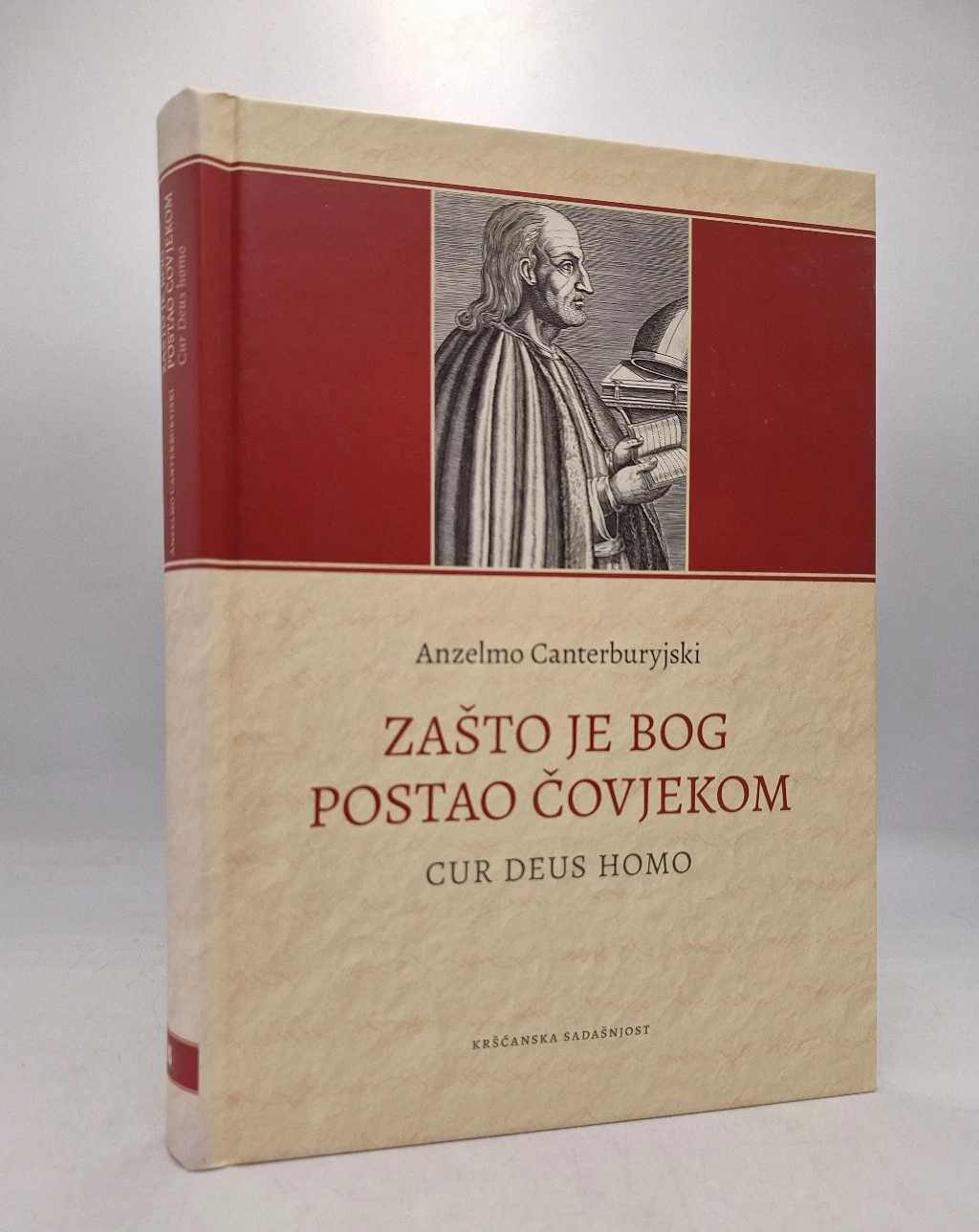
Zašto je Bog postao čovjekom - Cur Deus homo
Basic information
- Author: Canterburyjski Anselmo
- Publisher: Kršćanska sadašnjost
- Availability: Available
- Condition: New book
- Code: 82697
Shipping options
Payment methods
Explore more
Zašto je Bog postao čovjekom - Cur Deus homo
Canterburyjski Anselmo
Summary
Anselm of Canterbury: Why God became man - Cur Deus homo
Finally, we got the capital work of St. Anselm of Canterbury Cur Deus homo or Why God became man, one of the most significant theological-philosophical writings of the Middle Ages that marked the entire Western thought. This first Croatian translation, which includes the Latin original in addition to the Croatian, will now be able to be used by Croatian theologians and philosophers and anyone interested in the development of Christian thought, especially since it is a book that far surpassed its time and became pivotal in the historical development of Western theological-philosophical thought. "With great effort with his own mind, in accordance with his faith, he tried to understand what he felt was hidden in the Holy Scriptures, shrouded in pitch darkness" - these are the words of Anselm's biographer Eadmer, which succinctly express the basic line of Anselm's thinking, a line that is particularly clearly visible in the text of the dialogue Cur Deus homo - Why God became man, in which the clarification of faith (in the service meditation) and attention to language and its relationship to the meanings it expresses and to the reality it expresses. Everything revolves around the question: By what necessity and for what reason did God, who is omnipotent, take a humble and imperfect human nature and become a concrete man so that he could save the bearers of that same human nature, redeem them from sin? Anselm's answer is clear: God saves man out of love, but he does not save him without man. The answer shows the necessity of shrewdness connected with love for one's "subject", it bears the mark of its time, but even more it exudes the breath of joyful conviction of a writer who knows whom he has believed and in whom he believes.
St. Anselmo (1033-1109) was a Benedictine monk and later Archbishop of Canterbury, the author of numerous works that influenced the development of Christian thought in the Middle Ages and later, but also an author to whom Christian history allowed numerous distortions of his thought. His most famous works - Monologion, Proslogion, Cur Deus homo, dialogues about truth, free will, grace and foreknowledge of God and a letter about the Incarnation of the Word - are a concrete performance of the Augustinian program of reflection on faith that seeks to understand itself as an act and as content: fides quaerens intellectum. Anzelmo shows how faith engages the best human powers of mind, will and heart in order to be thought out, lived and communicated.
The book was translated and provided with an extensive introduction by Dr. sc. Stjepan Kušar.
Additional information
- Author: Canterburyjski Anselmo
- Publisher: Kršćanska sadašnjost
- Year of publication:2024
- Place of publication:Zagreb
- Pages:247
- Dimensions:17x24 cm
- Script:Latin script
- Condition:New book
- Binding:Hardcover
Reviews
0 reviewsWrite a review
Share your experience and help other readers choose.
This item has no reviews yet. Be the first to share your experience.
More books by Canterburyjski Anselmo
More books from Kršćanska sadašnjost




You may also like








Recently viewed