
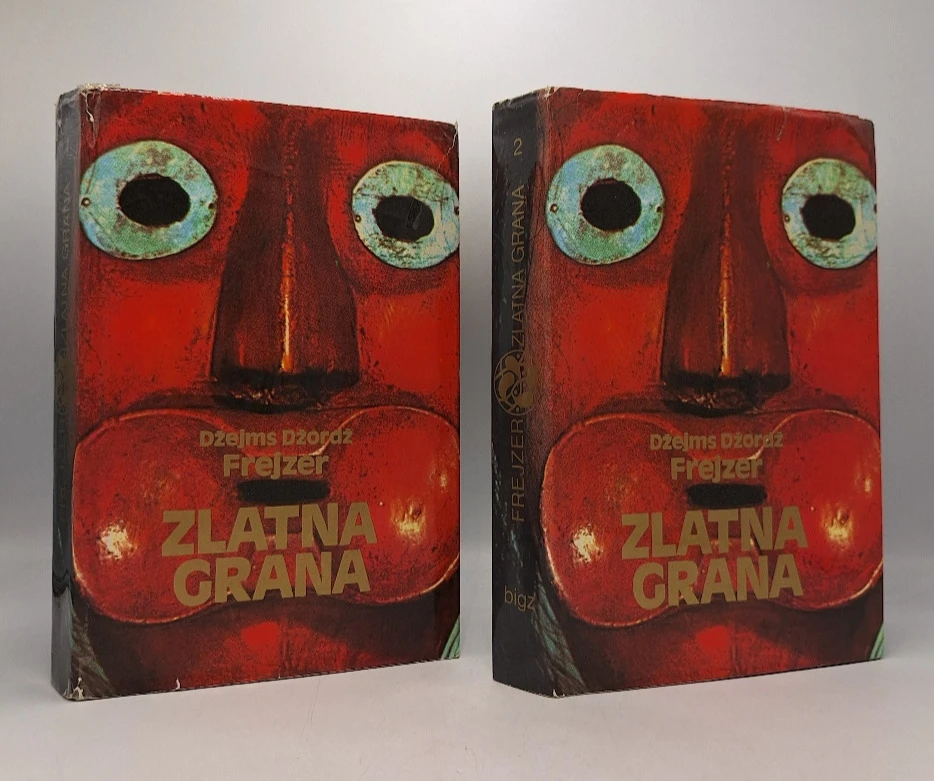
Zlatna grana: proučavanje magije i religije I-II
Basic information
- Author: Frazer James George
- Publisher: Beogradski izdavačko-grafički zavod
- Availability: Available
- Condition: Very good
- Code: 78145
Shipping options
Payment methods
Explore more
Zlatna grana: proučavanje magije i religije I-II
Frazer James George
Summary
James George Frazer: The Golden Bough: A Study of Magic and Religion I-II
Sir James George Frazer (1854-1941) was a Scottish anthropologist who specialized in the study of myth and religion. His early research into the development of religion, in the progress of humanity from a primitive to a civilized social system, gave rise to a series of theories about the historical evolution of ancient cults, rites, rituals and religious beliefs.
The Golden Bough is Frazer's greatest and best-known work, a collection of his mature theories. In it, Frazer begins by researching the hereditary rituals of the priest-kings in Diana's Grove, a sacred forest in ancient Italy. The rite included the ancient custom of allowing a runaway slave to fight the king – and possibly take his title – if he could first break off a branch from a special golden tree. Frazer saw a connection between the story and Virgil's epic poem the Aeneid, in which the possession of a golden branch allows the hero Aeneas to descend into the underworld. A large part of Frazer's book draws from this research into the ancient cult of the tree, the efforts of early peoples to control nature and the ritual killing of divine kings.
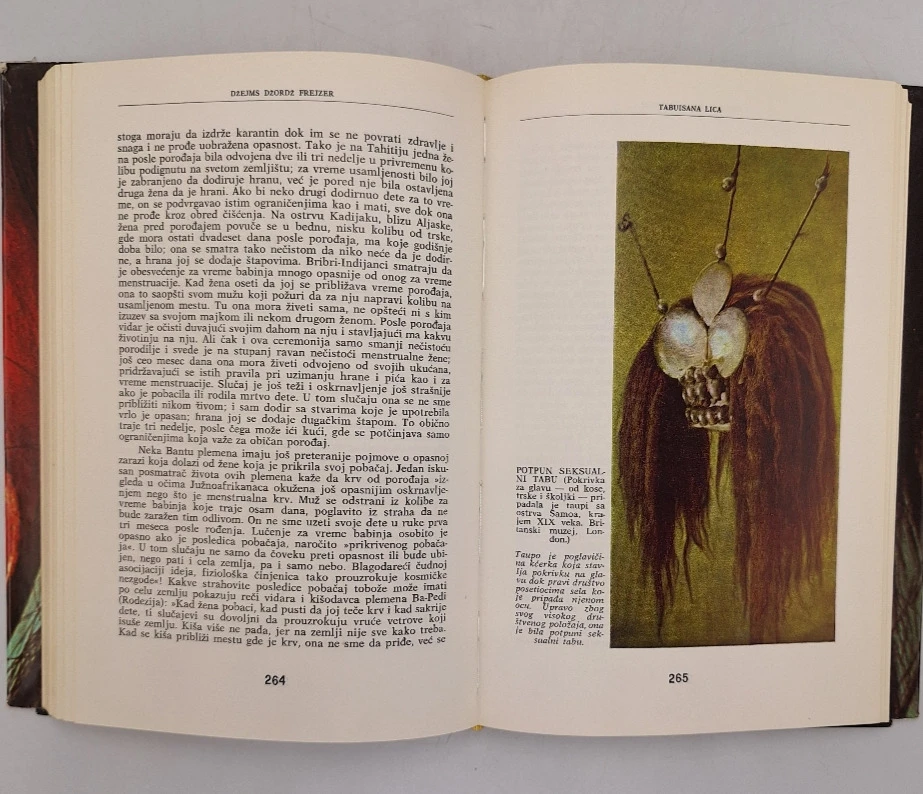
In The Golden Bough Frazer examines a multitude of myths and folktales from the most diverse cultures and times and points out the striking similarities between them. Among his topics are magic and sorcery, taboos and sexual rituals, the nature of the soul and religion, scapegoats and human sacrifices, great literature and legends.
Additional information
- Author: Frazer James George
- Publisher: Beogradski izdavačko-grafički...
- Year of publication:1977
- Place of publication:Beograd
- Pages:427+445
- Dimensions:15.5x23.5 cm
- Script:Latin script
- Condition:Very good
- Binding:Hardcover with dust jacket
Reviews
0 reviewsWrite a review
Share your experience and help other readers choose.
This item has no reviews yet. Be the first to share your experience.
More books from Beogradski izdavačko-grafički zavod
You may also like