
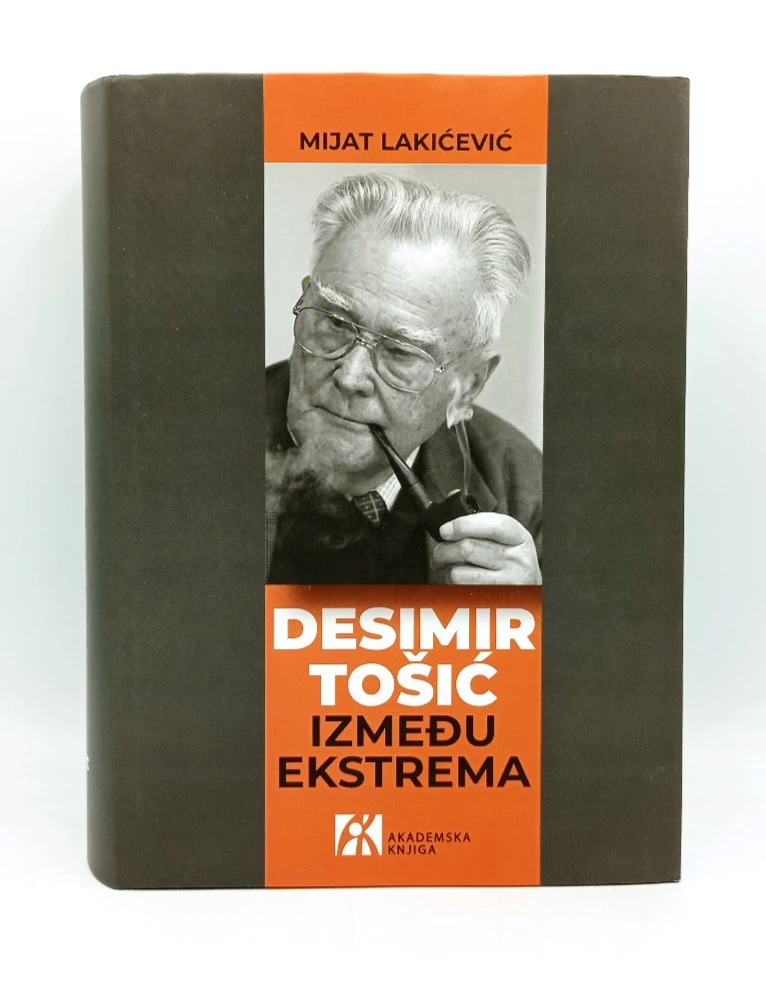
Desimir Tošić između ekstrema
Basic information
- Author: Lakićević Mijat
- Publisher: Akademska knjiga
- Availability: Available
- Condition: New book
- Code: 59774
Shipping options
Payment methods
Explore more
Desimir Tošić između ekstrema
Lakićević Mijat
Summary
Mijat Lakićević: Desimir Tošić between extremes
Lakićević's manuscript is more than a chronicle in the best sense. In Desimir Tošić, he discovered a unique phenomenon in the political and cultural history of Serbia in the 20th century, a prominent member of its elite - in Tošić's opinion, "non-existent". He believed that the emergence of an elite requires time and stable development, and Serbia, a backward and poor agrarian country, often went to war, revolted, was occupied and bombed, and failed to create a social elite. The thin layer of the intelligentsia did not differ much from the people. Foreign connoisseurs of Serbia in the 19th century also noticed this (Russian Slavist P. A. Rovinski). Unity with the people was a dogma.
Desimir Tošić lived and worked in the era of extremes, as Eric Hobsbawm called the short twentieth century: Nazism, communism, anti-communism, and anti-Semitism, ethnic nationalism, revanchism derived from them. Tošić did not differentiate between "better" and "worse" extremes. According to him, they used to touch each other. Desimir Tošić, from his youth to the end of his life, advocated the middle line: dialogue, compromise, understanding. In modern Serbia, the middle line, even with attempts at political organization, was never the majority, that is, ruling, but it existed and continuously crystallized as a fragile vertical. The work on its study in Serbian historiography can, however, be compared to archaeological work until the beginning of the 21st century.
Dr. Latina Perović
Additional information
- Author: Lakićević Mijat
- Publisher: Akademska knjiga
- Year of publication:2020
- Place of publication:Novi Sad
- Pages:1046
- Dimensions:18x25 cm
- Script:Latin script
- Condition:New book
- Binding:Hardcover with dust jacket
Reviews
0 reviewsWrite a review
Share your experience and help other readers choose.
This item has no reviews yet. Be the first to share your experience.
More books by Lakićević Mijat


More books from Akademska knjiga






You may also like