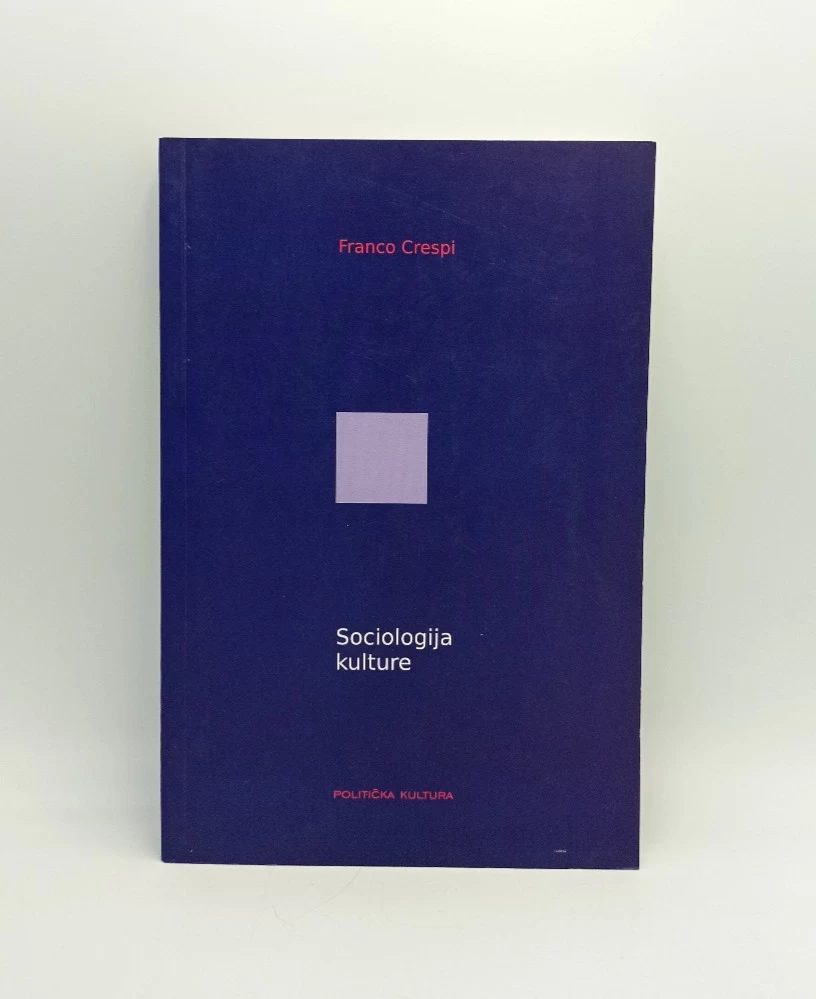
Sociologija kulture
Basic information
- Author: Crespi Franco
- Publisher: Politička kultura
- Availability: Available
- Condition: Very good
- Code: 63516
Shipping options
Payment methods
Explore more
Sociologija kulture
Crespi Franco
Summary
Franco Crespi: Sociology of Culture
The Italian sociologist Franco Crespi interprets the basic concepts, genesis and theoretical-methodological problems of the sociology of culture as a special sociological discipline. The book is also a guide for orientation in a wide area of literature on the sociology of culture.
In the modern era, the awareness of culture as a constitutive dimension of our life experience has grown more and more. The progressive transition from the understanding of culture as shaping and cultivating the spirit to the anthropological understanding of culture as a set of preconceptions, values and norms present in a given socio-historical context, since the eighteenth century undoubtedly determined a deep transformation of our relationship with nature and social reality, and its consequences have fully matured in the epoch in which we live. The sociology of culture simultaneously appears as one of the consequences of this process, but also as one of its causes: the idea of scientific analysis of the complex world of cultural production could only arise from a new awareness of the pervasive presence of the symbolic in our experience, but once initiated, this idea greatly contributed to the strengthening of insight into the influence of culture in all manifestations of our lives. The result of that transformation, since it was shown that culture forms an insurmountable horizon within which we get to know and test our reality, has also testified to the fragility and limits of every cultural form. Hence the need to increase our ability to overcome the contradictions that arise from our inevitably ambivalent relationship to culture.
Additional information
- Author: Crespi Franco
- Publisher: Politička kultura
- Year of publication:2006
- Place of publication:Zagreb
- Pages:210
- Dimensions:16x24 cm
- Script:Latin script
- Condition:Very good
- Binding:Softcover
Reviews
0 reviewsWrite a review
Share your experience and help other readers choose.
This item has no reviews yet. Be the first to share your experience.
More books from Politička kultura



You may also like







Recently viewed