
Charles Bukowski is a deeply honest and brutally emotional writer
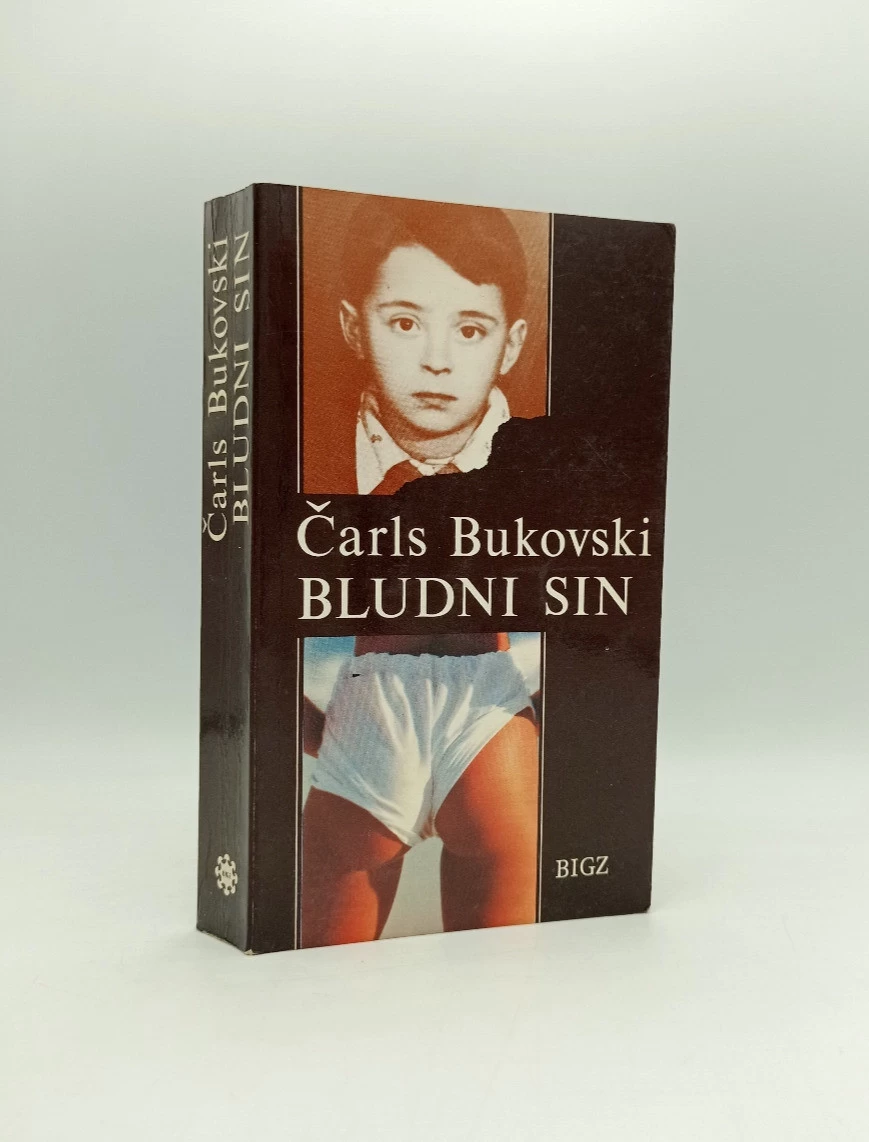
Charles Bukowski was born in Germany in 1920. His mother was German, and his father was an American soldier. He was an only child.
When he was two years old, Charles boarded a ship with his parents and sailed to the United States of America. They settled in Los Angeles, where Bukowski lived for the rest of his life.
The writer had a very difficult childhood. He described it as a horror story and stated that his father beat him almost daily. Looking back on his upbringing, he once asserted:
"It was a very good literary training for me."
Because of this, but also due to abuse by his peers, during his early youth he was very withdrawn and shy. In his early teenage years, he started drinking alcohol, with which he was in a so-called lifelong relationship.
During World War II, Bukowski left California briefly, probably to avoid the draft, and traveled the country, spending long periods in Philadelphia and New Orleans.
At the time, he was primarily a short story writer, but that would change a decade later, in 1954, after he suffered an internal hemorrhage that kept him on the edge of life and death for nine days.
After that dramatic experience, Bukowski began writing poems and soon became one of the most unique and influential voices in American poetry of the 20th century. The writing style of Charles Bukowski is that his works will never reach a wider audience.
However, these predictions were not correct considering that the books of the peculiar writer, including poetry, have been translated into dozens of world languages and have been sold in millions of editions.
His writing style was under a great social, economic and cultural influence of Los Angeles. He often said that the city he lived in was his favorite subject.
Bukowski is characterized by unconventionality and raw emotion, the writer is not afraid to express his thoughts, which is why he is often shocking, but at the same time insightful and deeply honest.
American poet and literary criticAdam Kirsch once stated:
"Bukowski is one of those provocative writers that every new reader discovers with great excitement."
Some of the words that describe Charles Bukowski's literary expression are:
rude, rude, controversial,but also excellent, revealing, captivating..
The writer himself described his style in an interview as follows:
"My style is very simple and direct, just like a photograph, I record what is happening, I don't make any speeches. He says what he says, and that's all. My poems are a little more emotional, I let myself go a little more. But in prose I'm quite honest."
His work was influenced by F.M. Dostoevsky, Knut Hamsun, Ernest Hemingway and Henry Miller. >Antikvarijat Biblos
The most beautiful woman in town
It is a collection of anecdotal short stories written in the first and third person. In line with his other works, the themes he deals with are alcoholism, gambling, sex and violence.
The stories are aggressive, brutal and dark; some bring tears to your eyes, some from laughing, some from crying.
Many contain elements of fantasy and surrealism.
“Actually, I told her, I'm a genius, but no one knows it but me.”
href="https://www.antikvarijat-biblos.hr/knjige/knjizevnost/posta">Pošta
Pošta is Charles Bukowski's first novel, published in 1971. It is an autobiographical memoir of his years in the US Postal Service. About that period, the writer said:
"I worked at the post office for eleven full years. From the age of thirty-nine until I was fifty. I was convinced that working at the post office would get to me; I simply couldn't take it anymore. That's when I decided that I would become a professional writer."
Chinaski wanders from place to place, surviving on drink and women, with his caustic sense of humor and cynical view of the world.
Faktotum
The novel is set in the 40s of the 20th century. Henry Chinaski, the eternally unemployed alter ego of Charles Bukowski, after a fight with his father, roams the back streets of Los Angeles in search of a job that will not come between him and his first love - writing.
"I was afraid of life, of everything that a man has to do just to be able to eat, sleep and clothe himself. So I lay on the bed and drank. While I was drinking, the world still existed out there, but I was currently he didn't hold it by the throat."
From the novel Faktotum
Notes old crook
This is a collection of columns that Bukowski wrote for the "Open City" newspaper. The short articles are characterized by his trademark, black humor, as well as attempts to express an objective opinion on various events in his life.
Examples describe an adventure with the wife of an unknown man who invited him to dinner to admire his work, as well as debates with other writers that he often conducted in his columns.
"An intellectual is a man who says simple things in a complicated way; an artist is a man who says complicated things in a simple way way."
; Notes of an old crook
The music of hot water
With his characteristic harsh and minimalist style, Charles Bukowski takes us on a walk around the city.
This collection of short stories deals with drinking, women, gambling and writing. The characters hang around the worst parts of the city; a motel room that reeks of disease, a dilapidated apartment where a couple who is constantly fighting lives and a cafe that is cared for by a skeleton.
"Love is a kind of prejudice. You love what you need, you love what makes you feel good, you love what suits you. How can you say you love someone when there are ten thousand people in the world that you would love even more, if only you knew them? And you will never love them." to meet."
The Music of Hot Water
Women
The novel focuses on the various challenges faced by the main character, Chinaski, faces when meeting women.
Bukowski writes in a specific way, he indifferently accepts everything that happens around him, not caring too much neither for himself nor for others.
"If I had been born a woman, I would surely have become a prostitute. Since I was born a man, I constantly longed for women, the emptier they were, the more they were my milieu. And yet women - hardworking women - scared me, maybe because they wanted my soul, and I wanted to keep what was left of my soul. I, in fact, longed for prostitutes, women from the bottom, because they were dangerous and had no demands. And yet at the same time I longed for a gentle, good woman, regardless of the high price." From the novel Women
Curiosity from the life of Charles Bukowski
1. He worked a wide range of jobs, among others, he was a postman, warehouseman, dishwasher, truck driver, worker in a dog food factory and a worker in a cake factory.
2. Bukowski started drinking alcohol at thirteen t year.
3. He started writing poetry at the age of 35.
4. The FBI had a file on him.
5. Actor Sean Penn wanted to star in a semi-autobiographical film about Bukowski for $1.
6. He was influenced by the writers of the beat generation.
7. During his life, he wrote countless letters.
8. He loved horse racing.
9. Charles died of leukemia, and his tombstone reads "Don't try."
Prepared by: Marijana Matijević
Biblos Newsletter
For book lovers who enjoy finding the rare
New titles, special copies and quiet recommendations from the antiquarian bookshop.