
Haruki Murakami enlightenment at a baseball game

One April afternoon, while watching a baseball game at the stadium, Haruki Murakami was overcome with a strong feeling that he could write a novel. That day everything changed in his life. He went home and started writing.
The Japanese writer was born in 1949 in Kyoto, during the baby boom after World War II. He probably inherited his passion for writing from his parents who were Japanese language teachers. In a 2019 article, Murakami shared a memory of his father, Chiaki.
Every morning, before breakfast, he sat in front of his Buddhist shrine and recited prayers with his eyes closed.
When Haruki asked him what he was doing, his father replied that he was praying for all those who died in the war.
Chiaki only spoke about his wartime experience once, and that story was deeply etched in the memory of his son, who was still in the lower grades of elementary school at the time.
Namely, Murakami's father was part of the unit that captured and mercilessly executed a Chinese soldier. The writer himself did not know what his father's role was in all of this, whether he had to watch his fellow soldiers being executed or whether he had the main say in that act. The experience was excruciating and painful, and one could say that this trauma transgenerationally passed on to the son.
"My father belongs to the generation that went to war in the forties of the last century. When I was a kid, my father told me stories - it was not very often, but they meant a lot to me. I wanted to know what happened to my father's generation then. It is a kind of legacy, a memory of that."
Haruki Murakami
Haruki Murakami graduated from Waseda University in Tokyo, where he also met his wife Yoko.
For the first time, during his studies, he got a job in a record store, and after finishing school, he opened a small jazz club, which he ran for almost eight years.
It seems that music played an important role in his life because it was the theme of many of his novels, and the titles themselves are connected to music. For example, The Norwegian Forest was named after a famous Beatles song, and the novel South of the border, west of the sunis titled after a part of Nat King Cole's poem.
Literary style
Murakami's literary style is called magical realism. It is a very peculiar way of writing in which elements of fantasy are intertwined with reality.
The main character is often a man who goes through inner turmoil in order to discover the truth about himself and the world.
The writer uses simple but powerful sentences that deeply penetrate the reader, and the topics he deals with in his books are:
- loneliness
- alienation
- love
- loss
- identity
- search for meaning
The process of creating a novel, Haruki Murakami, described as follows:
1. While writing, he does not engage in any other work.
2. It maintains a steady pace. The daily quota is 1016 words.
3. The draft of the novel is an improvisation, it does not know in which direction the action will take place.
3. After finishing the draft, he takes a short break of usually a week.
4. First revision. At this stage, he is making big changes. According to the author, the funnest part. Expanding or reducing parts of the novel.
5. The second modification is "fine work", no major cuts.
6. In the third BC there are no deductions from the editing, it is about the final polishing of the novel.
7. The writer takes a break. He puts the manuscript aside for a while.
8. Final detailed reading.
9. He gives the novel to the first reader, his wife.
If this doesn't seem romantic enough to you, maybe you're right because Murakami himself says:
"It sounds more like working in a factory. And I agree - artists don't work like that. But why does a novelist have to be an artist? Who made that rule? Nobody, right? So why not write in the way that comes most naturally to you? Moreover, refusing to think of yourself as it removes a lot of pressure from the artist. More than being artists, novelists should consider themselves "free" - which means that we are able to do what we want, when we want, in the way we want, without worrying about how the world sees us. This is far better than wearing the rigid and formal clothes of an artist." the works of Haruki Murakami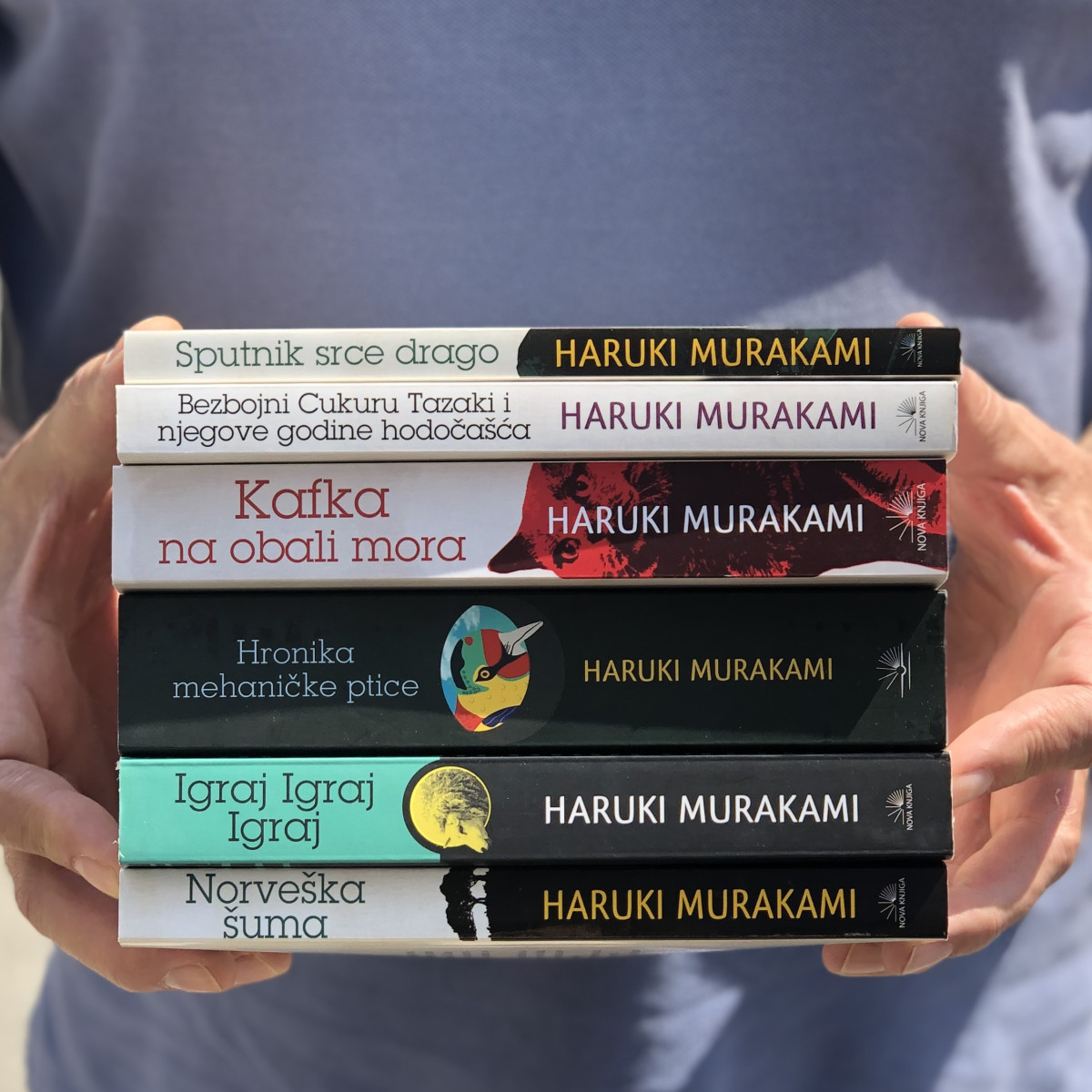
Photo: Marijana Matijević
Norwegian Forest
The plot begins with the song "Norwegian Forest" by the Beatles, which is heard from the speakers on the plane.
On the waves of a melancholic melody, the protagonist Toru returns almost 20 years back, to the sixties of the 20th century when he was a student at the university in Tokyo.
The novel is a nostalgic story about loss. Namely, Toru is a quiet and serious young man torn between two women. The beautiful and depressed Naoko and the open and wild Midori.
The book is a world bestseller and Haruki Murakami's most famous work.
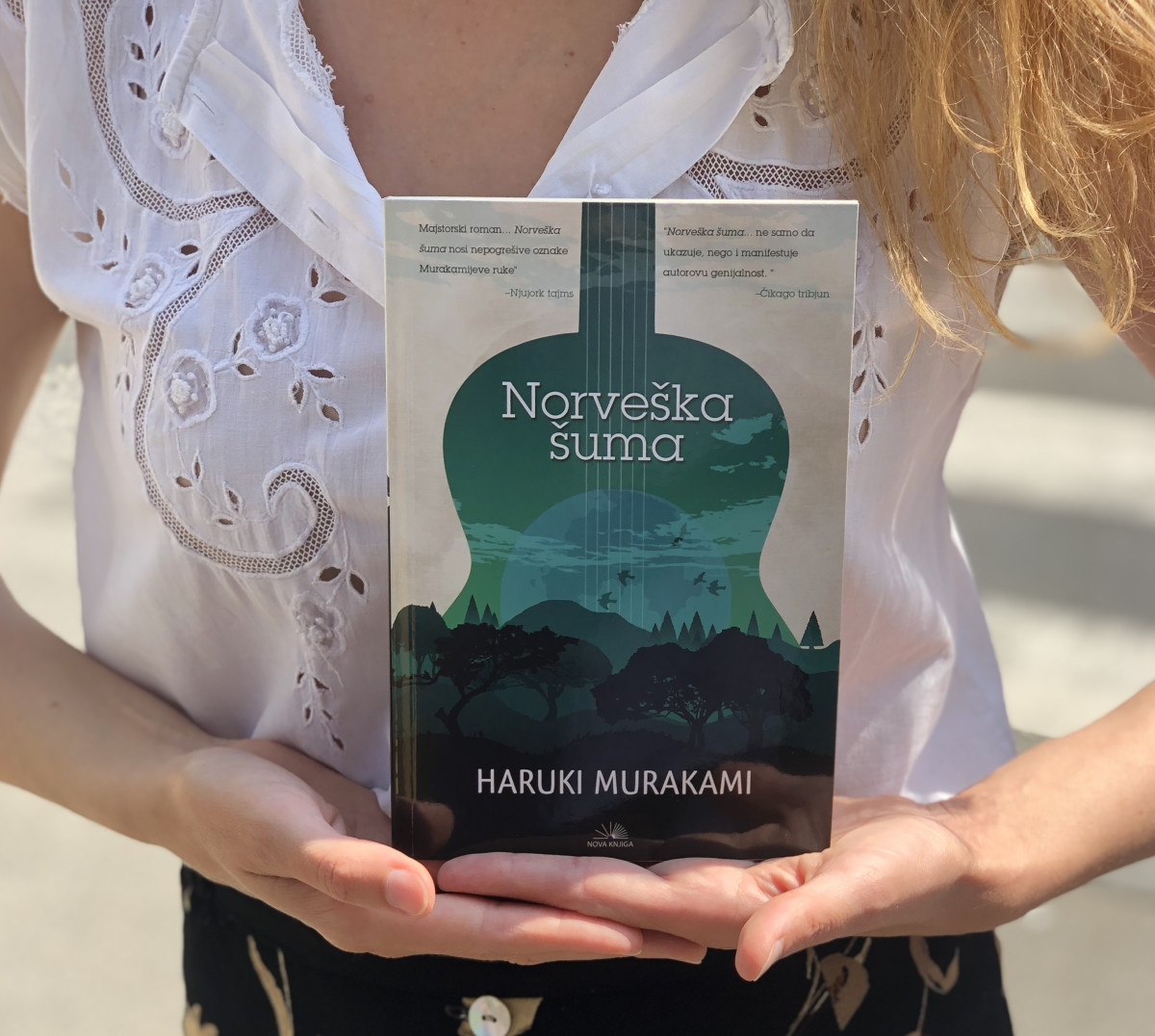
Photo: Mirko Salaj
South of the border, west of the sun
The protagonist of the novel Hajime is a withdrawn and lonely young man who meets Shimamoto, a girl with polio, in his village. Both singles, they spend their time listening to gramophone records.
Before enrolling in high school, his family moved away and as a result the two young people lost contact. They meet again in their 30s when Hajime is a devoted husband, a good father to two daughters and a successful owner of a jazz club, and Shimamoto is a mature beauty shrouded in mystery.
Fatal love, as a frequent motif in Murakami's novels, is also present in this book. Struck by desire, Hajime puts his whole life on the line.
Kafka on the seaside
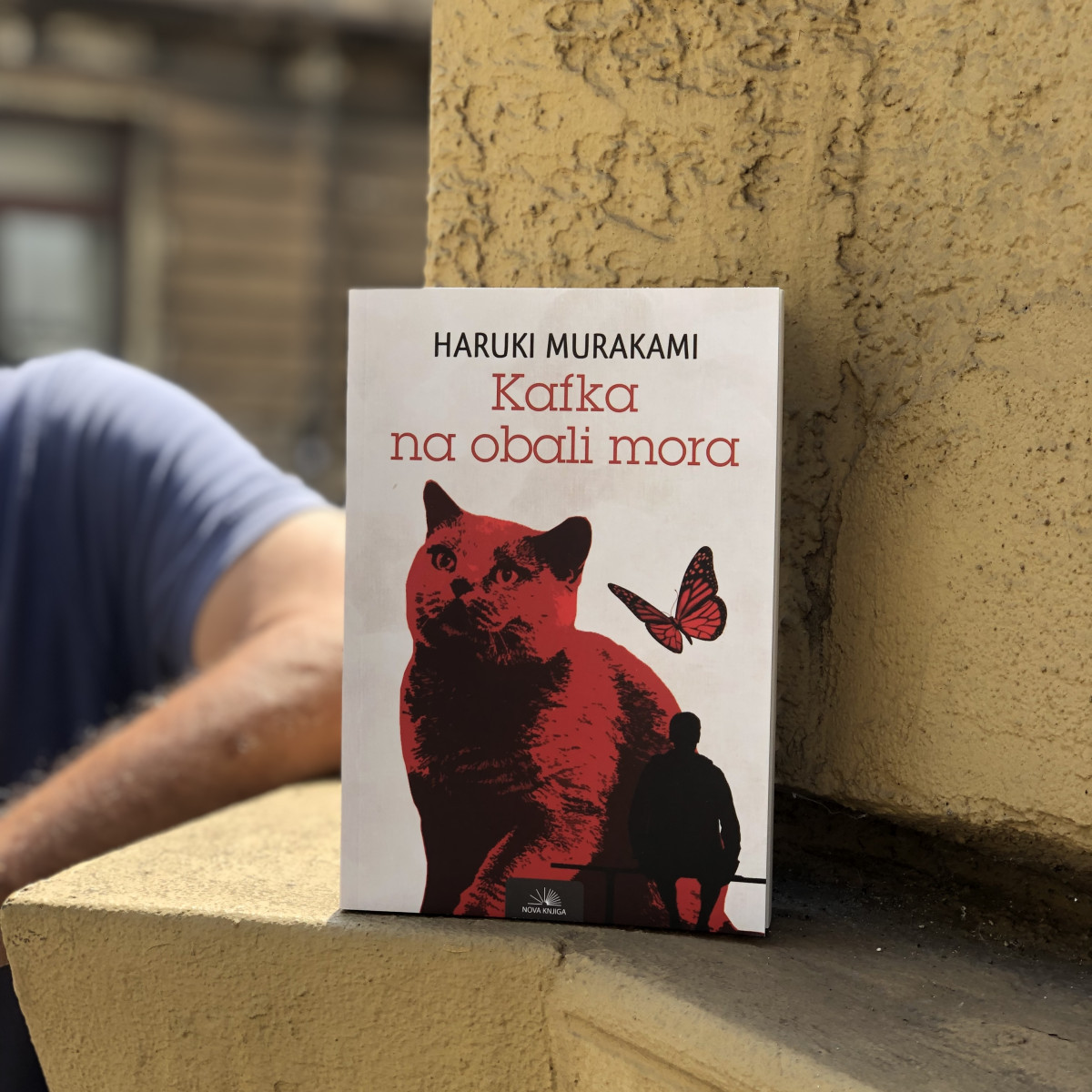
Photo: Marijana Matijević
The book contains two different but interconnected plots. The odd-numbered chapters of the novel tell the story of the fifteen-year-old teenager Kafka, who leaves home fleeing his father's Oedipus curse in search of his mother and sister.
The even-numbered chapters tell about Satoru Nakata, who in his childhood, during the Second World War, had an inexplicable loss of consciousness due to which he cannot read and write, but has the ability to communicate with cats.
Murakami skillfully interweaves humor, sexuality, popular culture and Japanese religious tradition.
Sputnik srce drago
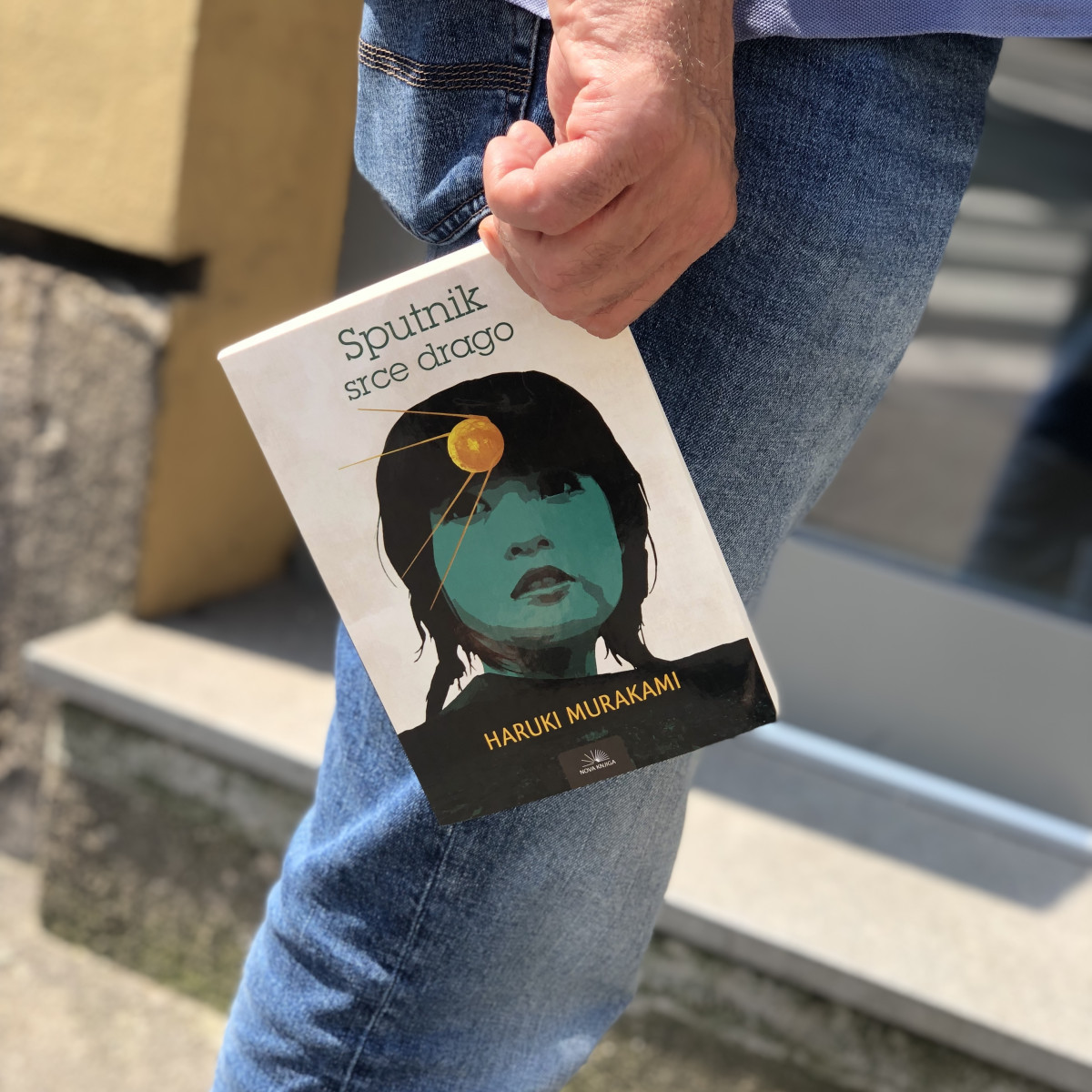
Photo : Marijana Matijević
This is a story about longing and unrequited love. It is about a love triangle between three women.
Sumire is in love with Mia, who is 17 years older, and K has feelings for her best friend Sumire.
Sumire's crush on Mia grows stronger and she decides to go with her on a business trip to Greece. During their trip, he sends K a series of letters describing his experiences and growing obsession with Miu. At one point, Sumire mysteriously disappears.
The characters are lonely, although they are all in love with someone. Love, it seems, did not heal them.
Bezbojni Cukuru Tazaki and his years of pilgrimage
The novel is about the Japanese railway engineer Tsukuru Tazaki.
When close friends, for no clear reason, suddenly end all relations with him, young Tsukuru is left without support in life and falls into depression. He seeks salvation in numerous love relationships that do not fulfill him.
Years later, Tsukuru tries to reconcile with his old friends, sets out in search of the truth and makes a startling discovery.
Prepared by: Marijana Matijević
Biblos Newsletter
For book lovers who enjoy finding the rare
New titles, special copies and quiet recommendations from the antiquarian bookshop.