
Ivo Andrić - our only literary Nobel laureate
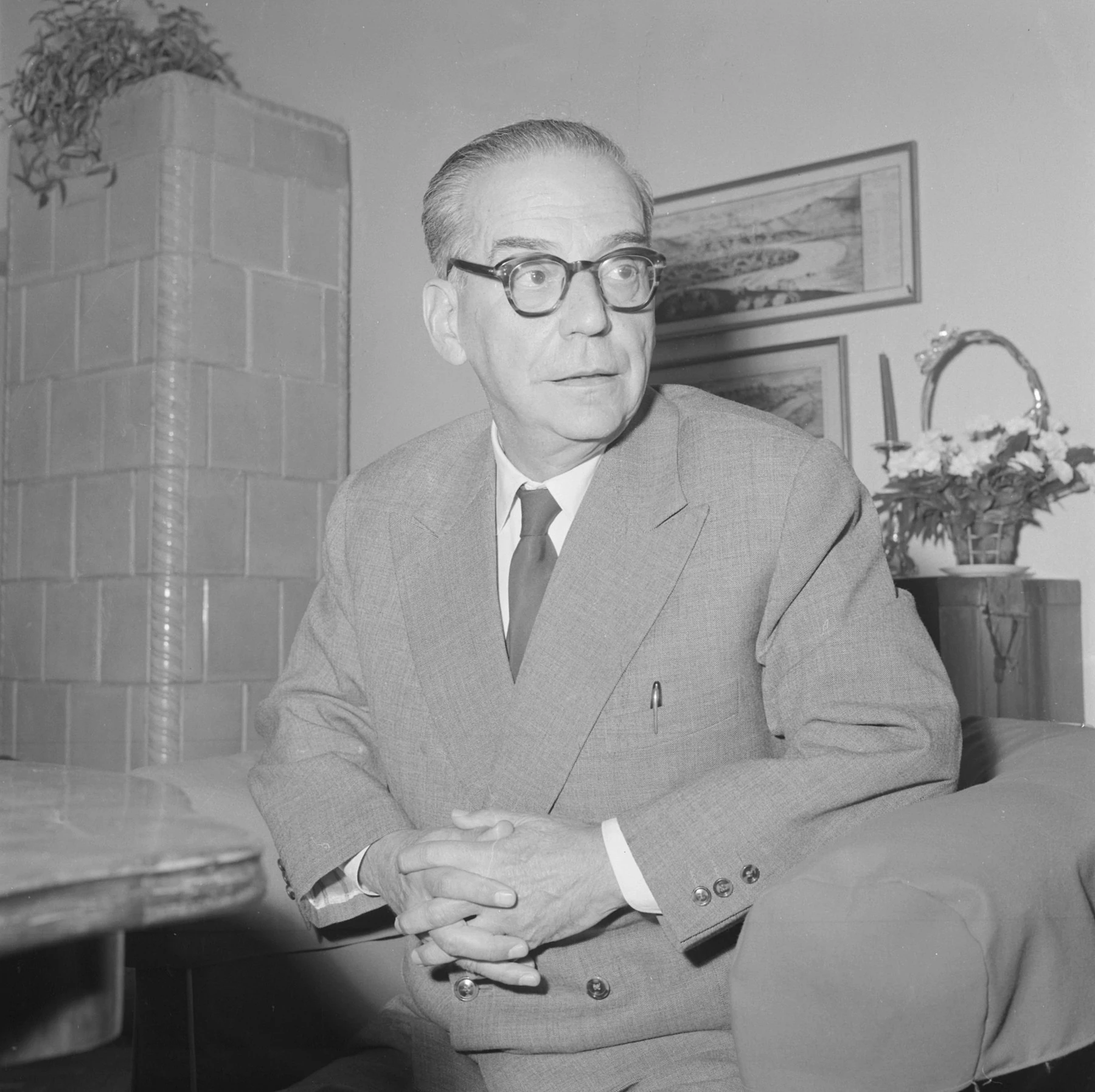
Ivo Andrić (1892-1975), the only Yugoslav winner of the Nobel Prize for Literature (1961), left an oeuvre that deeply marked the cultural and historical consciousness of these areas. He was born on October 9, 1892 in Travnik, in a modest family of Croatian-Catholic origin. His father died early, and his mother Katarina, a seamstress, was poor and could not raise him alone. The boy therefore spent his childhood with his aunt and uncle in Visegrad, next to the Drina River and the Mehmed Pasha Sokolović Bridge, which would later become the central symbol of his most famous novel. Growing up in the multi-ethnic, historically complex and often tense environment of Bosnia decisively shaped his literary interest in borders, bridges and the destinies of people trapped between empires and religions.
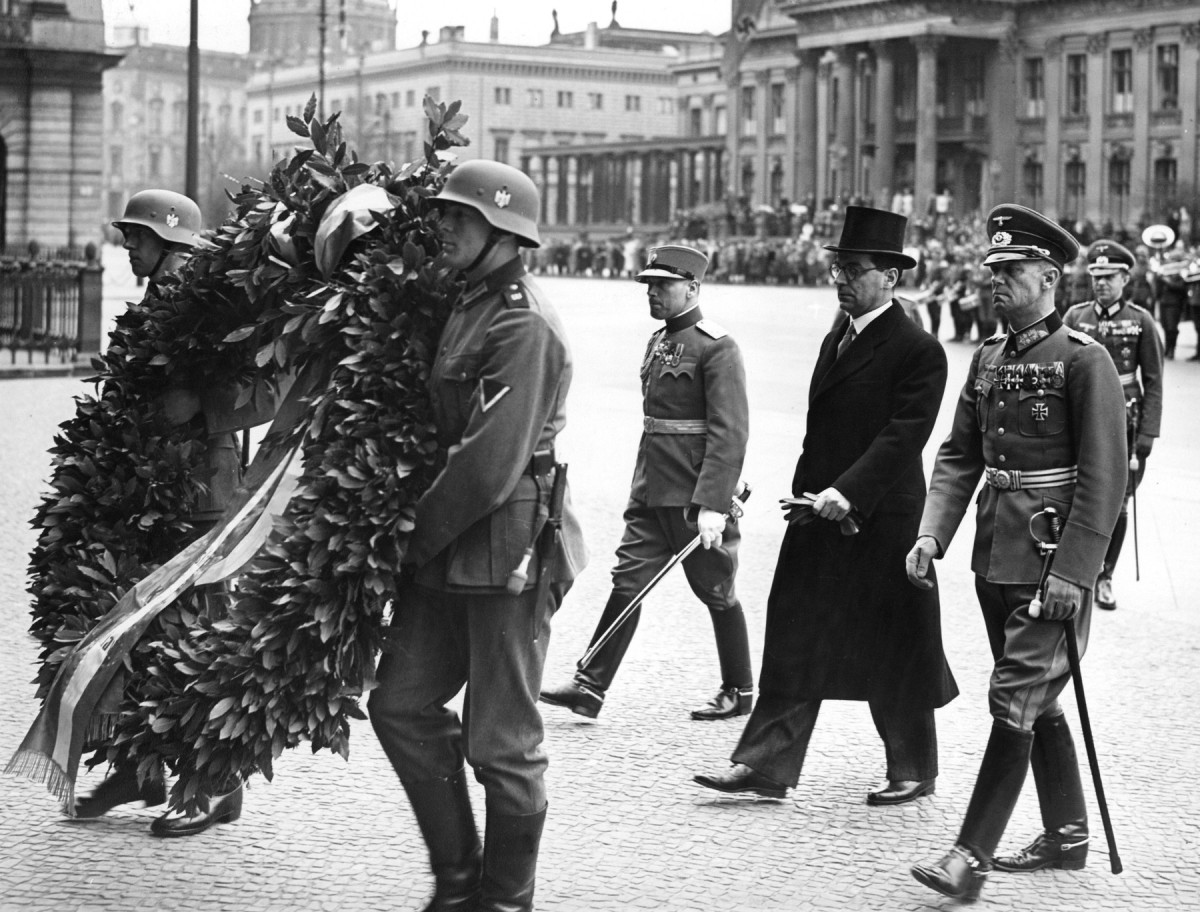
He studied Slavic studies and history at several European universities (Zagreb, Vienna, Krakow, Graz), and already as a student he became involved in cultural and political life. He belonged to the circle of young intellectuals gathered in "Mlada Bosnia". Brussels. He reached the peak of his diplomatic career in 1939 when he became ambassador in Berlin, where he witnessed the rise of Nazism. After the collapse of the Kingdom of Yugoslavia in 1941, he retired from politics and settled in Belgrade. That's when his most fruitful literary period begins - in the same year (1945) he published his three greatest novels: Travnička hronika, Gospodgica and On the Drina bridge.
He was withdrawn, rarely appeared in public, and after the war he lived an almost monastic life dedicated to writing and reading. His personal life was also characterized by self-deprecation. He died in Belgrade on March 13, 1975, at the age of 82.
Creativity and influence
Andrić left an oeuvre that deeply marked the cultural and historical awareness of these areas. His prose is imbued with the history of Bosnia and the Balkans, the destinies of small people in the whirlwinds of empires, conflicts and turning times. He is particularly known for his skilful storytelling that combines historical realism, philosophical reflection and universal questions of human destiny.
The durability of his influence stems from the fact that he managed to turn the local – the Bosnian and Balkan world – into a general metaphor for human suffering, endurance and the search for meaning. His style is both calm and strong, and his ability to portray history through the prism of ordinary people makes him a classic writer.
Andrić's first literary attempts were created during his studies and were published in magazines in Zagreb and Sarajevo. He wrote poems and short stories in the spirit of art nouveau and expressionism. In his youth he was associated with the Croatian literary circle, and early texts were published in the Croatian language (for example in the magazines Hrvatska mlada lirika, Savremenik, Književni jug). Especially memorable is his prose "Ex Ponto" (1918), a collection of meditative and lyrical-philosophical writings created during his stay in prison, which reveals the young Andrić as a seeker of meaning, filled with melancholy and a religious-philosophical tone. Later, in the mature phase, his language gradually became standard literary-Serbian, which is also the subject of polemics and interpretations. Also, in certain i
In intellectual and political circles, Andrić caused controversy: some criticized him for his alleged "anti-Muslim" perspective, because he described Turkish rule in Bosnia through scenes of suffering and violence, while others pointed out that it was he who most deeply understood the complexity and multi-layered nature of Bosnian identity. Both his diplomatic career in the Kingdom of Yugoslavia and his silence during some political breakdowns were interpreted in two ways - as wisdom and distance, but also as a reticence that arouses suspicion.
Nobel Prize
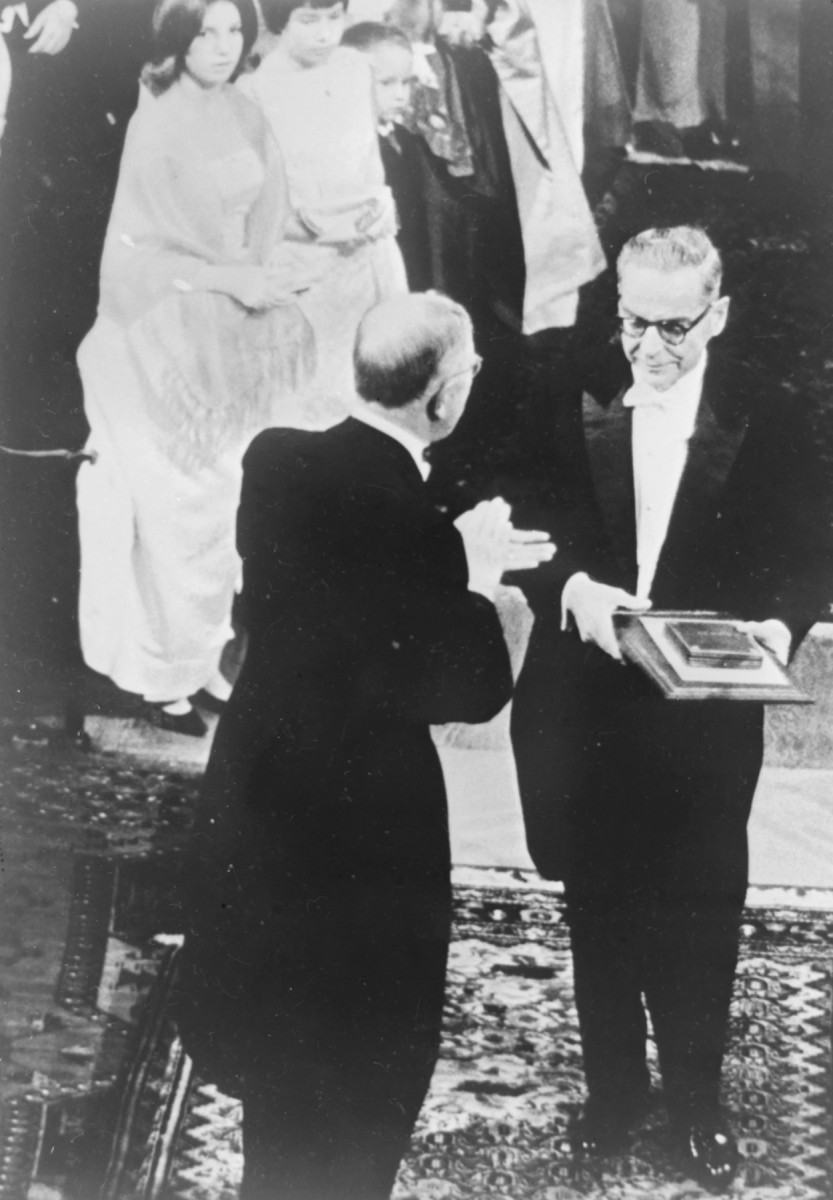
Ivo Andrić received the Nobel Prize for Literature in 1961. In its explanation, the committee highlighted his "epic strength with which he shapes motives and destinies from the history of his country". This means that he managed to raise the local history of Bosnia and the Balkans to a universal level - what happens in a small town or in the prison near Andrić actually speaks about all of us, about human suffering, dignity and transience. Andrić won the Nobel Prize primarily for the novel "On the Drina ćuprija", an extraordinary work that summarizes centuries of history and destinies in one bridge and one community, but also for his entire creativity. The award confirmed his status as a world writer, whose works have been translated into more than forty languages.
Main works
Travnička hronica (1945)

The novel is set in the period between 1807 and 1814 in Travnik, where the French and Austrian consuls meet, each with their own habits, views on the world and attitude towards the "Eastern" environment. Through their eyes and through the eyes of local people, Andrić shows a small town that becomes the scene of great political games, but also a place of closure and misunderstanding. The work shows Andrić's fascination with the meeting of cultures and the clash of mentalities: Europe and the Balkans, East and West, closedness and openness. Among the novel's main protagonists are the Frenchman Daville - educated but lonely; Austrian von Mitterer – cold and devoted to his work; vizier and local authorities trying to balance between different interests. There are also the ordinary citizens of Travnik, whose lives show how politics and history touch small people as well. Find the book in the webshop of the Biblos antique store.
On the Drina ćuprija (1945) The bridge here is not just a building - it is a witness to the arrivals and departures of armies, empires, merchants and ordinary people - each of them leaves a mark on the bridge, and the bridge remains after them, which makes it a symbol of permanence versus the transience of human lives. Through the story of the bridge and the city, Andrić describes the life of Bosnia under Ottoman and then Austro-Hungarian rule. It is this ability to turn one Bosnian village and one bridge into a universal image of human history that makes Andrić's novel a masterpiece.
Throughout the centuries, the bridge becomes a stage for human destinies: there are merchants and peasants,
soldiers and travelers, happy weddings and tragic executions. The bridge connects people, but also bears witness to their divisions, sufferings and wars. The novel does not have one main character, but a series of characters who come and go - little Alihodža, always faithful to the bridge and his town; Abidaga, the cruel construction supervisor; Mehmed Pasha, who as a boy was taken to the janissaries, so he donated the bridge to his native region. Each character brings his own story, and the bridge remains to remember everything. Find the book in the Biblos antiquarian webshop.
Psychological novel about Rajka Radaković, a rich and lonely spinster from Sarajevo who, out of fear of poverty and insecurity, sacrifices love, friendships and her own happiness. Her stinginess gradually turns her into a lonely and embittered old woman, and her life passes without joy. "Miss" is a picture of inner vanity, resentment and inability to love. The book is at the same time a picture of a Sarajevo citizenry in changing times. Apart from the central character, Rajka Radaković, a symbol of stinginess and fear, the other characters - from family to neighbors and acquaintances - are mostly transient and serve as a mirror of her personality. Although the novel is actually a psychological portrait of a woman, it is also a critique of a society where money replaces humanity. A book that still sounds relevant today. of Andrić's most suggestive and compact works. Friar Petar, a Bosnian friar, ends up in an Istanbul prison - the "cursed courtyard". Inside that claustrophobic space, he meets prisoners from various parts of the empire. Stories follow one after another: about guilt and injustice, about people who are there through no fault of their own, and about those who fell under the burden of fate. The prison becomes a symbol of the world, where man is trapped and powerless before higher powers.
Through the character of Friar Petr and the stories of the prisoners, Andrić explores the issue of guilt, punishment, injustice and human weakness. The work is short, but extremely dense and symbolic - a true gem of his prose. In addition to Fr. Petar, modest and kind-hearted, through whose eyes we follow everything, there is also Ćamil, a young man with a tragic fate, at the same time one of Andrić's strongest characters, and Karađoz, the strict supervisor of the courtyard. The characters are portrayed with a lot of compassion, but also with a sense of inevitable sadness. One of Andrić's most poignant and most read books. Find the book in the Biblos antiquarian webshop.
Signs next to the road (posthumously, 1976)
A collection of short notes and aphorisms that Andrić wrote over the years - about life, death, transience and the beauty of silence. The book is often read as his intimate diary of thoughts and philosophical reflections. Published after Andrić's death, the book shows the author in his most intimate version. There are no specific characters in the book, but Andrić himself is felt in every entry - his view on life, the world and man. This book is therefore often seen as his spiritual testament. A book that is read slowly, but stays in the mind for a long time. Find the book in the Biblos antiquarian webshop.

Reflections and world view
Andrić's work is imbued with the issue of human suffering and endurance. His characters are often small, inconspicuous people who carry the burden of history on their backs. His writing is characterized by a calm, calm tone, without pathos, but with deep sadness and Bridges, rivers and prisons appear as symbols of borders, transitions and imprisonment. He was a skeptic and an observer: he believed in the transience of everything human, but also in the power of storytelling.
Ivo Andrić was at the same time a historian of human destinies and a poet of the everyday; his works show how the whole of human history can be reflected in one small place is an author who quietly and consistently built a literary bridge between his experience and the universal questions of life and death - a bridge that still stands as firmly as the one on the Drina.
Why read Andrić? bridges, castles and prisons are not just places on the map - they are symbols of life, suffering and dignity. By reading it, we get to know ourselves in their fears, hopes and choices. Andrić is still interesting today because he talks about human weaknesses, fears and the strength to survive. This is why new generations always find meaning in his books href="https://www.antikvarijat-biblos.hr/autor/andric-ivo">Look for Ivo Andrić's works in our webshop!
Prepared by: Daniel Glavan

Biblos Newsletter
For book lovers who enjoy finding the rare
New titles, special copies and quiet recommendations from the antiquarian bookshop.