
Knut Hamsun - can the writer's political views be separated from his literary work?

"I will banish my thoughts if they think of you again, and I will tear out my lips if they say your name one more time. Now, if you really exist, I will tell you my last word in life or in death, I say goodbye." From the novel "Hunger"
Nobel Prize winner for literature, Knut Hamsun, was born in 1859 in Norway.
When when he turned five, the family moved to the north of the country, and the specific landscape of that climate and the rural community left a strong impression on the young writer.
Later, this will especially come to the fore in Hamsun's books because it is the relationship between the individual, culture and nature that is the main theme of his novels.
"My home was poor, but infinitely precious." Knut Hamsun
Even as a boy, he separated from his family and went to live with his uncle to help him with his work at the post office he ran. However, he did not come to a supportive environment, namely, his cousin beat him and starved him. Because of this relationship, Knut, according to his own words, had mental health problems throughout his life.
Nevertheless, he managed to leave the bad environment and supported himself by doing various jobs. He was a cobbler's apprentice, a stonemason, a teacher and at one point a tram driver.
He started writing when he was about eighteen years old. The Norwegian is a pioneer of the psychological novel, and in order to portray what happens in the protagonist's mind, in his works he used the stream of consciousness technique, i.e. the characters talk to themselves.
In the 20th century, such a way of writing will be associated, among others, with Virginia Woolf, James Joyce, Hermann Hesse and Franz Kafka.
Also, when we talk about his literary influence, the statement of the Polish-American author Isaac Bashevis Singer should be conveyed, which reads: "The entire modern school of fiction in the twentieth century stems from Hamsun. They were entirely Hamsun's students: Thomas Mann and Arthur Schnitzler, and even American writers such as Fitzgerald and Hemingway.“
Sympathizer of Nazi Germany
During the Second World War, Knut Hamsun firmly advocated National Socialism and advocated the German invasion of Norway.
He supported the Quisling government and contributed to the deportation of people to death camps.
Also, in order to prove his loyalty to the Nazis, he personally presented his Nobel Prize to Goebbels, the German Minister of Propaganda.
Unfortunately, he did not regret his actions until the end of his life. Therefore, the legitimate question is whether the writer as a person can be separated from his work? As for literary critics, in this case, the answer is yes.
Hamsun as an author, according to znalci, is of such quality that he should be read, regardless of the fact that he had, to say the least, terrifying political views.
Blessing of the earth
The action of the novel takes place in Norway. Isak, the main character, is not a great thinker, but he is a hard worker. It has a very clear goal; cultivate the land, create a home and start a family.
The book is in a way an ode to nature and at the same time a critique of industrialization and the so-called progress of modern society. The writer reminds us of what is actually necessary for a good life, which is home, love and the beauty of the passing days.
This edition of the book "Blessing of the Land", published by the publishing house "Sareni dučan", was translated by our poet Antun Branko Šimić.
Hunger
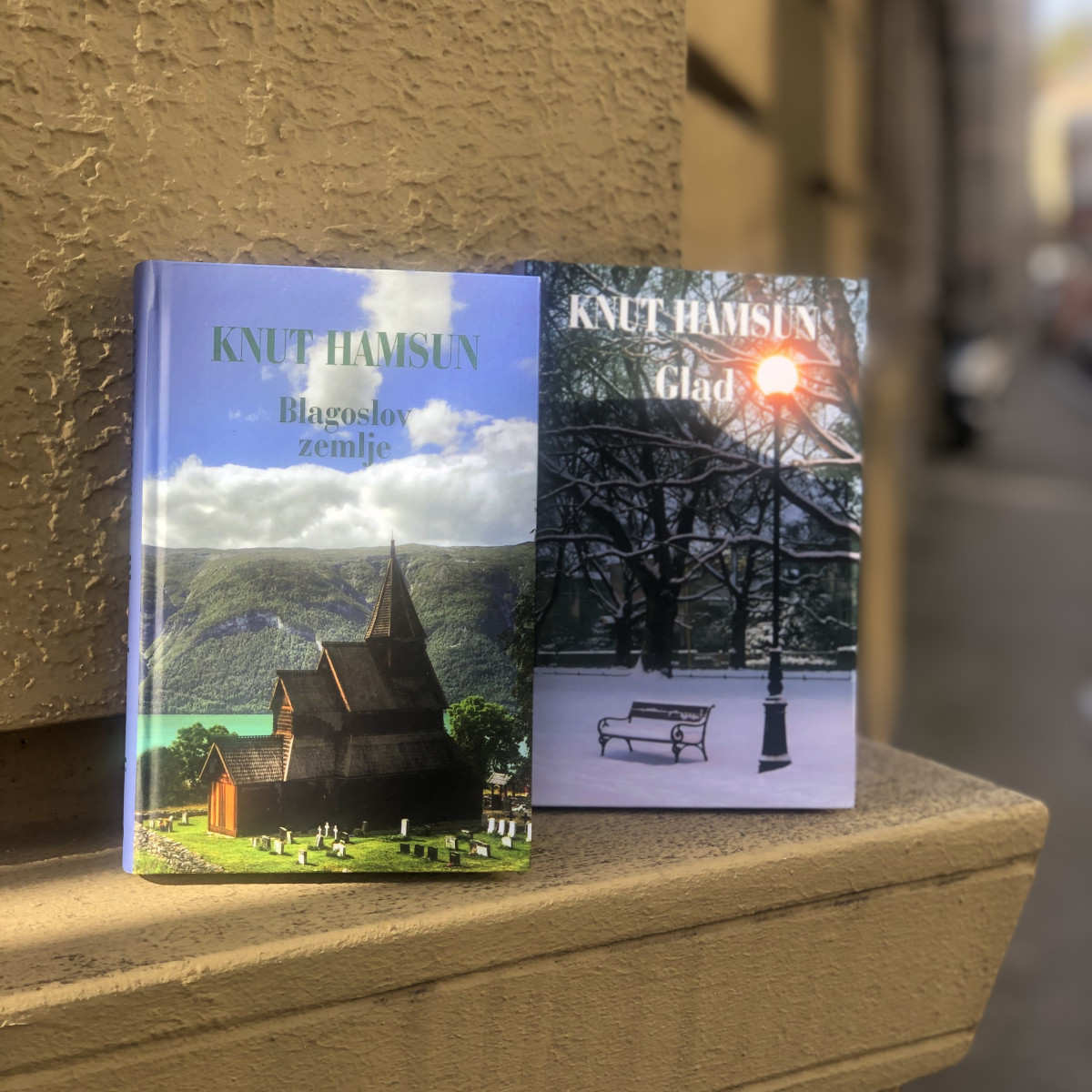
Photo: Marijana Matijević
Classic of the modern world literature set in the 19th century. Hunger is the story of a Norwegian artist who wanders the streets of Kristiania, today's Oslo, and lives on the edge of existence.
It is an autobiographical work in which the author talks about the desperation and poverty of a starving writer. A young man is looking for inspiration while desperately trying to make ends meet. Life in the city is merciless. He has no job, no friends. He is alone, without anyone's help.
Knut Hamsun, with a little irony and a lot of spiritual strength, presents to the readers his difficult life story that glorifies human dignity, even in moments of man's greatest trials.
Mysteries
Johan Nilsen Nagel is a mysterious stranger who suddenly, one summer, appeared in a small Norwegian coastal town. Just as suddenly, out of the blue, he disappeared.
In the meantime, he raised a lot of dust behind him, leaving a strong impression on the local community. The biggest mystery in the novel is precisely Nagel, more precisely, we wonder what his true personality is, and what intentions he actually has.
The main character is full of contradictions. On the one hand, he is modest and just, and on the other, corrupt and arrogant. It brings comfort to the wounded, but there is also its dark side.
Pan
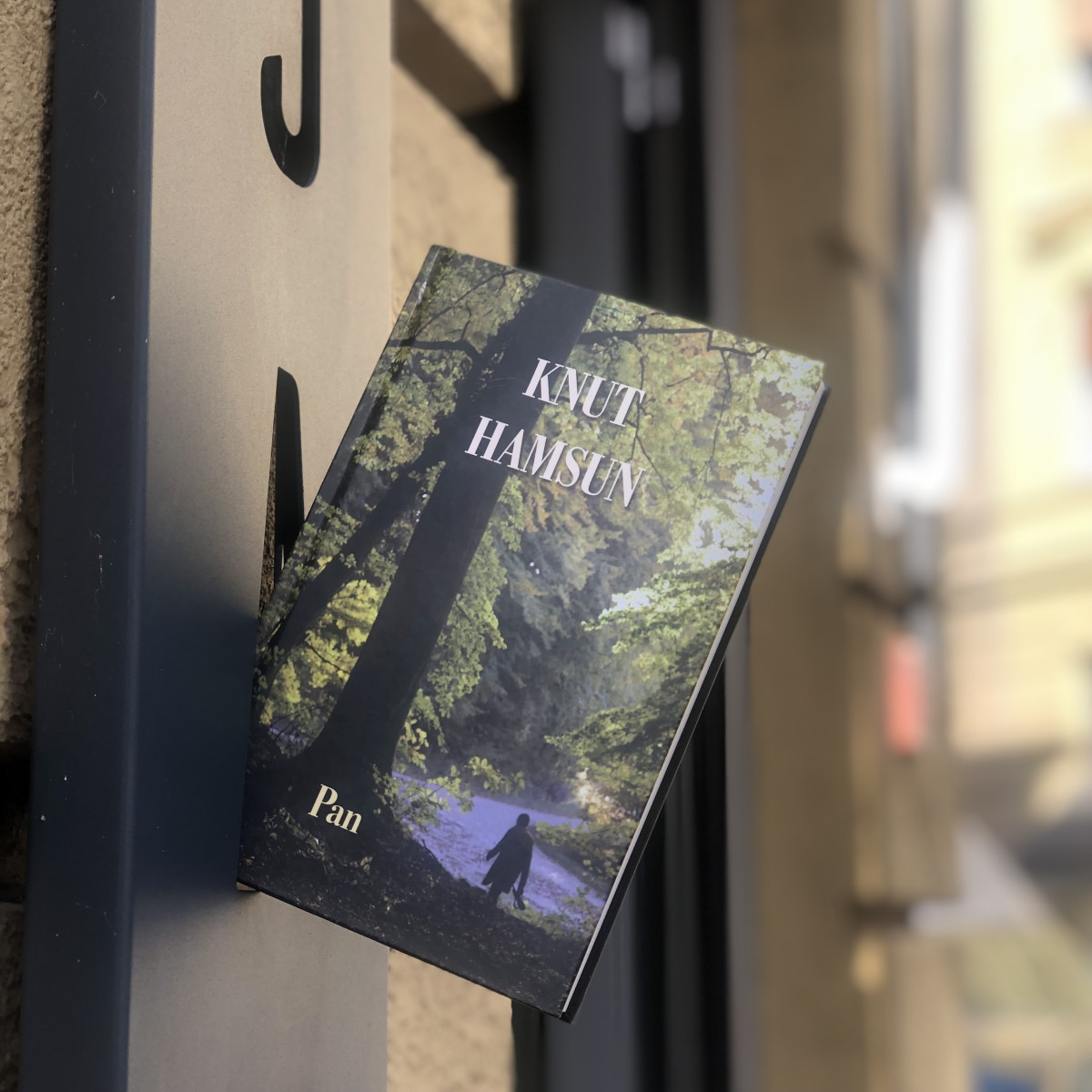
Photo: Marijana Matijević
Lieutenant Thomas Glahn, a hunter and former soldier, lives alone in a cabin in the middle of the forest with his faithful dog Aesop.
His life changes a lot when he meets Edvarda, a girl he falls in love with. The attraction is strong and mutual. However, as the relationship develops, there is more and more jealousy, resentment and misunderstanding between them.
The novel, in short, talks about how unrequited love affects the human psyche.
According to many literary critics, this is Hamsun's most beautiful and artistically perfect work.
On Overgrown Paths

Photograph: Marijana Matijević
Hamsun wrote this book as a ninety-year-old, at the time he was in custody awaiting trial for treason, for which he was accused of collaborating with the Nazis.
Narrating in the first person, the writer describes the events from his arrest in May 1945 to the sentencing in June 1948.
He describes meetings with people, memories from his childhood, and reflects on the situation he is in at that moment. Although he showed open sympathy for the infamous German regime, in the following words, the Nobel laureate tried to justify himself and prove his innocence.
"What burdens me - the only thing and only my article and according to the newspaper. There is nothing else that could be faulted. To that extent, my account is very simple and clear. I didn't report anyone, I didn't participate in any meetings..."
Victoria
It is about one of the most famous Norwegian romance novels. Johannes, a miller's son, falls in love with Victoria, the daughter of an impoverished Separated by class differences and faced with the pressure of the environment, two young people are in an extremely complex relationship. In one moment they love each other, while in another they want to be together, but they cannot find each other.
During the entire text, they kiss only once, but the writer manages to convey to the readers all the ecstasy, happiness and potential of the love that is born.
Norwegian writer, this work has been screened the most times. Knut Hamsun later named his daughter Victoria.
Prepared by: Marijana Matijević
Biblos Newsletter
For book lovers who enjoy finding the rare
New titles, special copies and quiet recommendations from the antiquarian bookshop.