
The most expensive book we sell costs 10,000 euros, and one of the most sought after was destroyed by partisans...

It says:Karmela Devčić Published: January 16, 2024 Jutarnji List
Photos: Nera Simic/Cropix
'A collection of banned editions of the 20th century would be interesting to collect. And here's how much books with Krleža's and Andrić's signatures cost'
Of all Croatian antiquarians, Daniel Glavan and his Biblos are the most common address for old and rare Croatian books.
For Glavan, it is "both a job, a passion, and a hobby". He is interested in manuscript books, books written in Glagolitic and Croatian Cyrillic, first editions by authors like Marulić, Bošković... He buys around the world, sells around the region. In addition to Croats, institutions and collectors buy from him, various interested parties from Serbia, Slovenia, Bosnia and Herzegovina, Montenegro... There are also buyers from overseas countries, from various continents, usually people with Croatian roots.
"Ninety percent of the most valuable that I offer I sell within a year. All these books find a buyer. Rare books are not a problem, the bigger problem is selling average ones, of which I have many."
How much is a book in good condition with signed by Krleža or Andrić?
"These go from 250 to 500 euros. It also depends on who it is signed, and it is not the same whether the author signed the first or a later edition. For example, on the world market, the first edition of Hemingway can be worth 300,000 dollars, and the second, possibly, is worth 10,000. What plays a role in that estimate in Croatia."
Buyers of foreign editions do not look for signed editions author. The most sought after are signed books by Krleža, Ujević, Andrić, A. B. Šimić, Kamov...
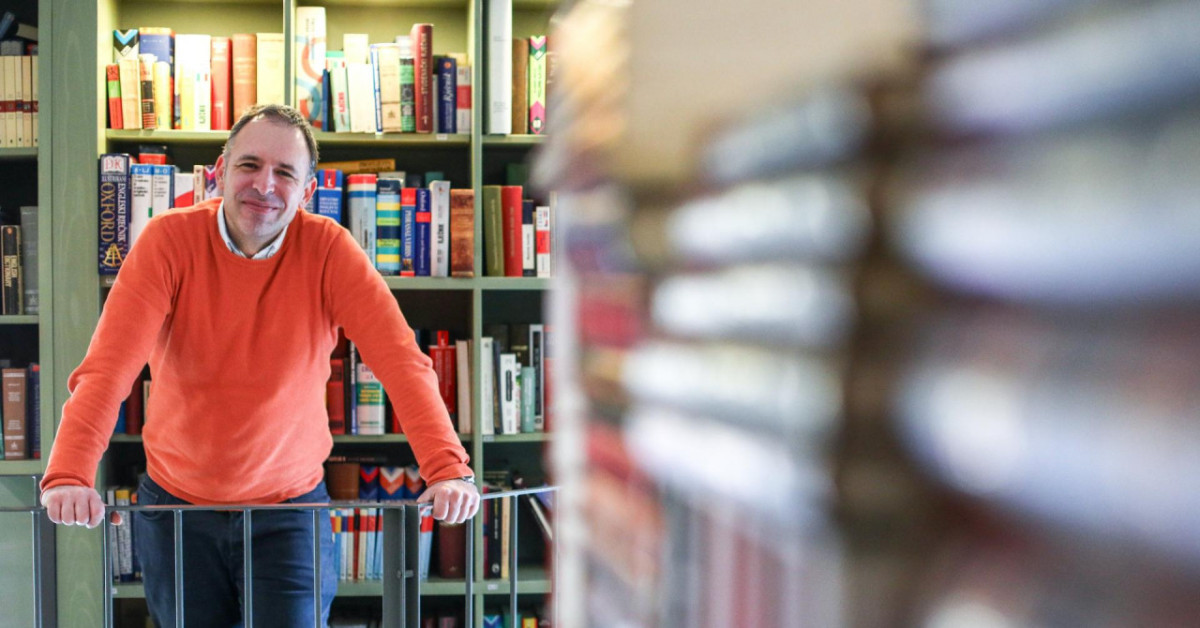
In his private, personal library, Glavan wishes for the first printed book in the Croatian language. to have one of the editions of "Judite" from the 16th century.
At one time, he had, admittedly, only half of "Judite", an incomplete copy from 1627. He sold it to one of our institutions.
"I had a rare copy of 'Turpitude' by Marko Ristić, one of the initiators of Serbian and regional surrealism, a book on which Ristić's dedication to Krleža from In 1938, 'Turpitudu' was banned by the king immediately after its publication, in 1936. It was a satire that the royal power of that time could not tolerate."
The most expensive title currently sold by Biblos costs 10,000 euros. First edition, from 1764, "Ruins of the Palace of the Emperor Diocletian at Spalatro in Dalmatia" by Adam Robert, a world-renowned Scottish architect. Glavan bought the first monograph of Diocletian's Palace, which brings its scientific treatment and reconstruction, at a fair in Milan.
"Adam Robert came to Split in the 18th century, he covered the city center in the book, he made 60 or more plates, scenes," says the antiquarian.
As he says, 95 percent of rare books are acquired abroad, at fairs. For twenty years he has been traveling around Europe and collecting them, he has contacts with antique dealers from all over the world.
For the last two years in April he has been going to New York, to the world's strongest antiques fair. A few days after this conversation, he is preparing to go to Stuttgart, where the largest European antiquarian book fair is held. He regularly visits fairs in Venice, Paris and London.
"Della nuova geometria" by Frane Petrić, one of the first books on geometry, can be bought in Byblos for 6,000 euros. It is from the 16th century, very well preserved.
"It is one of the first books in the world in which a geometric system is set up with illustrations, the first undefined geometric terms appear in it. Here Petrić continued Euclid's earlier works," said Glavan briefly.
Besides the one in Biblos in Zagreb, three more copies of this book are sold in the world. Their prices range from 9,000 to 18,000 euros.
In our rare book market, historical books, important for certain parts of Croatia, are most often sought after. oljici, currently Glavan does not have any for sale. Also, incunabula of Croatian authors from the 15th century were sought.
The third most expensive book in Byblos is "La Dalmazia descritta", author Carrara Francesco, Croatian historian and archaeologist. The price of this edition from 1846 is 3600 euros.
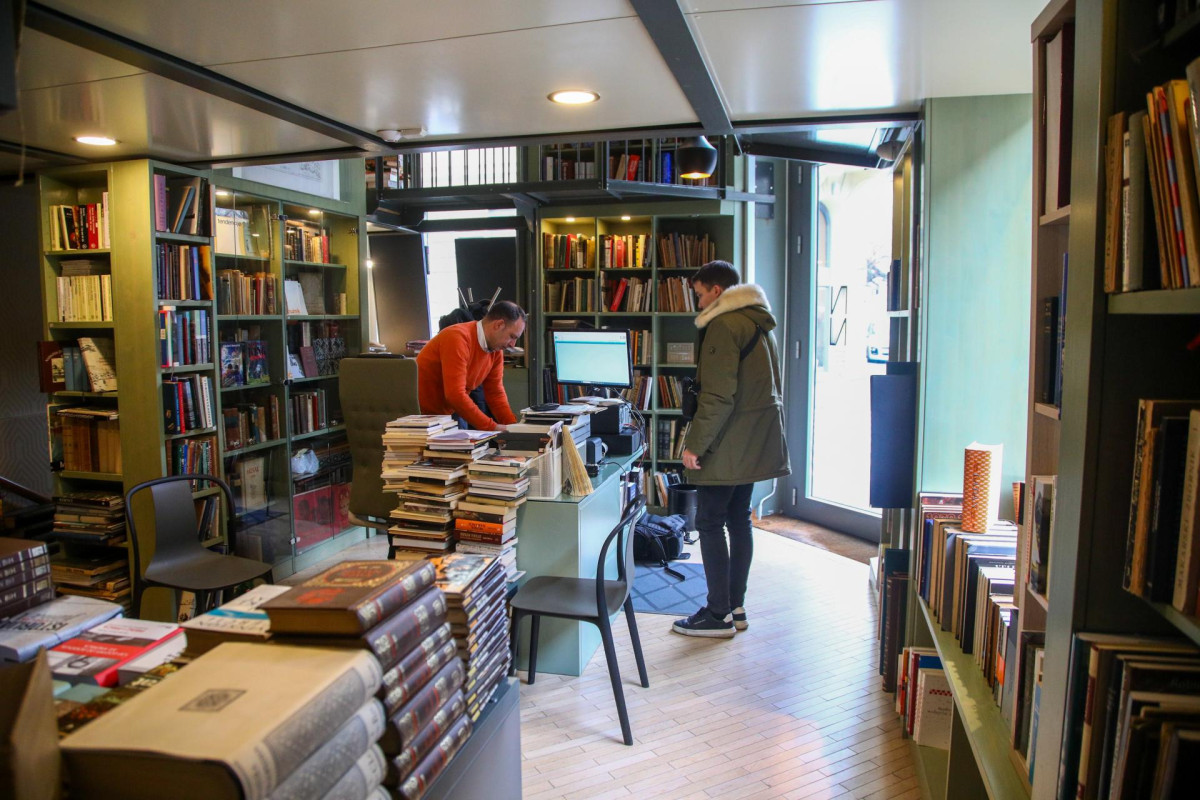
It contains 24 graphics with Croatian folk costumes, full-page color illustrations with legends in Croatian, Italian and German. They also have protective films. This geographical and ethnographic work, which tells about the peculiarities of Istria and Dalmatia, was published in Croatian in 2006, by the Ethnographic Museum in Split.
"Die Ehre des Herzogthums Krain", Vol 4 (Glory of the Duchy of Carniola) by Johann Weickard Valvasor can be purchased for 3,500 euros. It is the fourth of four volumes, the only one in which Croatia is covered, Slovenia is in the first three volumes.
Glavan will say, partly in jest, more seriously, that what he does is "adrenaline work". Because you never know what you will find in an apartment, what someone will bring you to an antique store. "This job is very unpredictable. Full of surprises."
Collections of Radovan Ivšić from the Second World War period are in high demand, then the fifth Croatian encyclopedia, which was published on May 2, 1945, and the partisans destroyed almost the entire edition.
He entered the antiquarian business, he says, "by accident." Exactly 20 years ago, he rented a stand at Britanac, a year later he already opened Biblos. They were not far from the Zagreb Cathedral for a long time, and six or seven years ago they moved to Zagreb's green wave, on the very corner of Palmotićeva and Đorđićeva.
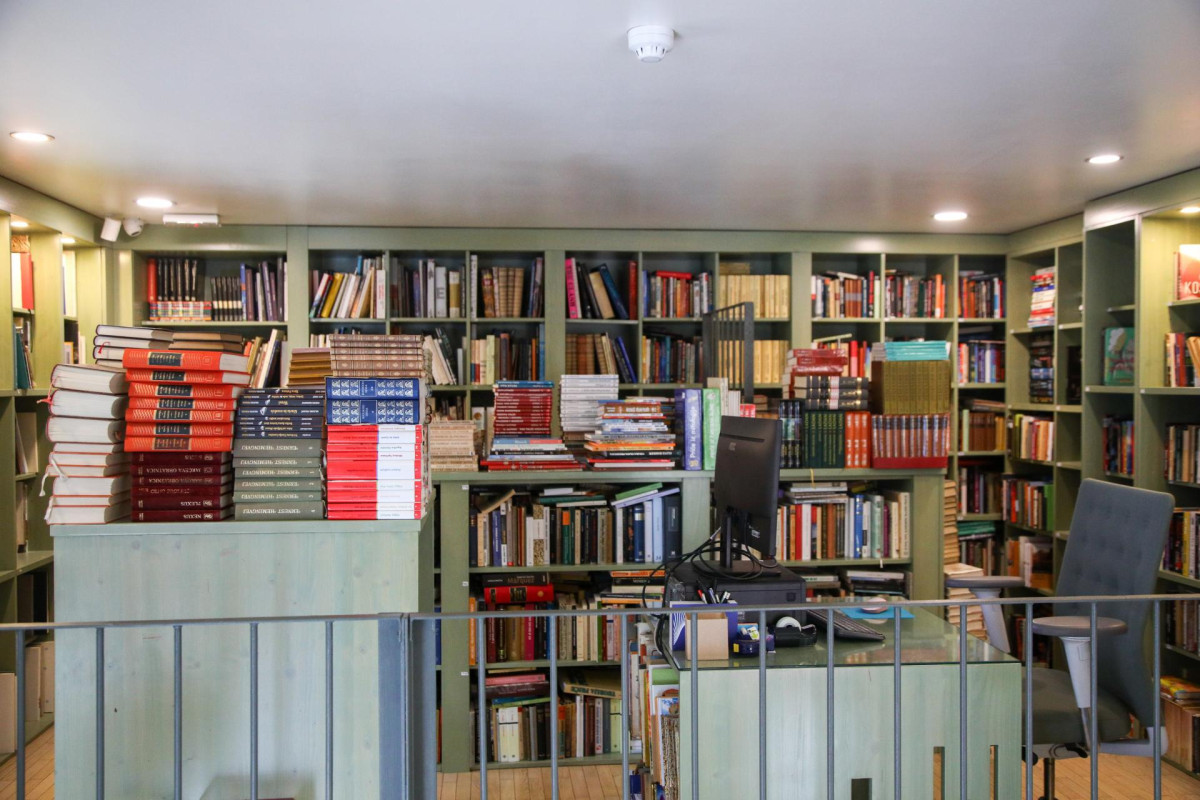
One of the favorite moments of antiquarians who are focused on Croatian repatriation book and cartographic heritage was the discovery of the first edition of Petar Zrinski's "Adrian Sea Sirens", a book that was printed two years before Petar Zrinski was executed. The book was bought by Daniel Glavan at a foreign fair. titles?
"After the earthquake, many people got rid of books because they were renovating apartments, I visited a lot of apartments in the city center. However, there were almost no rare books, only average ones. Antiquarians expected to find who knows what, but very few rare and old books appeared. I know this from conversations with other colleagues." "This is because of the Second World War and its consequences. As a result of the NDH government, a lot of Jewish and Orthodox families were removed from the city. After 1945, the Communists nationalized the apartments. The books were paid for by the guild. In the center of Zagreb, there are few families that have continuity for more than 80 or 90 years. Here, in the neighborhood of our antique store, the owners of the building are all those who arrived after 1945. There are very few natives in the inner city. It used to happen that I found books in the center of the city in charming places where the new owners had placed them."
Biblos Newsletter
For book lovers who enjoy finding the rare
New titles, special copies and quiet recommendations from the antiquarian bookshop.