


Hesse's family expected him to become a priest. However, the writer was significantly influenced by the East. He interwoven his stories with concepts from Buddhism and Hinduism, as well as concepts such as enlightenment, Maya (illusion) and awareness.
"We are only happy when we do not ask for anything from tomorrow, and from today we gratefully receive what it brings us." Hermann Hesse
German writer was born in July 1877 in Calw. Music and literature played an important role in the Hesse family of eight. Mother Marie wrote poetry, and father Johannes skillfully used words in his sermons. Both parents spent a period of their lives in India as missionaries.
Since he grew up in a Christian environment, they directed him to join the ministry and sent him to a seminary. Hermann didn't do very well there. Soon he began to suffer from insomnia and chronic headaches.
He was taken to a pastor for treatment, but his health further deteriorated due to his unrequited love for the priest's daughter, which brought him almost to the brink of suicide. Broken, he goes to a sanatorium. Fortunately, after a few months, Hesse managed to recover and, due to his good conduct, he was dismissed.
People around him very quickly understood that he was an exceptional literary talent. Namely, even as a young man he composed rhymes with ease and, following the example of his brother who rebelled against his family by enrolling in a music conservatory, he decided that he wanted to be a writer.
In a letter to his wife, his mother Marie once wrote:
"The little one has life in him, incredible strength, a strong will and, for his four years, a truly amazing mind."
Although he was quite rebellious and disinterested in traditional education, Hesse was easily one of the best students.
Nevertheless, towards the end of his schooling, he decided to leave the gymnasium and got a job as an apprentice with a mechanic and as an employee in bookstores and antique shops. :)
His life changed significantly in 1904 when he published his first novel entitled "Peter Camenzind". The book was a great commercial success, and Hermann Hesse began to make a living from writing. He got married, had three sons and moved to the countryside.
He sought inspiration, among others, in the works of great Western philosophers such as Plato, Spinoza, Schopenhauer and Nietzsche.
For his work, in 1946, he won the Nobel Prize for Literature.
The influence of the East
One could say that Hermann Hesse's interest in India was inherited. Namely, as we have already mentioned, the father, mother and grandfather stayed there as missionaries for several years.
Although his parents respected Buddhism and Hinduism to a certain extent, they still believed that Christianity was the only real and true religion. This was often a source of conflict between them because the young writer could not stand dogmatism.
In the period from September to December 1911, Hesse went on a "trip to India" during which he visited Sri Lanka, Malaysia and Sumatra.
There are several probable reasons why he decided on this venture. His marriage was in crisis, then he wanted to get away from the negative political situation that reigned in Europe at that moment, and finally, there is the need for spiritual development.
In some way, the West was inferior to Hesse. However, this did not mean, in his opinion, that Westerners should simply accept the Eastern way of thinking. In fact, he was skeptical of all religions and believed that intellectual and spiritual development lead to creating new, individualized ideas.
What impressed him the most on that trip was the connection felt between people despite ethnic or religious differences.
"The beggar stutters in a strange dialect, and everyone around him understands him, regardless of the fact that they do not speak the same language, nor do they belong to the same people. Everywhere an unusual and happy feeling that all people are equal, that they are brothers and sisters. That old and small truth that there is only one humanity left the biggest impression on me." Hermann Hesse
Ultimately, due to health reasons, the writer did not reach South India that time (he had visited it for the first time 11 years earlier), but the terms and concepts from those regions were the basic motives of his later works.
It should be said that Hesse was very specific, so he also criticized Buddhism, which, as can be seen in his books, impressed him.
The following quote perhaps gives us the best insight into his knowledge about life. The difference between the worshiped East and the suffering West was no longer important to me. I realized that thousands of modern admirers of Tao had never come across the word "Tao" and that in both Europe and Asia there was a timeless world that was a part of it. Of Europe and of the Bible, of the Buddha and of Goethe. This is where my magical education began. But I stopped with my longing for India and my escape from Europe. Only then did the Buddha and the Tao Te Ching sound clear and familiar to me." Hermann Hesse
The influence of C.G. Jung
The two giants had a friendly relationship. They met several times in their lives, and often exchanged letters. Jung even wrote the foreword to Steppenwolf, one of Heese's most significant works.
During the only session of psychotherapy with Jung, Hesse allegedly stated that if he overcomes creative neurosis, he will stop writing, so he decided to end the therapy.
In his books, the German writer often dealt with topics that the Swiss psychologist also dealt with.
Jung's influence is perhaps most visible in the novel "Demian", where Hesse through his characters thinks about the concept of individuation, self, ego and anime.
Psychotherapist Lang stated: "Demian is a novel of individuation par excellence. The phase of the journey to self-knowledge is described in the chapters: Bird, Beatrice, mother Eva and Demian, and these are the archetypes produced unconsciously."
Also in the novel "Steppenwolf" the writer talks about the archetype of the shadow, another Jungian concept, that is, our dark a side that needs to be made aware and integrated in order for man to become an authentic being.
Literary works of Hermann Hesse

Photo: Marijana Matijević
Steppe Wolf
Harry Haller is a sad and lonely intellectual who has lost the joy of life. He doesn't feel whole, like he's half-man and half-wolf.
He listens to Mozart, reads Goethe and Dostoevsky, is fascinated by Buddha and Gandhi. His life changes dramatically after he meets a woman who is his opposite, carefree to the unconventional Hermina.
The novel was initially banned in some states of the USA, and became extremely popular only in the 60s and 70s when members of the hippie movement discovered it. east
Photo: Marijana Matijević
It is about a story about an inner pilgrimage, about the human desire for enlightenment and the long road that must be traveled to reach it ultimate goal.
Members of the mystical Alliance headed to mythical lands in search of truth or God.
Zarathustra, Pythagoras, Plato, Buddha, Mozart and Baudelaire are some of the companions or those the author meets on this mysterious journey through space and time.
Using clear and accessible language, the book brings together the experience and conclusions of many years of spiritual struggle.
Game of glass beads
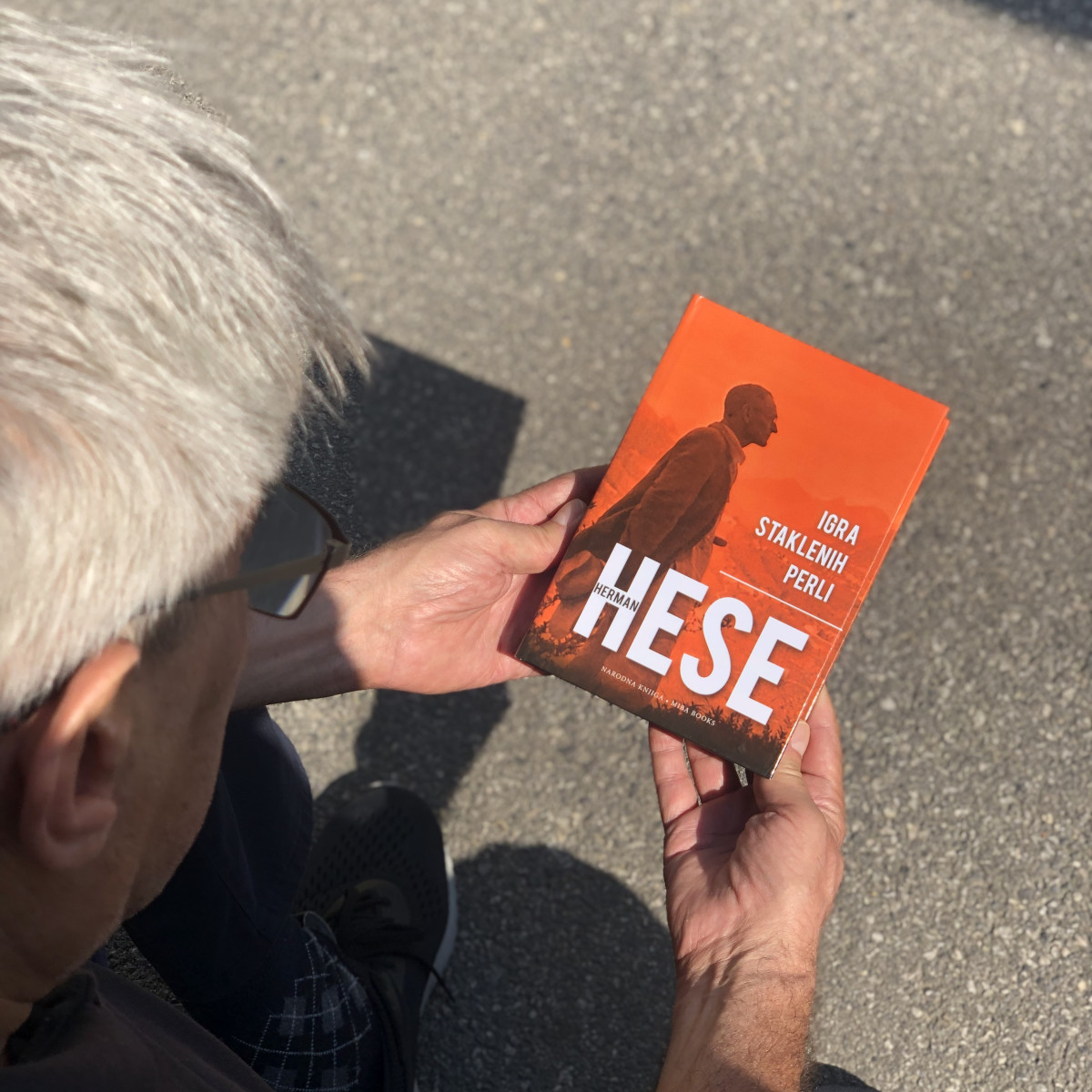
Photo: Marijana Matijević
The action takes place in the 23rd century in the fictional utopian state of Kastalia. The intellectual elite are in power in that country.
It is surrounded by a larger, completely different state where wars, political intrigues and the struggle for power take place.
Selected, gifted boys are sent to Castalian schools where they learn about music, philosophy, literature and art history. If someone fails to finish school, he is ostracized from society.
The crown of their education is the game of glass pearls.
Narcissus and Chrysostom

Photo: Marijana Matijević
A story about two people with completely different characters. One is an ascetic monk, and the other is a romantic young man eager for worldly experience.
Goldilocks represents nature and the "feminine conscious mind", but also the anima, the male unconscious, while Narcissus embodies science, logic and God, i.e. the "male conscious mind" or animus, the female unconscious.
This duality within man between emotions and reason is a theme that Hesse dealt with throughout of life.
U zrvnju
One of the first novels of the great German writer. The author describes the fate of a gifted child whose ambitious father sends him to a seminary in order to achieve academic success.
Hans obediently accepts what is expected of him, until he befriends a rebellious young poet. After having a nervous breakdown, he goes home.
Here Hesse dives into the head of a young man, exploring his strong struggle between personal needs and the demands of society.
Knulp
The book influenced the writer Jack Kerouac, as well as other authors of the Beat generation.
Knulp is an eternal vagabond, wandering from city to city and does not want to settle down. He stays with friends who provide him with food and shelter.
Lying on his deathbed, he "talks to God" and regrets his wasted life. However, it is revealed to him that his purpose was actually to bring the longing for freedom into the everyday life of ordinary people.
Even an aimless life, he realizes, has some meaning.
Siddhartha
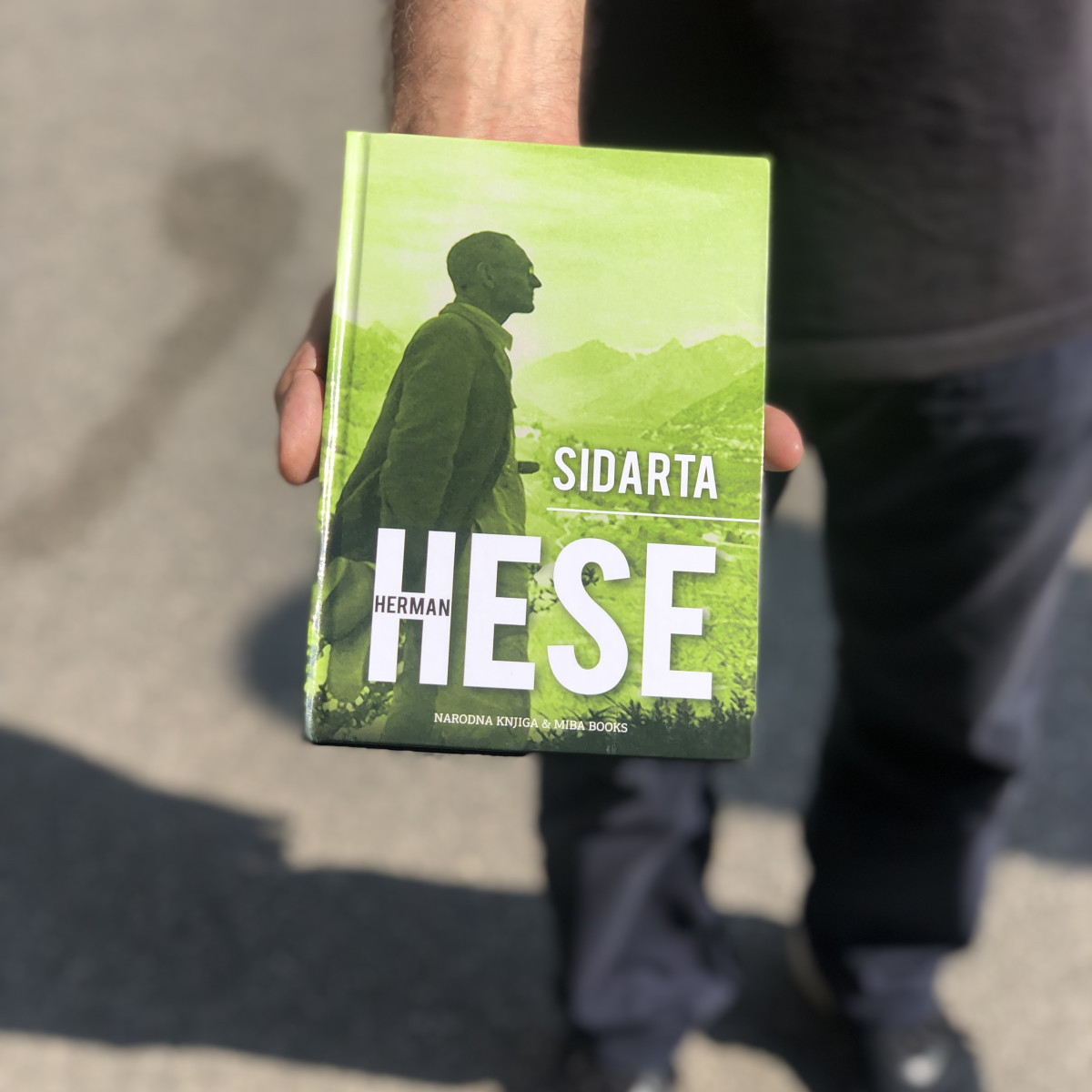
Photo: Marijana Matijević
The theme of the novel is the search of Siddhartha, a rich Indian Brahmin, for spiritual fulfillment.
The main character leaves his comfortable world and goes on a journey during which he meets wandering ascetics, Buddhist monks, successful merchants, the courtesan Kamala and a simple boatman who has achieved enlightenment.
Hesse combines Eastern religions, Jungian archetypes and Western individualism in order to portray as faithfully as possible man's need to find meaning.
Ultimately, Siddhartha realizes the wholeness of life and achieves a state of bliss and the highest wisdom.
Prepared by: Marijana Matijević