


From accidental discovery to the owner of a famous antique store, Daniel Glavan saved thousands of books from oblivion
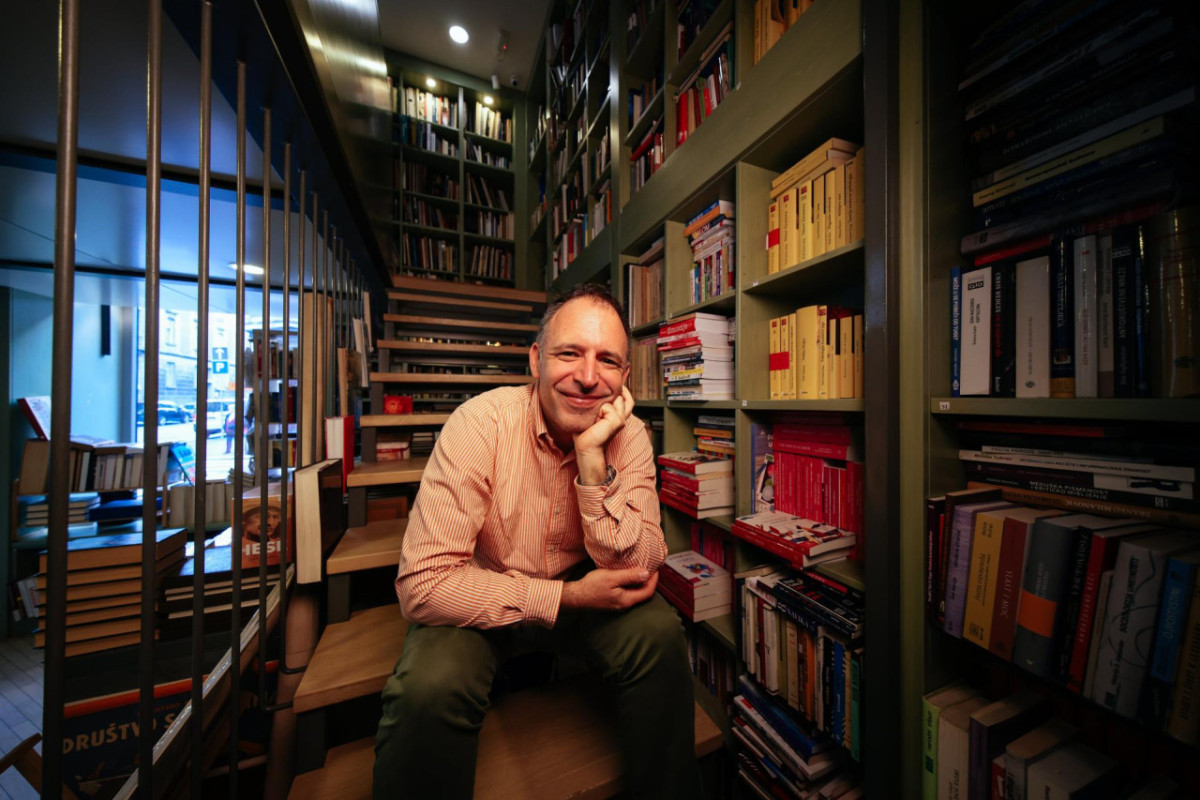
Daniel Glavan, a 48-year-old antiquarian from Zagreb, found his first valuable book by chance on the dusty shelves of a family library in Zagreb. It was the early 2000s, he was 25 years old, studying law and earning pocket money at the time by selling books at a stand on Britanac, not far from the family apartment in Herzegovina. He found valuable books everywhere, from containers to attics and basements.
- So I was invited to a house, was looking through books in their library and one caught my eye with a very low year printed on the first page. At that moment, I didn't know what I had found or if it had any value, but luckily neither did the owners - recalls Glavan.
It turned out to be the dissertation of the military leader George III. Drašković, a member of the famous Croatian noble family from the 16th century, the only such known example. At that moment, he says, he felt an Indiana Jones adrenaline rush for digging and researching antiquities and decided that this was it - hunting for old books was his career. An additional plus, few people in Croatia dealt with it, and there were only a few antique shops in Zagreb. A year later, he opened his antiques shop in Jurišićeva, near the Rotonda Center.
(photo: Vedran Peteh/Cropix)
- Honestly, I never wanted to study law. I was interested in books since childhood, along with stamp collecting, so it somehow seemed natural to me to enter that business - he explains.
Two decades later and several tens of thousands of books have passed through his hands, Glavan is the owner of one of the most famous antiquarian shops in Zagreb, Biblos, on the corner of Palmotićeva and Đorđićeva, but also the only domestic dealer of rare Croatian incunabula, books that were created almost at the very beginning of printing in Europe up to 1500. and whose prices reach 20,000 euros.
(photo: Vedran Peteh/Cropix)
'Knjigocide'
We met him in the morning, before the opening of the antique store, and sat down among the 21,000 books crammed on three floors of the space. We ask Glavan all about the secrets of the trade: how he gets valuable books, where he finds them, how the value is estimated, who the buyers are and whether it is possible to make a living from old books in Croatia. He says that he used to find books everywhere, from family libraries all over Croatia and garbage containers to various world auctions and foreign fairs.
- At one family I found dictionaries of Belostenac and Jambrešić, and I also remember that I dug up valuable books from the 18th century from a barn in Feričanci - he recalls.
At the same time, people who get rid of old books the most he resents the "bookcide", as he calls it. This is when people don't know what to do with old libraries, so they throw everything in the trash. Many valuable books, he notes, have been irretrievably lost. For example, the entire library of Dragutin Gorjanović Kramberger, a Croatian paleoanthropologist known for the discovery of Neanderthals on Hušnjakovo brdo in Krapina. According to one story, the new owner who bought Kramberger's house didn't know what to do with them and simply threw them away.
- It's a shame, such books can always be sold or donated to the library, the archive - he adds.

Glavan knew this many times. to come to the rescue of thrown books, take them and store them, but this started to create an increasing burden for him.
- I now have more than 14 thousand books in the warehouse that I haven't even reached yet and look to see what is between them. However, I simply don't have the heart for books, no matter what they are, to be thrown away and destroyed - he frowns.
Fortunately, many more people are involved in collecting books today than before. The main story is about an entire army of dedicated book rescuers from dumpsters who are mostly former bottle collectors. They smelled that better profit than plastic, so now they dig through containers, look for books and sell them on Hrelić. For years, Glavan wandered around Hrelić looking for rarities, but he has stopped that practice now.
- There are more and more such hunters, so it's hard to find something really valuable if you don't come there at 4 in the morning, with a flashlight, and painstakingly dig through those piles. Honestly, I don't have time for that anymore - he says.
Today, with more than twenty years of experience in the domestic antiquarian scene, Glavan no longer has problems finding books. As he says, they come to him on their own. People are known to call him in the middle of the night, offering him their libraries for purchase. When he receives such a call, it is necessary to react quickly.

- It has happened to me that some valuable books slip away - he admits.
So once, when he was returning from Milan in the evening, an elderly lady from Istria called him. offering him the first edition of "Mountain Wreath" by Peter II. Petrović Njegoš from 1847. He said that he would arrive at her address in the morning.
- And I called her at around nine o'clock in the morning to say I was coming, but she had already sold the book, in those few hours in the middle of the night. I can't describe how sorry I was. But, never mind, as I get older, I realize that I can't have everything. Sometimes you catch something, sometimes you miss it, it happens - he says.
The most valuable book
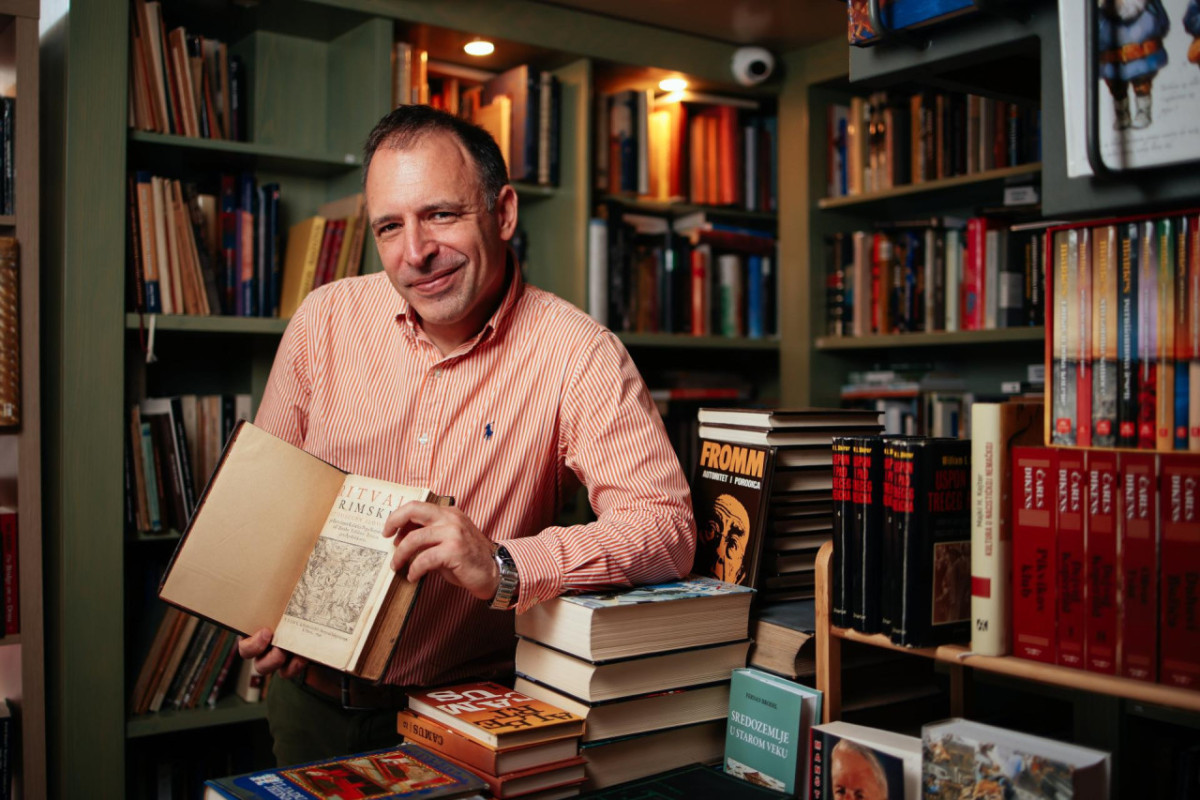
However, his last catch, about which he does not hide his excitement, is probably the most valuable book of his career. The Roman Missal of Andrija Paltašić from 1485, one of the rarest Croatian incunabula, comes to him from Italy from a seller. There are ten such in the world, of which seven are complete, but none in Croatia. He will now be the sole owner of Hrvat Paltašić's incunabula and will exhibit it at this Interliber. By the way, Paltašić was a famous Croatian publisher from Kotor, in the 15th century he founded, as the first Croat, a printing house in Venice. Incunabula, particularly well preserved and in good condition, can fetch up to 20,000 euros in sales. How much he bought it for, he does not want to reveal.
- With incunabula, the condition is very important. The difference can be up to five times in value, depending on whether it is complete or not, whether it has all the original pages, illustrations, whether there are notes in the margins or not, and so on - he explains.
In addition to incunabula, Glavan also keeps a bunch of other rare books in the antiquarian, worth from one thousand to ten thousand euros. He gets up and opens the glass case behind the cash register, showing us what he has. One of the more valuable is "Voyage pittoresque et historique de l'Istrie et de la Dalmatie", a sumptuous travelogue of Istria and Dalmatia, published in Paris in 1802 by the travel writer Joseph Lavallée and the French painter and architect Louis-François Cassas. Interestingly, this thick book, which he sells for 8,000 euros, was printed and sent especially to the addresses of high-ranking French officials, politicians and generals, including the famous military leader and statesman Napoleon.

- Maybe this one was Napoleon's, we can't know that. I doubt that he wore it to Saint Helena - laughs Glavan.
We also looked through the first editions of Gundulić's "Osman" in several sequels, "Ritual Romanski" by Bartol Kašić and several books by Ruđer Bošković. He also has books by Marko Marulić, Frane Petrić, Albert Fortis, "Gazophylacium" by Ivan Belostenc. They are all worth several thousand euros. Such books, however, are hard to find in the garbage or in someone's attic, he notes. They are mainly purchased at foreign book fairs, such as the one in Milan, Paris or New York. There, Glavan has been developing contacts and acquaintances in recent years, he doesn't miss a single one. After all, that's how he found his incunabula.
- The sellers there usually know what they have and it's hard to find such books well below the price. But there is a large turnover of collectors, experts and lovers, so it is useful to have such acquaintances - he adds.
Like paintings, expensive books, apart from fairs, are also sold at specialized auctions by well-known houses such as Sotheby's, Christie's, Swann or Heritage. Glavan says that these auctions are typically held online and you need to be well prepared and focused for them. It happened once that he was carried away by the atmosphere, so he crashed.

- I once bid 15,000 euros for a book because I found myself in a duel with another buyer and the adrenaline took me away. Later I found out that the book is not that valuable and I lost money - he admits.
However, we are interested in who are the buyers of such books, how do they find them, who in Croatia is ready to shell out the value of a new car for one book. He says that it is a narrow circle of ten people, mostly businessmen and collectors. Some buy out of love for an old book, others as an investment.
- We all know each other well, we often go out for lunch or drinks, and I always let them know first when I get something of value that I think they might be interested in - he reveals and adds that these are not books on which a quick hunt turns.
In addition, incunabula and old books, which he has been particularly interested in for the last five years, and for which he has traveled the whole world, are a rare catch. And the antiquarian is a business that survives on popular and easily available books.
- It's like opening a coffee shop and then thinking that you can only do business by selling expensive whiskey. That doesn't really work, you have to have coffee.

(photo: Vedran Peteh/Cropix)
'Fast food' literature
So, Glavan primarily earns from "fast food" literature, various popular science books, self-help, cookbooks, monographs and guides. In recent years, millennial nostalgia books have also been in great demand: complete editions of Marija Jurić Zagorka's books, older Algoritm editions of "Lord of the Rings" and "Harry Potter". Depending on the state of preservation, he can sell those books for several hundred euros if they are in the collection. In the end, philosophy and psychology do well, he notes.
- Philosophers are actually the most grateful customers. These are typically people who read all their lives and always come back for more - he notes.
Various philosophical collections are always in demand, and they are not too expensive, such as Guthrie's "History of Greek Philosophy", "The Fall of the West" by Oswald Spengler or "The World as Will and Representation" by Arthur Schopenhauer, all in the range of 50 to 200 euros.
In addition, rare copies of domestic literature were also sought. Two authors who have become the holy grail of every antiquarian in recent years stand out: Ivan Raos, specifically his novel "Beggars and Sons", on which the series was filmed, and the poet Danijel Dragojević. His collections of poems are particularly valuable, they sell for between 300 and 400 euros, because this reclusive individual who recently passed away did not allow new ones to be printed. editions.
- They can still be found around Zagreb, in the home libraries of various professors or writers, but less and less. The earthquake caused quite a stir there, forcing people to throw out or move books.

Finally, Glavana we also ask about his reading habits. In particular, did turning his passion into a job hurt his enjoyment of reading. The chief waves; he still reads every night before going to bed, which has been his ritual since he was young. He says that he mostly reads historical books, and then also local authors such as Miljenko Jergović and Ivo Andrić.
- One of my favorite books is 'Mjesečari' by Hermann Broch, I would like someone to finally publish it in Croatian. Now I am particularly interested in the history of Dubrovnik and the history of Bosnia. When I was younger, I was interested in the Second World War, but today I am more attracted to the Middle Ages and the nineteenth century - he enumerates.
He also denies the increasingly frequent announcements that Croats read little. According to statistics, barely a third read at least one book a year ago, but that is not Glavan's impression. He points out that the domestic reading community around antique shops is numerous and dedicated. He reckons that he has at least two thousand loyal customers in his antique shop alone.
- I think it has something to do with the strong antique shop scene in Zagreb. I would dare to say that we are the strongest in the entire region. We have seven or eight very nice and serious antique shops and I like to believe that we are keeping that reading culture alive. The book has defeated both the earthquake and the corona virus and technology, so I am not afraid for the future of reading or antiquarian shops - he concludes. Pavić, published in Jutarnji list on November 26, 2025, photos by Vedran Peteh/Cropix