
De translatione imperii Romani ad Germanos
Basic information
- Author: Vlačić Matija
- Publisher: Apud Ioannem Saurium
- Availability: Available
- Condition: Very good
- Code: 40688
Shipping options
Payment methods
Explore more
De translatione imperii Romani ad Germanos
Vlačić Matija
Summary
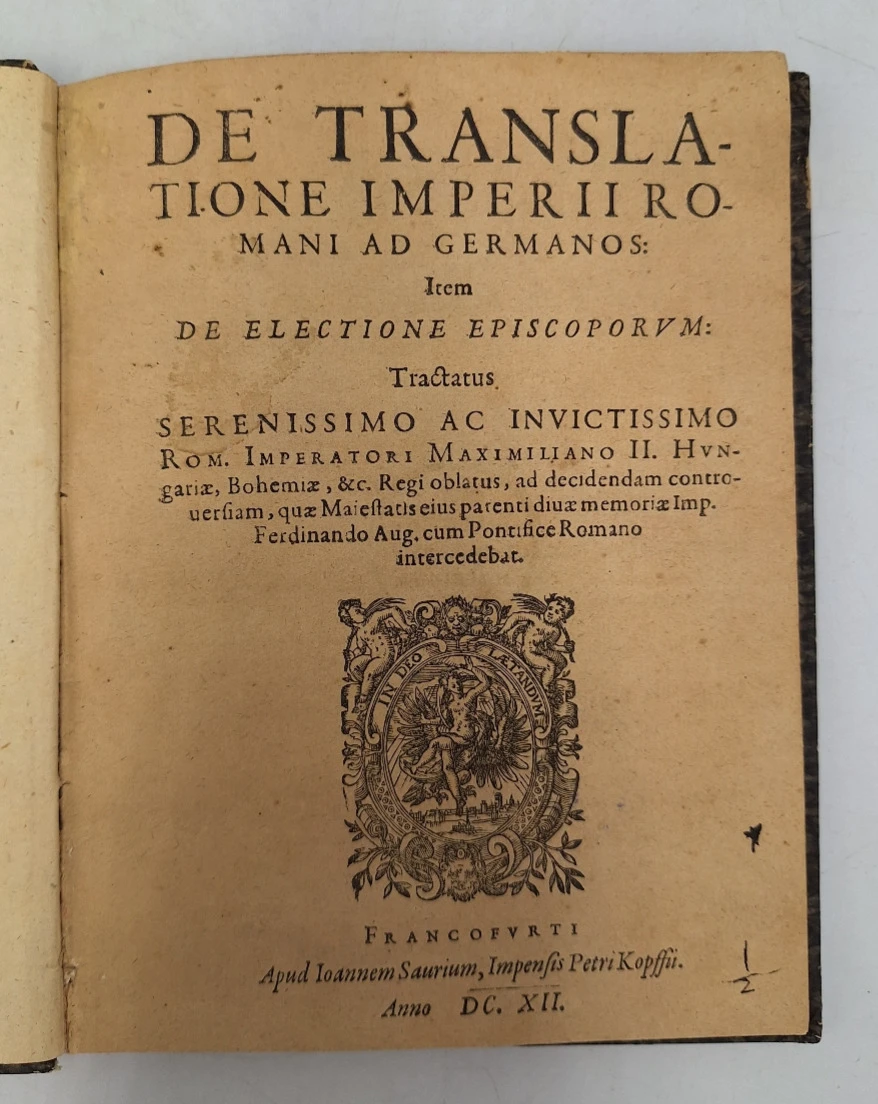
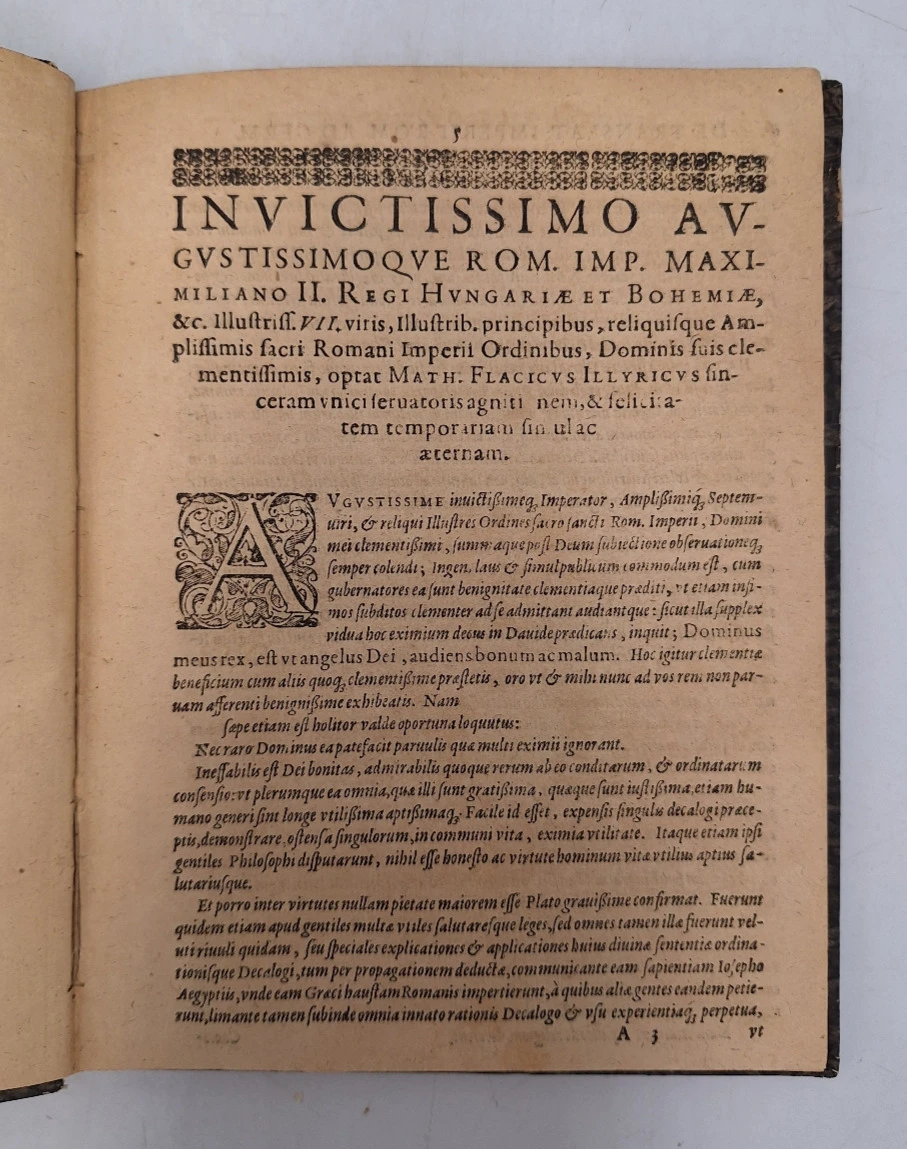
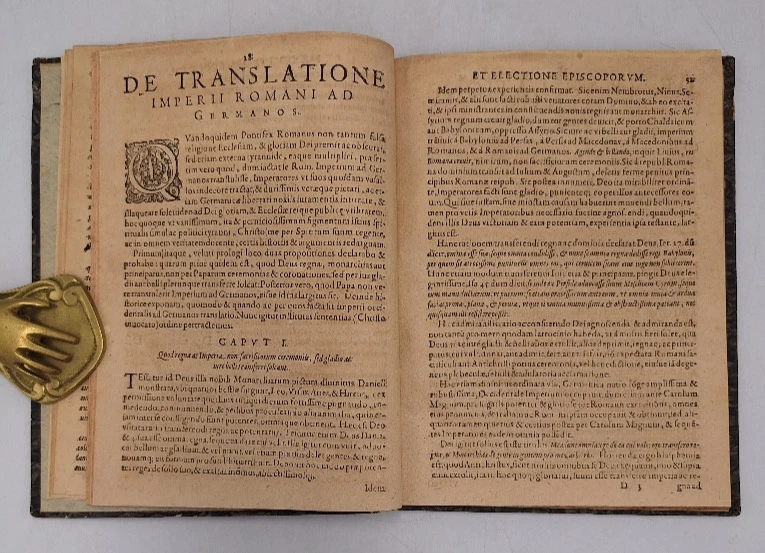
Matthias Flacius Illyricus: De translatione imperii Romani ad Germanos
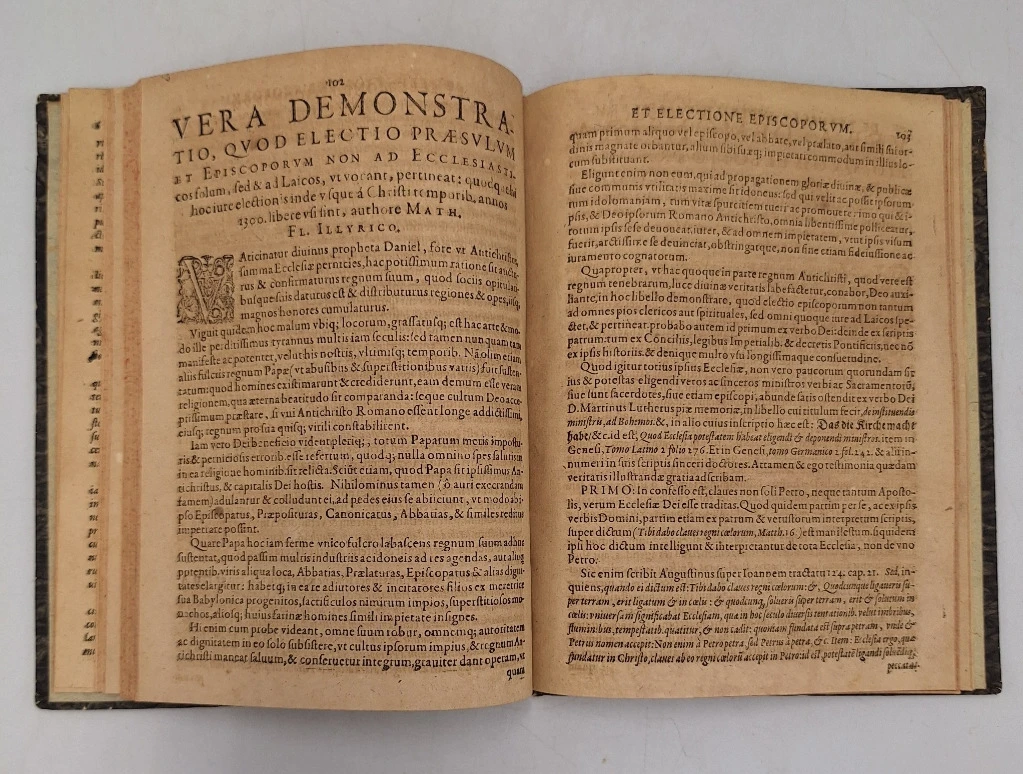
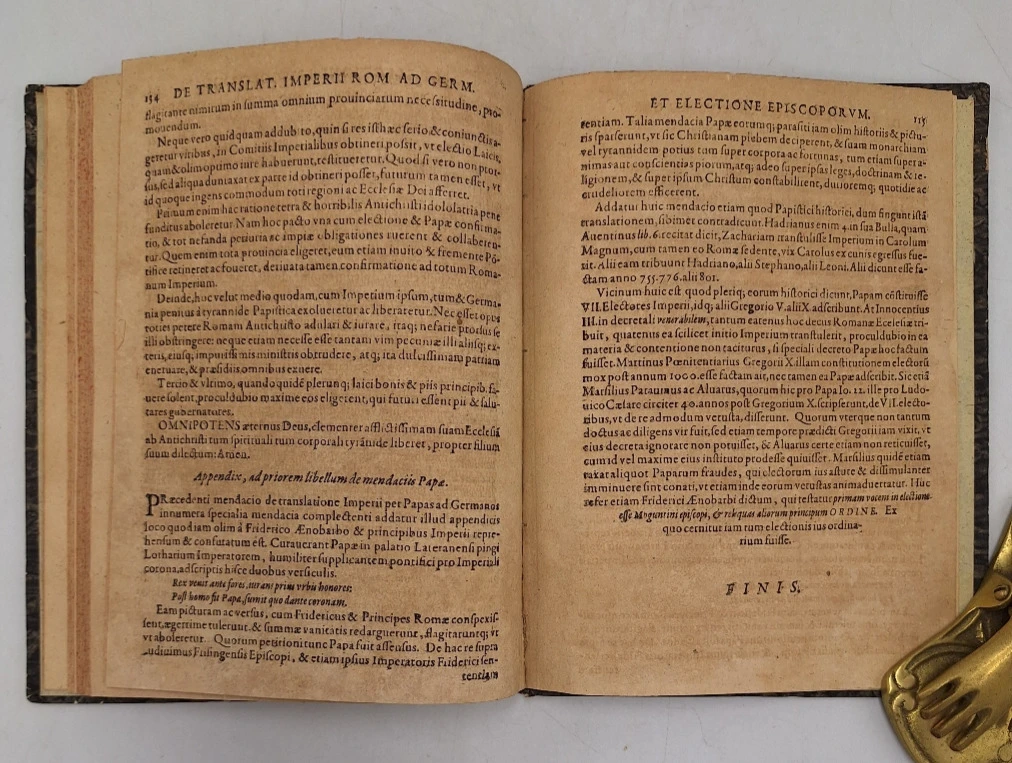
The work "De translatione Imperii Romani ad Germanos" ("On the transfer of the Roman Empire to the Germans"), which was published by Matthias Vlačić Illyricus in 1566, is a significant work in which the author deals with historical-political and theological issues of the legitimacy of government.
Catholic.
- Historical perspective: The work is part of Vlačić's extensive oeuvre in which, in addition to theology, he deals with history and church law.
In response to this and other Vlačić works, the Catholic side retaliated, and St. Robert Bellarmine later wrote about the same topic in the work De translatione Imperii Romani a Graecis ad....
This work was created in the period when Vlačić, after leaving Magdeburg, worked as a professor and church supervisor, and continued to actively fight for Protestant principles.
Vlačić, Matija Illyric (Latinized Matthias Flacius Illyricus), Croatian Protestant theologian, church historian and philologist (Labin, March 3, 1520 – Frankfurt am Main, March 11, 1575). He began his education in Venice with the humanist Giambattista Cipelli (Baptista Aegnatius); there, his uncle Baldo Lupetina introduced him to the reformation movement. From 1539 he studied classical languages in Basel and Tübingen, and in 1541 he came to Wittenberg, then a leading Protestant university, where in 1544 he was tutored by Ph. Melanchthon obtained the title of Master of Liberal Arts and became a professor of Hebrew and Greek and a champion of the Reformation. From 1549 he lived in Magdeburg and soon clashed with Melanchthon and his "philippist" supporters who accepted an agreement with the Catholic side. Vlačić, together with his "Flacianist" followers, rejected teaching about the seven sacraments, images, fasting and other so-called irrelevant church matters. It is argued that Vlačić's attitude was decisive for the survival of the basic teachings of the Reformation in their original form. After leaving Magdeburg, he was a professor of Protestant theology and Hebrew language at the University of Jena (1557–61) and church supervisor of Thuringia. Due to a disagreement with the local prince over the right to censor university textbooks, he left Jena and came to Regensburg in 1562, where he founded a university and tried to establish a printing house in which he would publish works in South Slavic languages. Then he came into contact with I. Ungnad, P. Trubar and Matija Klombner; for some time he cooperated with the Bible Institute in Urach, mostly on the translation and editing of books, and advocated for the opening of a theological school in "Illyrian" in Celovac or Ljubljana. From 1566, he often changed places of residence (Antwerp, Basel, Speyer, Strasbourg, Frankfurt am Main).
He wrote propaganda and polemical tracts, church history and hermeneutic writings, as well as works in the fields of philosophy, history, and philology. His first monographic work, On the word of faith (De vocabulo fidei, 1549) is based on the analysis of the verb to believe and announces linguistics as an auxiliary tool in theological knowledge. In the work Catalog of Witnesses of the Truth (Catalogus testium veritatis, 1556) he proved that Luther's teaching is not new, but that the fight against the abuse of church teaching has been occurring since the early Christian era. In Magdeburg, he conceived and organized a collaborative course for the monumental Ecclesiastical History or Magdeburg Centuries (Ecclesiastica Historia, Centuriae Magdeburgenses) in 13 books (published in Basel 1559–74). Each book covers one century (lat. centum: hundred), hence the name of the work. Vlačić is one of the main writers of the first printed, planned and critically processed history of the Church up to 1300. His most significant work, the Key to the Holy Scriptures (Clavis Scripturae sacrae, 1567), is the first encyclopedic and hermeneutic dictionary of the Bible; in it, Vlačić developed the opinion that the Holy Scripture interprets itself, and its understanding does not require church mediation, but a good classical education, and is therefore considered the originator of Protestant hermeneutics. He is credited with the polemical four-language treatise Conversation between a Papist and a Lutheran (1555), the main part of which was written in the Croatian language, the Istrian Chakavian dialect of Labin (it was signed under the pseudonym Anton Senjanin), and the printing of the Children's Bible (1566), a multilingual religious textbook with catechisms in five languages, including Croatian. The meaning of Catechismus Hervatski in the reform orthographic solutions that contained the proposal to create a unique alphabet and spelling for Croats and Slovenes. He is also credited with the treatise on logic Dialectic paralipomena (Paralipomena Dialectices, 1558), in which he warns about the importance of the middle term in a syllogism. Also significant are his lists of Latin historical mocking poems that he published in several books (1548, 1550, 1552, 1557), some of which he wrote himself, such as the Elegy on the Corruption of Man (Elegia de corruptione hominis). As one of the most prolific writers of his time, he wrote about 200 works, many of which remained unpublished; most of his manuscripts, mostly in Latin and to a lesser extent in German, are stored in libraries and archives in Vienna, Weimar, Regensburg, Strasbourg and Wolfenbüttel.
Other important works: Apology of M. Vlačić Illyrik addressed to the school in Wittenberg on the issue of adiaphora (Apologia Matthiae Flacii Illyrici ad scholam Vitebergensem in adiaphororum causa, 1549), Discourse on original sin and to free will (Disputatio de originali peccato et libero arbitrio, 1560), On the transfer of the Roman Empire to the Germans (De translatione imperii Romani ad Germanos, 1566), A concise account of the language of the New Testament (Glossa compendiaria in Novum Testamentum, 1570).
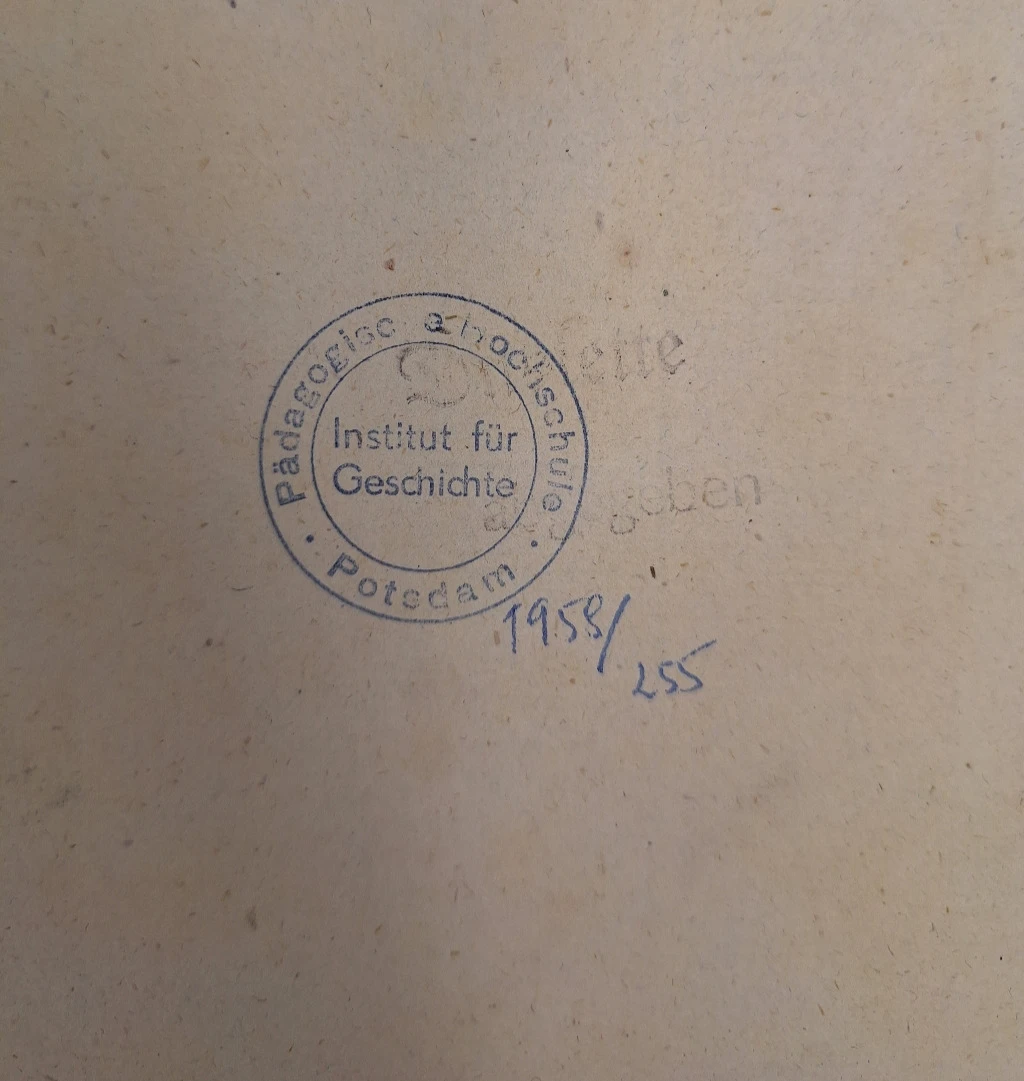
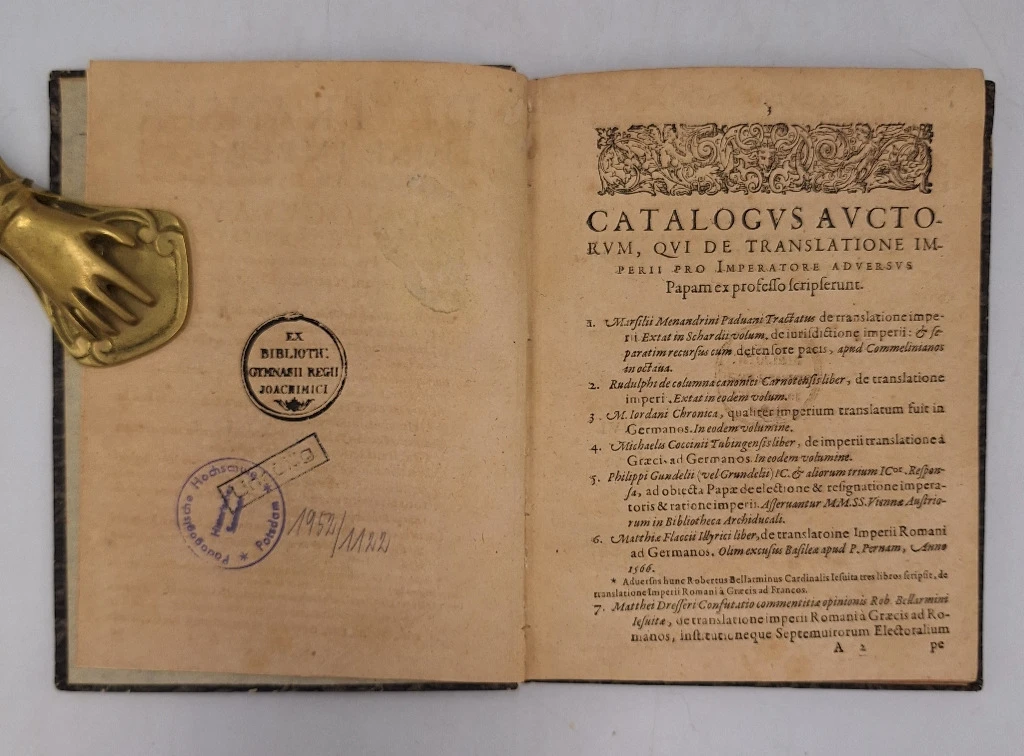
Contemporary black stamp *Ex Biblioth[eca] Gymnasii Regii Joachimici* on the back of the title page. *Gymnasium Regio Joachimicum* was a distinguished German high school founded in 1607 by Elector Joachim Friedrich. Originally founded in Joachimsthal as a school for gifted boys, it was moved to Berlin after it was destroyed during the Thirty Years' War. In 1912, the institution moved to its final, purpose-built campus in Templin, and closed permanently in 1956. Known for its humanistic education, the school is often mentioned in historical and academic texts in the Latin language. It shaped generations of the Prussian elite and employed many of the most prominent scholars and educators of the era. 2. Seals of the 20th century *Institut für Geschichte* and a similar seal of the *Pädagogische Hochschule* of Potsdam (sold as a duplicate).
References: Holzmann-Bohatta, volume 1, no. 11161. VD17 1:019336F. USTC 2094245 records 14 copies in institutional libraries worldwide.
Additional information
- Author: Vlačić Matija
- Publisher: Apud Ioannem Saurium
- Year of publication:1612
- Place of publication:Frankfurt
- Pages:115
- Dimensions:10.5x16.5 cm
- Script:Latin script
- Condition:Very good
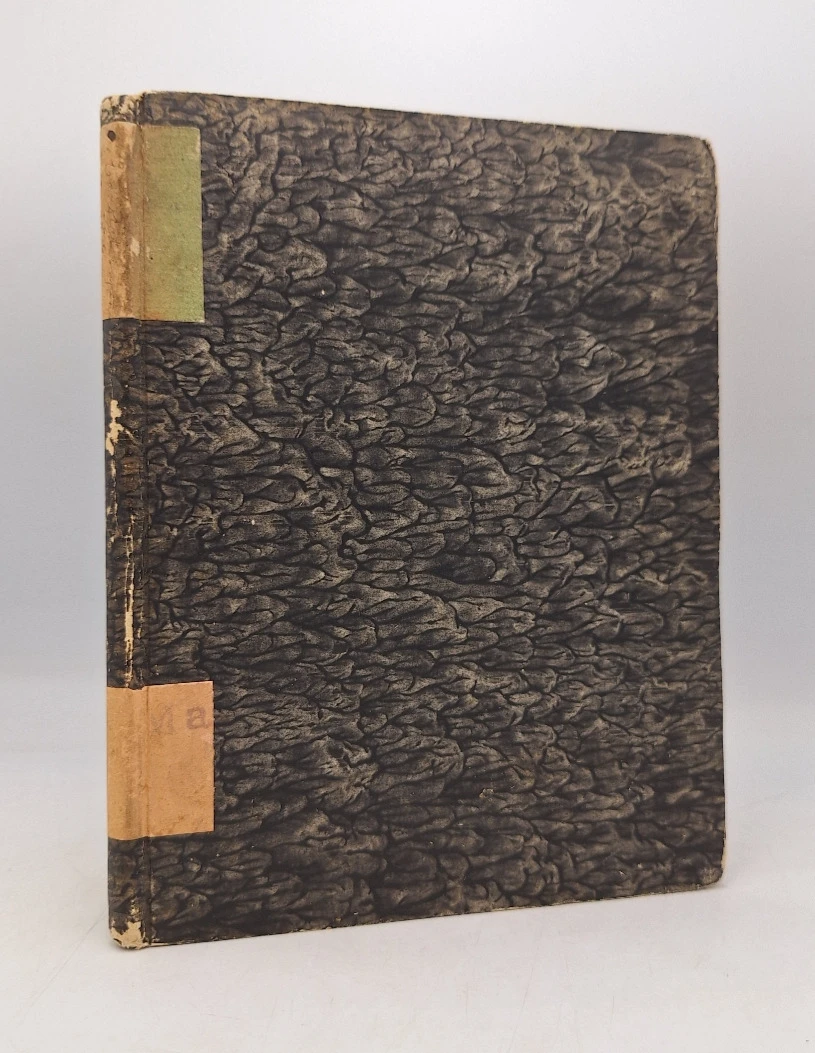
- Binding:Hardcover
Reviews
0 reviewsWrite a review
Share your experience and help other readers choose.
This item has no reviews yet. Be the first to share your experience.