
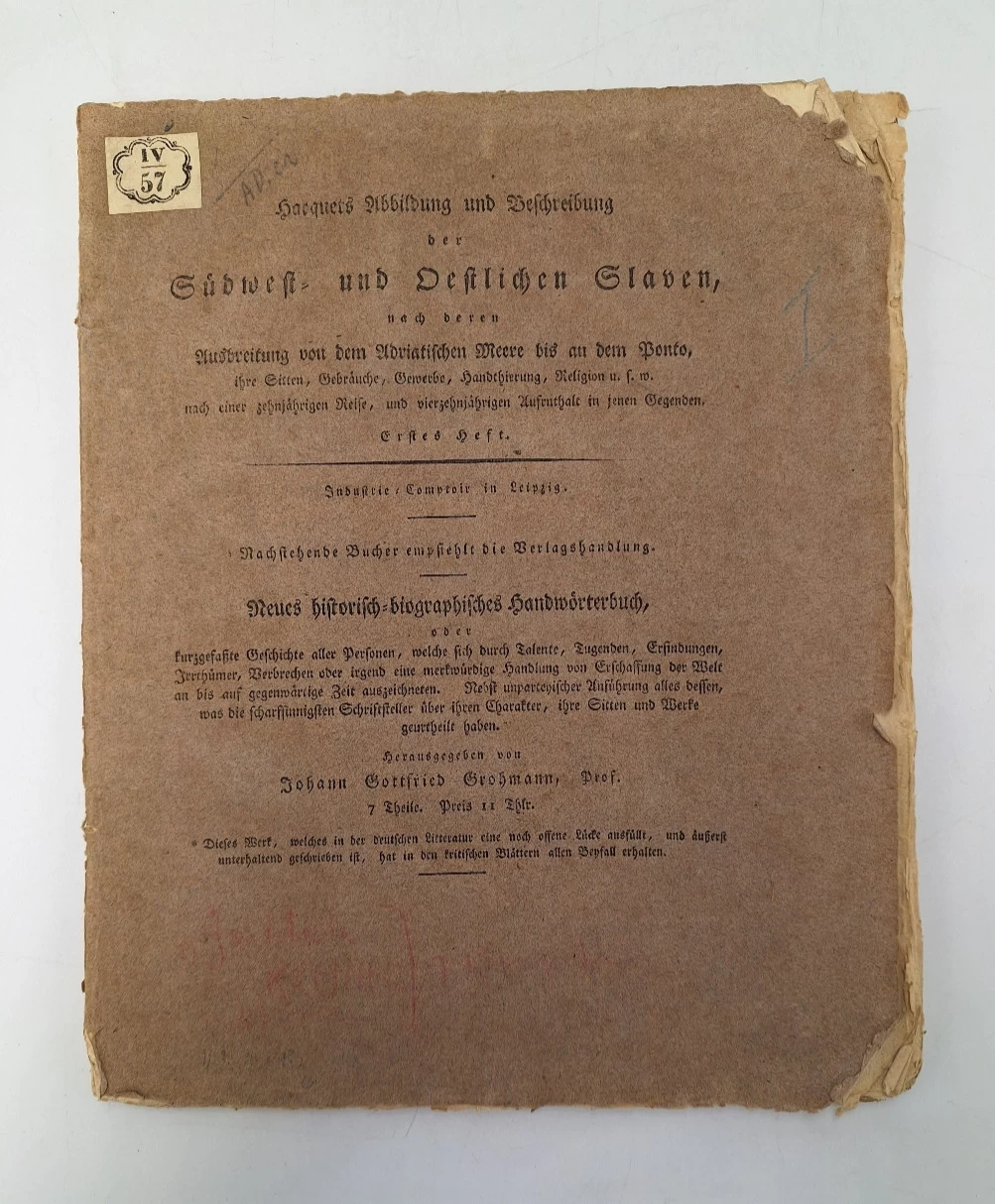
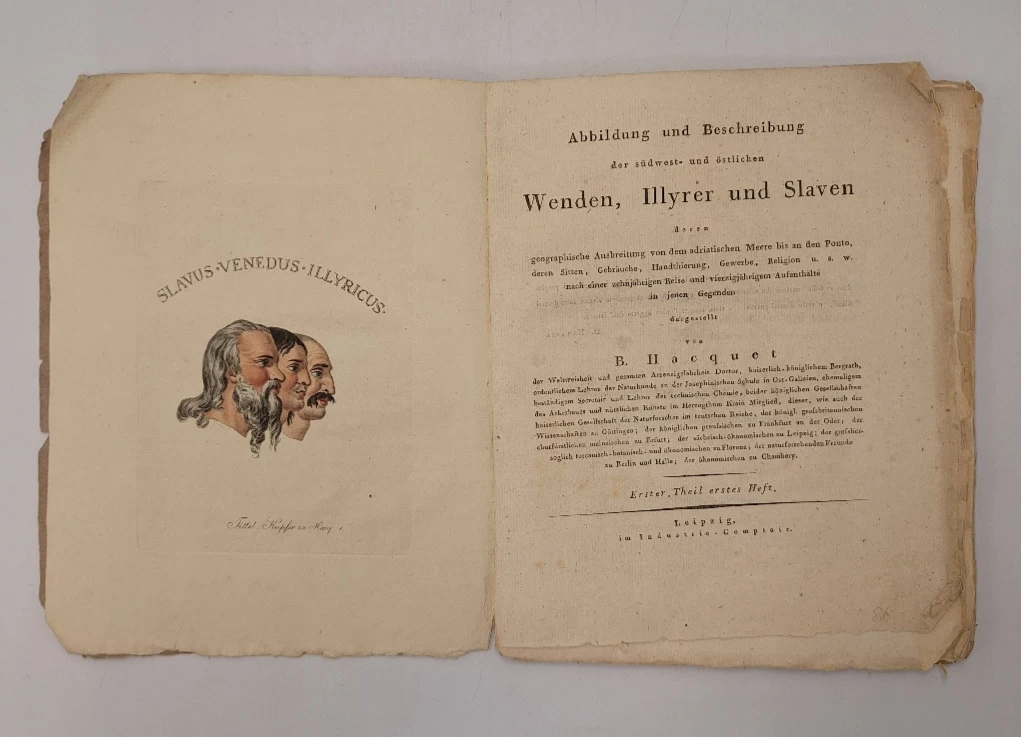
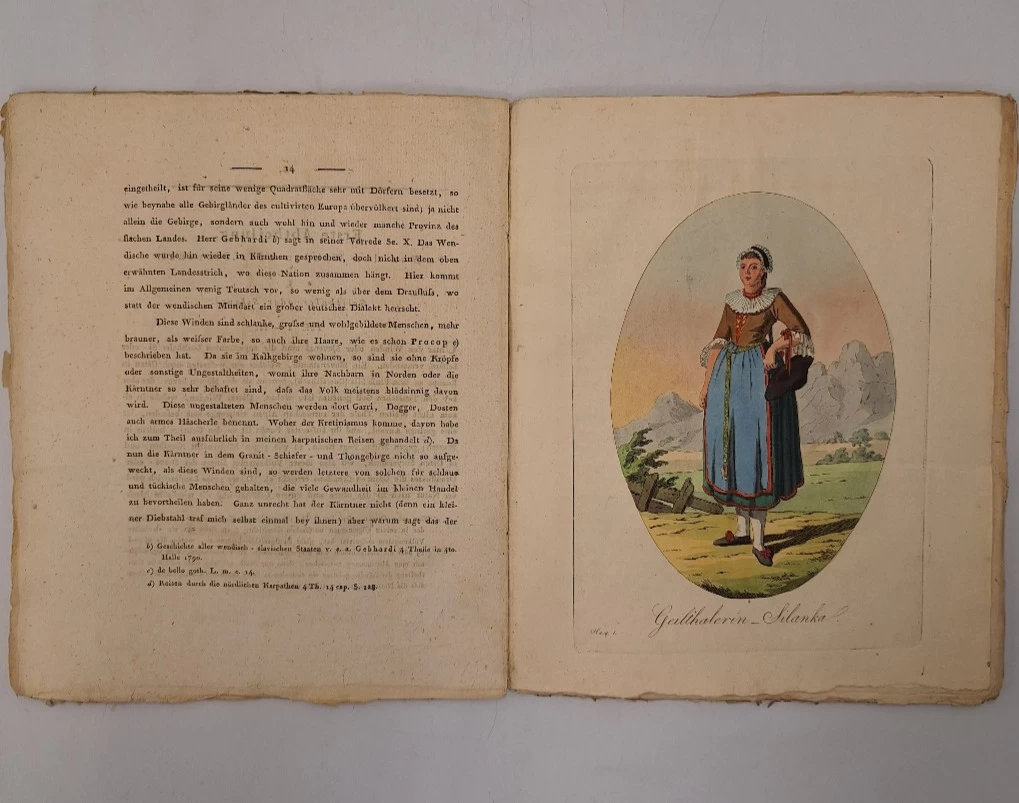
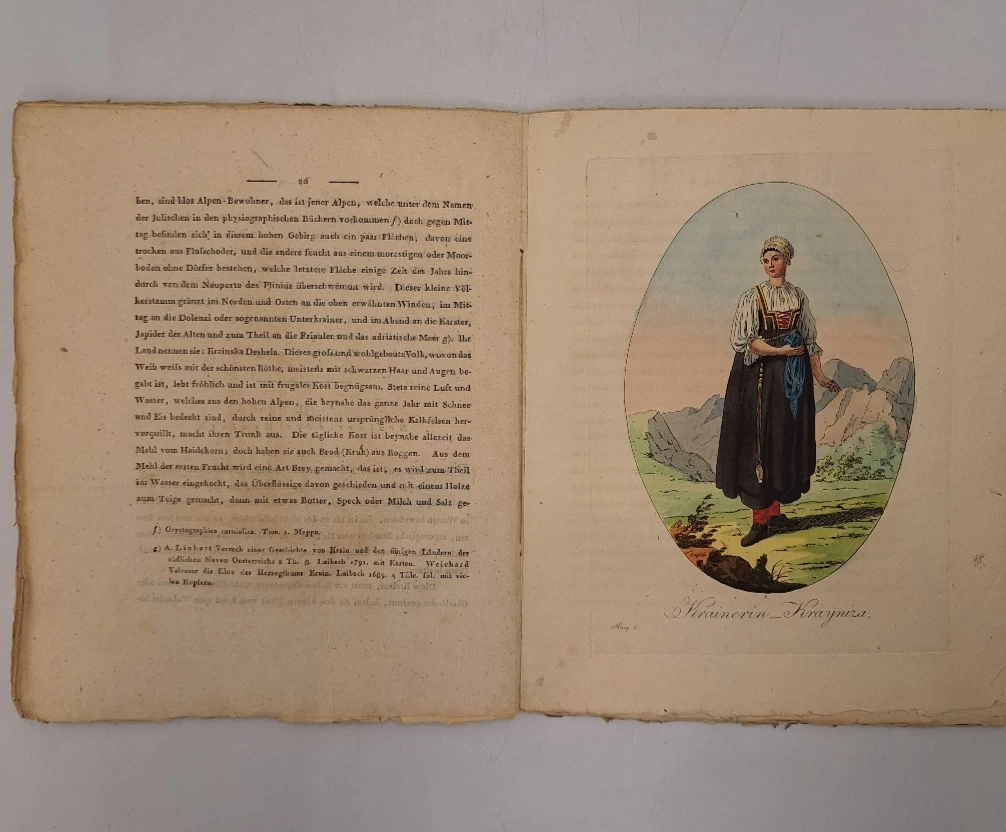
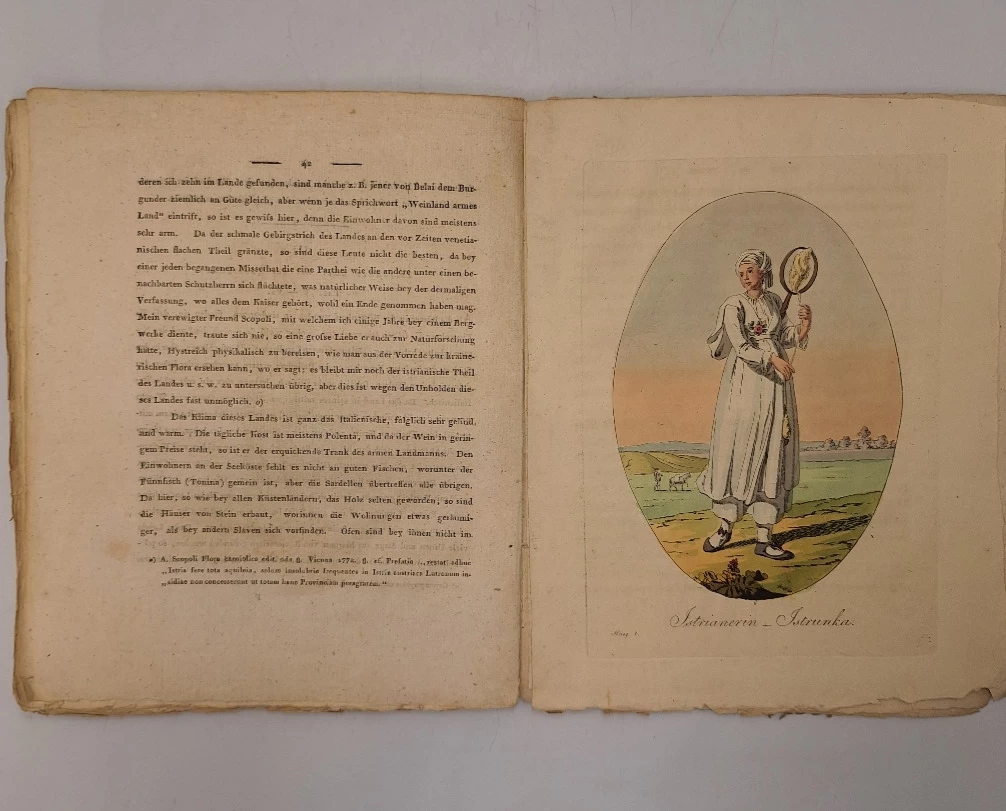
Abbildung und Beschreibung der südwest- und östlichen Wenden, Illyrer und Slaven deren geographische Ausbreitung von dem adriatischen Meere bis an den Ponto, deren Sitten, Gebräuche, Handthie
Basic information
- Author: Hacquet Belsazar
- Publisher: Industrie-Comptoir
- Availability: Available
- Condition: Good
- Code: 72410
Shipping options
Payment methods
Explore more
Abbildung und Beschreibung der südwest- und östlichen Wenden, Illyrer und Slaven deren geographische Ausbreitung von dem adriatischen Meere bis an den Ponto, deren Sitten, Gebräuche, Handthie
Hacquet Belsazar
Summary
Belsazar Hacquet: Abbildung und Beschreibung der südwest- und östlichen Wenden, Illyrer und Slaven deren geographische Ausbreitung von dem adriatischen Meere bis an den Ponto, deren Sitten, Gebräuche, Handthierung, Gewerbe, Religion u. s. w. nach einer zehnjährigen Reise und vierzigjährigem Aufenthalte in jenen Gegenden
First edition. The first volume (Erstes Heft). Alphabetical notes below the text. List of illustrations at the beginning of the book, after the preface (Vorrede). Illustrated - seven full-page colored copperplates on inserted unnumbered sheets (plates) with depictions of folk costumes. Ethnographic study of the South Slavic peoples dedicated to the Habsburg Emperor Francis II, who once visited him in Ljubljana. The complete work consists of five volumes, the last volume was published in 1808. In the subject, the first volume, the author describes Ziljane, Kranjce and Istrani. After being published in volumes, the work was published as a book in 1802-1803. year. In 1814, an abridged English translation of Illyria and Dalmatia appeared in the collection of 43 books The World in Miniature edited by F. Schoberl, while the second edition was published in 1821. In 1815, M. Breton published a translation and adaptation in Paris under the title L'Illyrie et la Dalmatie. The aforementioned series of publications testifies to the interest in Dalmatia in Europe on the eve of the Congress of Vienna in 1815. In 1816, a German edition of Illyrien und Dalmatien was published, the second edition of which was published in 1830. The Croatian translation was published in 2008 by the Split Ethnographic Museum.
Balthazar (Belsazar) Hacquet (Le Conquet, 1739 - Vienna, 10 January 1815) - French physician, naturalist and ethnographer. He also served in Slovenia - in Idrija and Ljubljana. From 1770 to 1787, he undertook numerous trips to Istria, Dalmatia, Lika, etc. - usually on foot. Described the traditional life of the South Slavs of the Habsburg Monarchy. He lived in South Slavic regions for forty years, and after returning to his homeland, he wrote the work in question. In addition, he also dealt with geology, mineralogy, botany, chemistry, petrology and karst research. His travels were partly supported by the Viennese court. He most likely knew the Croatian language.
Additional information
- Author: Hacquet Belsazar
- Publisher: Industrie-Comptoir
- Year of publication:1801
- Place of publication:Leipzig
- Pages:50
- Dimensions:22x27 cm
- Script:Latin script
- Condition:Good
- Binding:Softcover
Reviews
0 reviewsWrite a review
Share your experience and help other readers choose.
This item has no reviews yet. Be the first to share your experience.
You may also like