
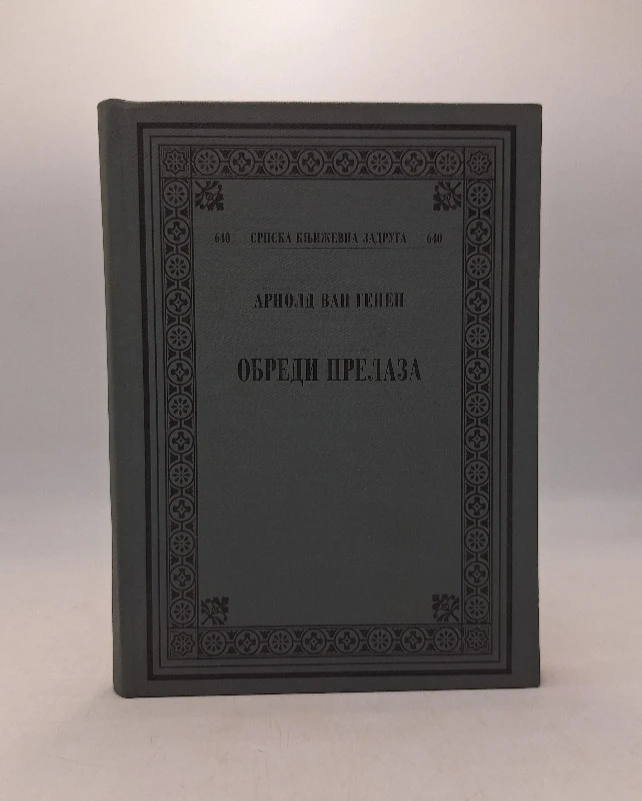
Obredi prelaza
Basic information
- Publisher: Srpska književna zadruga
- Availability: Available
- Condition: Excellent
- Code: 82565
Shipping options
Payment methods
Explore more
Obredi prelaza
Summary
Arnold van Gennep: Rites of Passage
The book of the famous French ethnologist and anthropologist Arnold van Gennep, Rites of Passage. A systematic study of rituals was published as early as 1909 in Paris. Van Gennep's most famous work has been cited in world science for almost a hundred years, but it was only in the last decade of the 20th century that it was translated into English and Russian, and now also into Serbian. The book studies and interprets the basic rituals of life, those significant situations that are repeated in each person both as an individual act and as part of a collective ritual, after which he prepares for the next important ritual decision. The repetition of key life situations as part of a collective ceremony that proves the strength of the collective and society and as a form of familiarizing the individual with the obligations and privileges provided by the collective act of transition from one social, physical and spiritual form of existence to another, is the main subject of Van Gennep's research and conclusions. All the most important situations, from birth, baptism and childhood, through engagement and wedding, to death and funeral, allow an individual to join the basic forms of behavior and functioning in the social community, but at the same time to confirm their individual identity. Arnold van Gennep based his interpretations of life rituals on research in all world cultures, especially European, Asian and African, and at the same time drew conclusions based on the research of world-famous ethnologists, anthropologists, linguists and culturologists.
Additional information
- Publisher: Srpska književna zadruga
- Year of publication:2005
- Place of publication:Beograd
- Pages:241
- Dimensions:14x19 cm
- Script:Cyrillic script
- Condition:Excellent
- Binding:Hardcover
Reviews
0 reviewsWrite a review
Share your experience and help other readers choose.
This item has no reviews yet. Be the first to share your experience.
More books from Srpska književna zadruga





You may also like