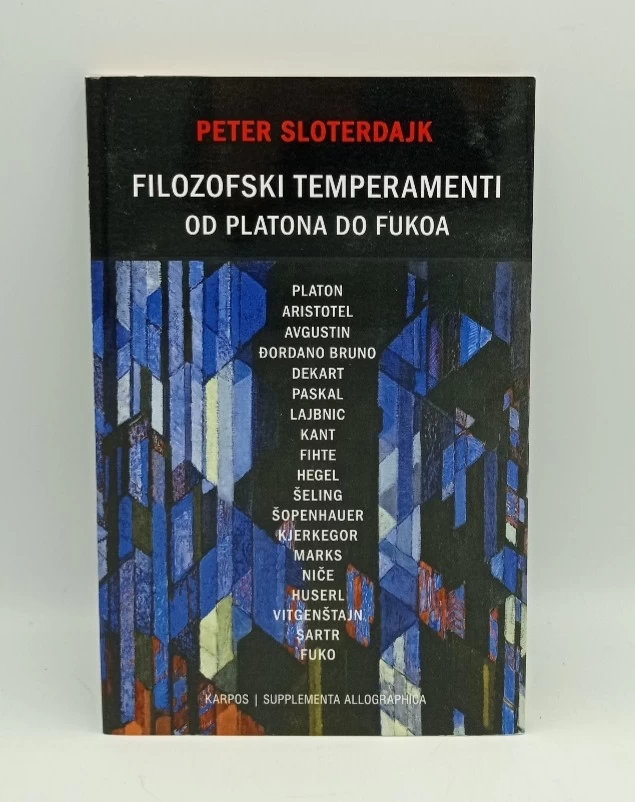

Sloterdijk Peter: Filozofski temperamenti od Platona do Fukoa
€ 11,00
Free delivery in Croatia for orders over EUR 70
Basic information
- Author: Sloterdijk Peter
- Publisher: Karpos
- Availability: Available
- Condition: Nova knjiga
- Code: 52726
Shipping options
GLS Croatia
5€
Delivery
0€
Personal collection at the antique store
0€
GLS parcel machine
3€
Payment methods
Pay on pickup
CorvusPay
By general payment / Virman / Internet banking
Cash on delivery
Filozofski temperamenti od Platona do Fukoa
Sloterdijk Peter
Summary
Peter Sloterdijk: Philosophical temperaments from Plato to Foucault
Peter Sloterdijk has a keen eye for the history of Western thought and in "Philosophical temperaments" he insightfully and - as only he knows how - vividly reads and evokes the lives and ideas of the world's most influential intellectuals. In 19 discursive vignettes that are full of both vivid descriptions of personalities and exemplary theoretical analyses, Sloterdijk's book, which offers an unusual reading experience, presents the development of philosophical thought not by piling up information about important books and irrefutable evidence, but as a continuous, deeply personal struggle with different thought and spiritual movements, a struggle filled with numerous pitfalls and detours, as well as extraordinary intellectual discoveries.
Sloterdijk dives into the work of these philosophers and explores the historical context of their lives. For example, he provocatively links Plato and shamanism, and connects Marx with Gnosticism, and thus - with his perfect rhetorical style - exposes both the essential external influences that shaped the thinking of these philosophers and all the delight and wonder that was (and still is) caused by the application of their thought achievements in the real world of life. By philosophical "temperament", Sloterdijk means a unique and unique creative encounter between a specific spirit and the most diverse cultural field. It was from such a rare – and all the more precious – meeting that, on the one hand, the unique thought achievements of the nineteen philosophers were born, while, on the other hand, that meeting simultaneously articulates and embodies that special dynamic of the Spirit that is always at work in philosophy as a whole.
Additional information
- Author: Sloterdijk Peter
- Publisher: Karpos
- Year of publication:2017
- Place of publication:Beograd
- Pages:99
- Dimensions:13x21 cm
- Script:Latinica
- Condition:Nova knjiga
- Binding:Meki
You may also like





Recently viewed








Biblos Newsletter
For book lovers who enjoy finding the rare
New titles, special copies and quiet recommendations from the antiquarian bookshop.