
Summary
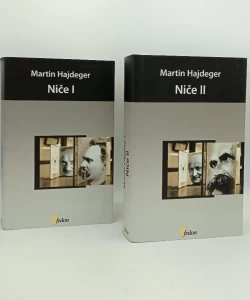
Martin Heidegger: Nietzsche I-II
The "Heidegger case" is a philosophical, intellectual, political, psychological and legal entanglement in which many contradictions of the twentieth century come together. In which mix genius and banality (at the same time), lucidity and darkness (without giving a gray color), penetrating and cowardice, consistency worthy of respect and dishonesty worthy of contempt. Martin Heidegger, one of those philosophical figures who, whether we like it or not, marks one of the thresholds in the history of philosophy, managed to unite all this in his personality. We know everything about his Nazism, a little less about his philosophy. There is no doubt about the fact that his philosophy led him directly to Nazism, but there is also no doubt that this philosophy should not be read in the shadow of Nazism. Although Being and Time is Martin Heidegger's most famous work, there are interpreters who consider his lectures on Nietzsche to be the birthplace and source of his philosophy. In Nietzsche, Heidegger recognized what no one before him had: a thinker of fire who leaves no stone unturned, a thinker who searched for a beginning as radical as the beginning offered to us, more than 150 years earlier, in the same language, by Kant. Heidegger, however, brings an additional radicality to Nietzsche's radical demands. Heidegger will interpret the will to power, the central term of his interpretation of power, as the will to will. That seemingly small movement will turn out to be an almost revolutionary step. French post-structuralist thought grows on this motif, which destroys murderous identities, representation and truth and creates the conditions for finally asking questions about what you always wanted to know, only you didn't know how to do it. Because if our will is focused on itself, and not on truth, good, justice, knowledge, on all those noble, beautiful and natural things that were somehow too easily taken for granted. If neither the truth nor those tears of Dostoyevsky's children can save our world, if everything is truly possible - and Auschwitz showed that it is - then we have no choice but to ignore the previous questions and look for new ones.
This item has no reviews yet. Be the first to share your experience.
Biblos Newsletter
New titles, special copies and quiet recommendations from the antiquarian bookshop.