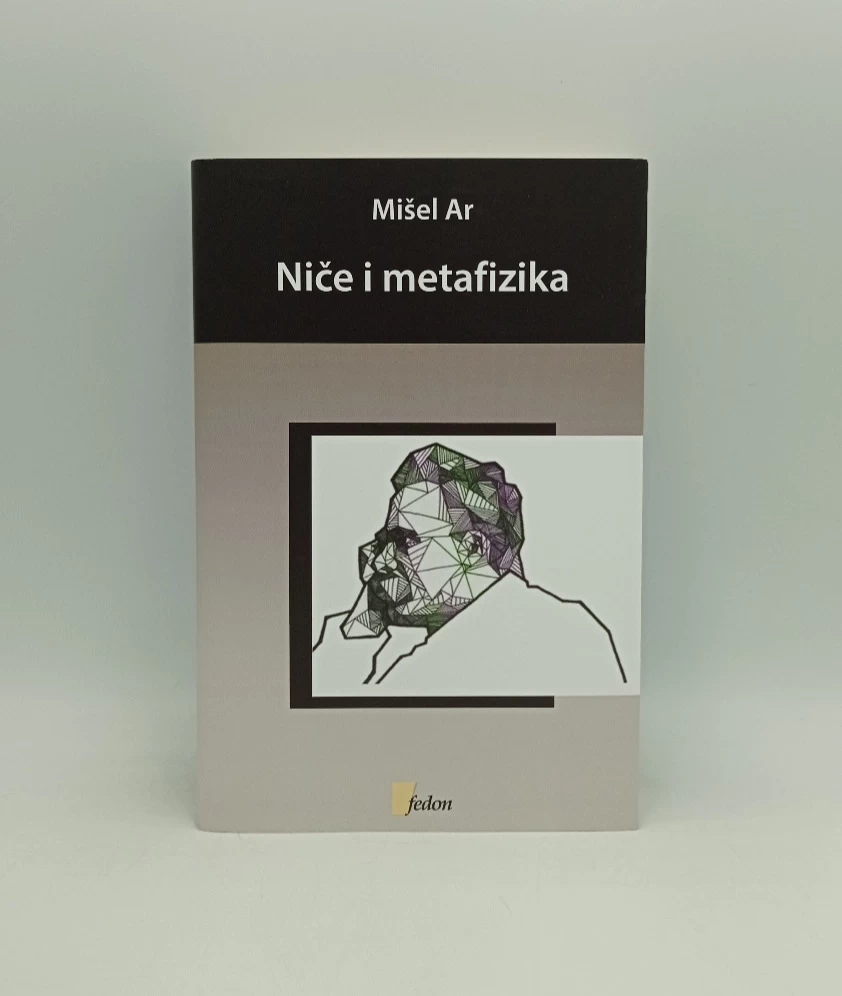

Haar Michel: Niče i metafizika
€ 26,00
Free delivery in Croatia for orders over EUR 70
Basic information
- Author: Haar Michel
- Publisher: Fedon
- Availability: Available
- Condition: Nova knjiga
- Code: 63863
Shipping options
GLS Croatia
5€
Delivery
0€
Personal collection at the antique store
0€
GLS parcel machine
3€
Payment methods
Pay on pickup
CorvusPay
By general payment / Virman / Internet banking
Cash on delivery
Niče i metafizika
Haar Michel
Summary
Michel Haar: Nietzsche and Metaphysics
The main thread of the studies collected in this collection
1. is a question of overcoming metaphysics. We do not impose this question on Nietzsche from the outside, he explicitly asked it himself: "Going beyond metaphysics is a matter that requires the greatest effort of human reflection..."
2. And this thing, without any doubt, marks the entire development of his thought from the "reversal of Platonism" to the affirmation of its eternal return.
However, before we embark on the development of Nietzsche's thought, we must define the starting point, which is Nietzsche's in the true sense of the word, and distinguish it from Heidegger's well-known problem of overcoming metaphysics, which starts from completely different assumptions. Even if we do not refer to these assumptions, what fundamentally separates Nietzsche and Heidegger at the very beginning is that with the former it is exclusively about a task, even more, a struggle: "how to free oneself from metaphysics?", while with the latter no task can be fulfilled if one does not start from a questioning that seeks to first determine "what metaphysics is".
In a way that can be considered presumptuous, Nietzsche believes that the answer to the second question is self-evident, that it does not represent a problem. Nietzsche takes the definition that is the most "popular", which is the least "technical": metaphysics is the belief in "another world", in a world that is ideal and true in itself, in short, this is what he calls "Platonism". In one sense, he continues Kant's critique of knowledge that would tend to extend beyond the world of phenomena, but, of course, rejects the establishment of faith in a transcendent world as a postulate of pure practical reason.
Kant's noumenon or idea for him is one of the last degrees of Plato's Sun: "the idea that has become lofty, pale, northern, Königsberg".
Additional information
- Author: Haar Michel
- Publisher: Fedon
- Year of publication:2021
- Place of publication:Beograd
- Pages:312
- Dimensions:13.5x20 cm
- Script:Latinica
- Condition:Nova knjiga
- Binding:Meki
You may also like






Recently viewed


Biblos Newsletter
For book lovers who enjoy finding the rare
New titles, special copies and quiet recommendations from the antiquarian bookshop.