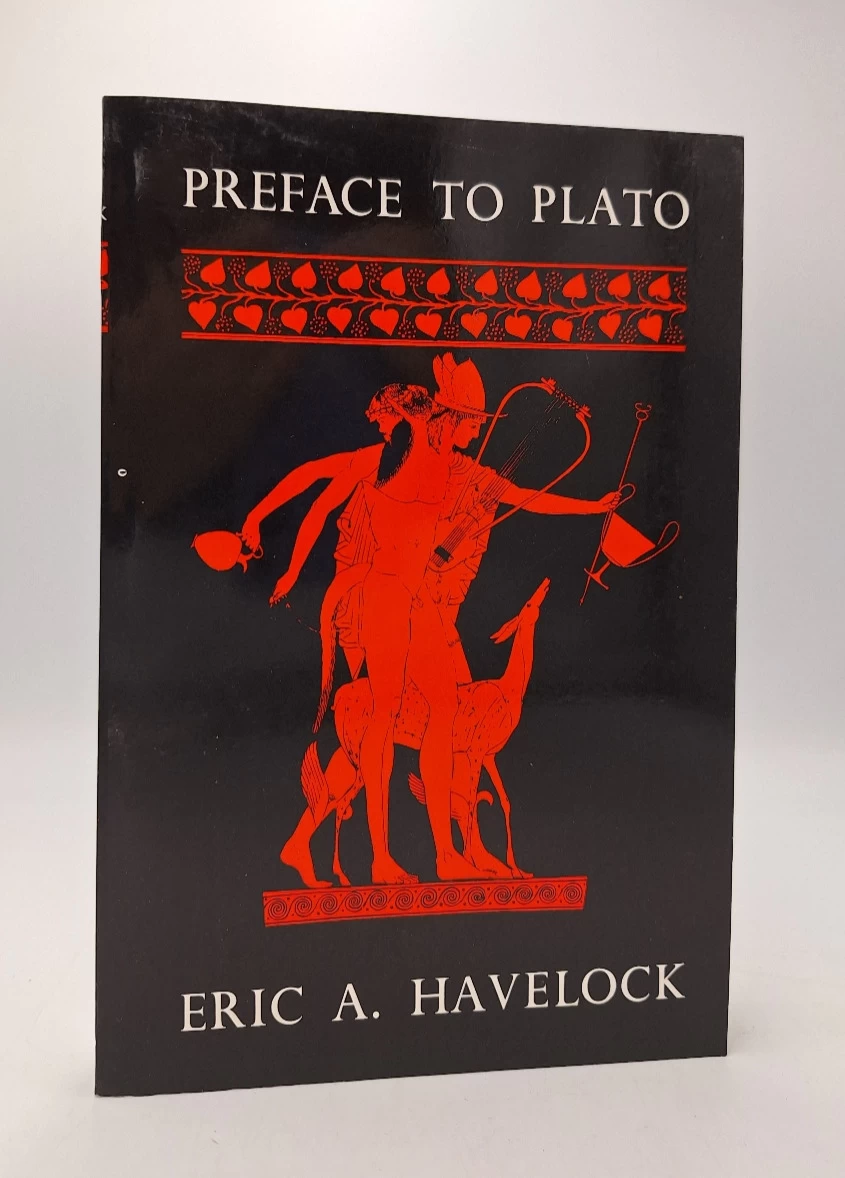

Havelock Eric: Preface to Plato
€ 14,00
Free delivery in Croatia for orders over EUR 70
Basic information
- Author: Havelock Eric
- Publisher: Harvard University Press
- Availability: Available
- Condition: Vrlo dobro
- Code: 72594
Shipping options
GLS Croatia
5€
Delivery
0€
Personal collection at the antique store
0€
GLS parcel machine
3€
Payment methods
Pay on pickup
CorvusPay
By general payment / Virman / Internet banking
Cash on delivery
Preface to Plato
Havelock Eric
Summary
Eric A. Havelock: Preface to Plato
Plato's frontal attack on poetry has always been a problem for sympathetic students, who have often minimized or avoided it. Beginning with the premise that the attack must be taken seriously, Eric Havelock shows that Plato's hostility is explained by the continued dominance of the poetic tradition in contemporary Greek thought. The reason for the dominance of this tradition was technological. In an illiterate culture, the stored experience necessary for cultural stability had to be preserved as poetry in order to be remembered. Plato attacks the poets, especially Homer, as the only source of Greek moral and technical instructions - Mr. Havelock shows how the Iliad functioned as an oral encyclopedia. Under the label of mimesis, Plato condemns the poetic process of emotional identification and the necessity of presenting the content as a series of specific images in the continuation of the narration. The second part of the book talks about Platonic forms as an aspect of an increasingly rational culture. Literate Greece required, instead of poetic discourse, a vocabulary and sentence structure simultaneously abstract and explicit in which experience can be described normatively and analytically: in short, the language of ethics and science.
Additional information
- Author: Havelock Eric
- Publisher: Harvard University Press
- Year of publication:1963
- Place of publication:SAD
- Pages:342
- Dimensions:14x21 cm
- Script:Latinica
- Condition:Vrlo dobro
- Binding:Meki
You may also like











Recently viewed













Biblos Newsletter
For book lovers who enjoy finding the rare
New titles, special copies and quiet recommendations from the antiquarian bookshop.