
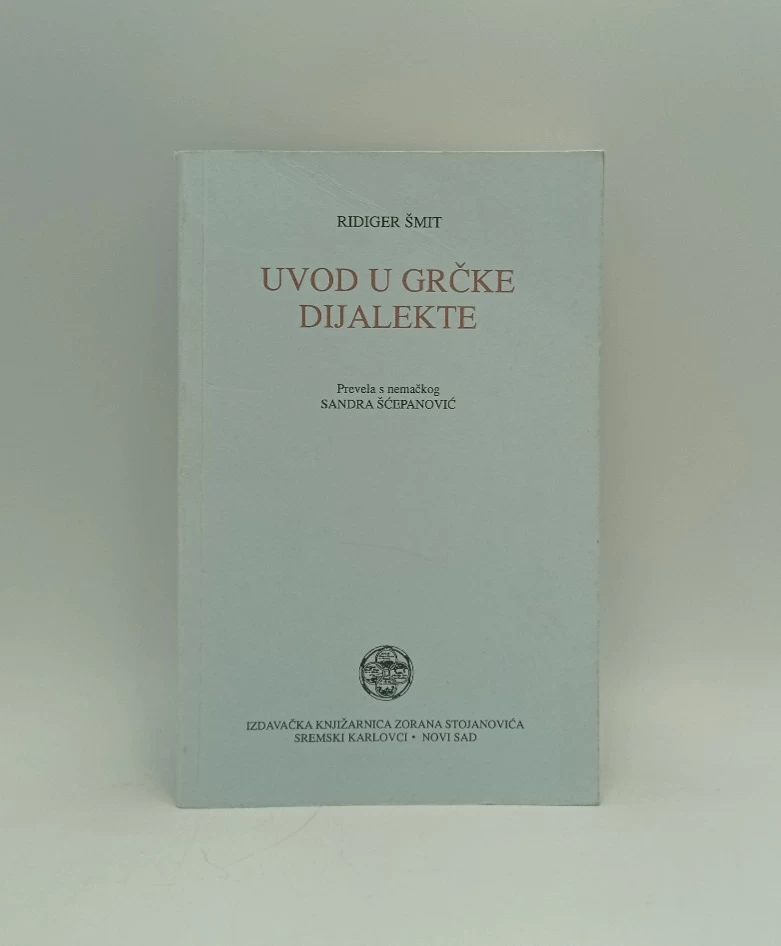
Uvod u grčke dijalekte
Basic information
- Author: Schmitt Rudiger
- Publisher: Izdavačka knjižarnica Zorana Stojanovića
- Availability: Available
- Condition: New book
- Code: 45474
Shipping options
Payment methods
Explore more
Uvod u grčke dijalekte
Schmitt Rudiger
Summary
Rudiger Schmitt: Introduction to Greek dialects
The study of Greek dialects is important for a wide circle of experts dealing with classical antiquity: for historians of the Greek language and Indo-Europeanists, because dialects can provide them with the first instructions for the exact determination of the origin of a form and its possible relatives; then for classical philologists, if they deal with non-antique poets and writers, i.e. different Doric, Ionian and Aeolian literary dialects, or pay attention to the history of the Greek language, which is so closely connected with the history of Hellenic literature; for the historians of the ancient times, also, since they, in terms of the vast geographical or thematic areas and long periods of time they deal with, for which literary sources are lacking, are often referred to the original ancient epigraphic or numismatic sources written in local dialects, but also because the dialects reflect the history and mutual relations of the Greek tribes; and finally for epigraphers, numismatists and papyrologists in the interpretation of their findings.
Additional information
- Author: Schmitt Rudiger
- Publisher: Izdavačka knjižarnica Zorana S...
- Year of publication:2005
- Place of publication:Novi Sad
- Pages:252
- Dimensions:11x18 cm
- Script:Latin script
- Condition:New book
- Binding:Softcover
Reviews
0 reviewsWrite a review
Share your experience and help other readers choose.
This item has no reviews yet. Be the first to share your experience.
More books from Izdavačka knjižarnica Zorana Stojanovića






You may also like