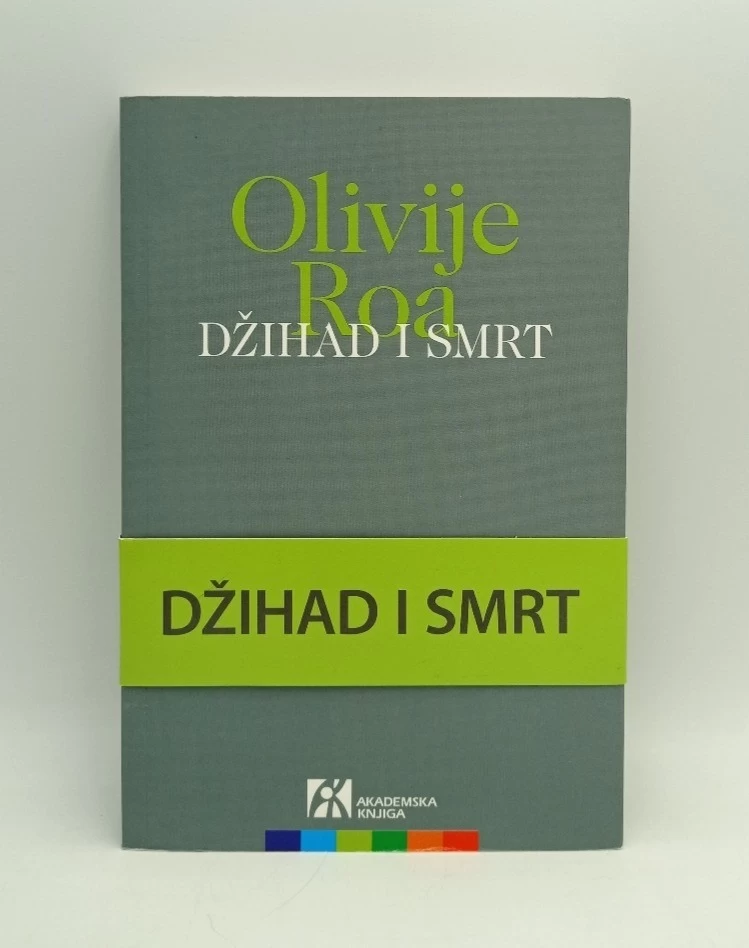

Roy Olivier: Džihad i smrt
€ 17,00
Free delivery in Croatia for orders over EUR 70
Basic information
- Author: Roy Olivier
- Publisher: Akademska knjiga
- Availability: Available
- Condition: New book
- Code: 42732
Shipping options
GLS Croatia
Delivery time: 1-2 working days (RH)
Delivery is made via the GLS delivery service.
5,00 €
Delivery
Delivery time: 3-21 working days
We send the delivery price via email within 24 hours.
Price on request
Personal collection at the antique store
Palmotićeva 28, 10000 Zagreb
Free
GLS parcel machine
Delivery time: 1-2 working days
Delivery is made to the selected GLS package machine.
3,00 €
Payment methods
Pay on pickup
CorvusPay
By general payment / Virman / Internet banking
Cash on delivery
Džihad i smrt
Roy Olivier
Summary
Olivier Roy: Jihad and Death
From Khaled Kelkal to the Nice assassination in 2016, almost all terrorists blew themselves up or let the police kill them, not trying to escape even when their death was not necessary to the success of the terrorist enterprise. Muhamed Merah adopted a phrase attributed to Bin Laden, which is regularly repeated in different variations: "We love death, you love life." For terrorists, death is not one of the possible outcomes or an unwanted consequence of their terrorist enterprise, but the central point of their plan. We find the same fascination with death among the jihadists who have joined the Islamic State: carrying out a suicide attack is the ultimate purpose of their engagement. But why is he really dangerous? Rather because of the consequences that terrorism leaves behind than because of the damage caused. Because all the strength of the Islamic State lies in playing with our fears. And those fears are fears of Islam. All the strategic effect of these assassinations is of a psychological nature: they do not threaten the military power of the West, they have only marginal consequences on the economy, they do not endanger our institutions except to the extent that we ourselves later call them into question with an exhausting and endless discussion about the priority of security over the rule of law. There is in fact a fear of the implosion of our own societies.
Additional information
- Author: Roy Olivier
- Publisher: Akademska knjiga
- Year of publication:2017
- Place of publication:Novi Sad
- Pages:156
- Dimensions:14x21 cm
- Script:Latin script
- Condition:New book
- Binding:Softcover
Reviews
This item has no reviews yet. Be the first to share your experience.
Write a review
You may also like







Recently viewed



Biblos Newsletter
For book lovers who enjoy finding the rare
New titles, special copies and quiet recommendations from the antiquarian bookshop.