
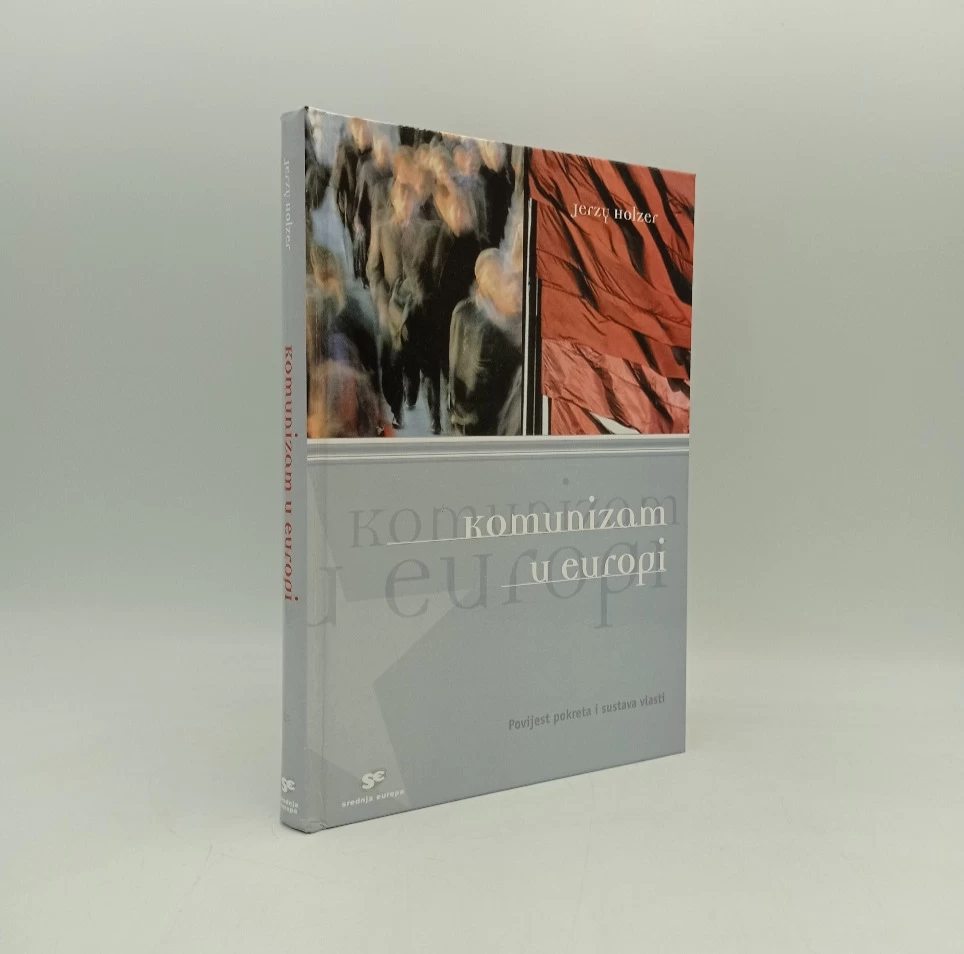
Komunizam u Europi
Basic information
- Author: Holzer Jerzy
- Publisher: Srednja Europa
- Availability: Available
- Condition: Excellent
- Code: 26999
Shipping options
Payment methods
Explore more
Komunizam u Europi
Holzer Jerzy
Summary
Jerzy Holzer: Communism in Europe
The genesis of communism can be sought in Europe in different epochs and in different phenomena of an ideological, social and political nature. In fact, depending on their own opinion about what communism was, its researchers and interpreters judge its genesis in ways that are far from consensus.
Looking for the ideological roots of communism, the historian will first recall the dream of achieving absolute and lasting good, which has been constantly present in the history of mankind since antiquity. In such a historical order, communism would be a modern continuation of gnosis in its Manichean interpretation, which assumed a struggle between absolute Good (in this case communism or in the class formula - the proletariat) and absolute Evil (in this case the opponents of communism or in the class formula - the bourgeoisie). The perspective of that struggle should be similar to the one accepted by the supporters of the Chiliastic (in Greek terminology) or Millenarian (in Latin terminology) vision, which in both cases was linked to the thousand-year, and in fact eternal, supremacy of Good after its final victory over Evil.1 It should be noted that communism was not the only one in presenting such Chiliastic visions that related to modern times, because National Socialism also stood out perspective of the Millennium Reich as the realization of the highest Good (albeit in a completely different form).
Additional information
- Author: Holzer Jerzy
- Publisher: Srednja Europa
- Year of publication:2002
- Place of publication:Zagreb
- Pages:214
- Dimensions:15x21 cm
- Script:Latin script
- Condition:Excellent
- Binding:Hardcover
Reviews
0 reviewsWrite a review
Share your experience and help other readers choose.
This item has no reviews yet. Be the first to share your experience.
More books from Srednja Europa








You may also like