
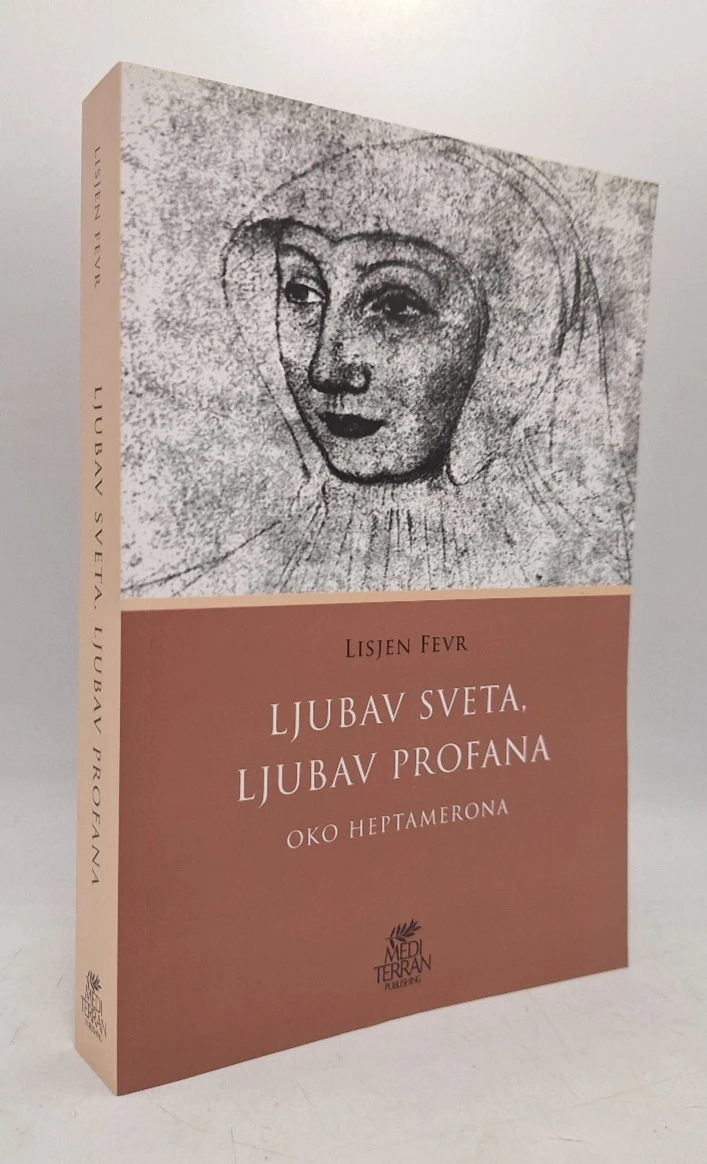
Ljubav sveta, ljubav profana
Basic information
- Author: Febvre Lucien
- Publisher: Mediterran Publishing
- Availability: Available
- Condition: Very good
- Code: 45610
Shipping options
Payment methods
Explore more
Ljubav sveta, ljubav profana
Febvre Lucien
Summary
Lucien Febvre: Love of the Sacred, Love of the Profane
About the Heptameron
Marguerite of Angoulême, Duchess of Alanson, then Queen of Navarre: even after so many biographies and monographs, quick sketches and extensive research, let us not hesitate to say that she remains for us one of the most exciting puzzles of her century. Passionately loyal sister of King François, Marguerite is first and foremost a great lady, who brilliantly maintains her brother's court in place of the good Queen Claude, prevented from leaving her handiwork and the small family circle of her wives. Marguerite, a child of the Valois dynasty, performs with recognized skill all the affairs of the French queen, in partibus aulicorum. He does not devote himself half-heartedly to the world and its rites; her brother involves her in the most important affairs of the kingdom: seduces ambassadors, negotiates with ministers, runs to Madrid after Pavia, later gets involved in the limited politics of the King of Navarre, her second husband; finally, on the eve of her life, perhaps disappointed, but certainly rich in human experience, she accepts to write a collection of stories that was intended to be the French Decameron; only the Heptameron was created - but it is still traditionally included in the list of "humorous" works of literature; he was very lucky that the good judges did not incriminate him as a swindler, and in any case he contributed a lot to the creation of a picture of a cruel, licentious Renaissance full of kidnappings, murders, poisons and adulterers: a Renaissance à la Brantom, or, if you prefer, à la Dima, Igo, Verdi.
Additional information
- Author: Febvre Lucien
- Publisher: Mediterran Publishing
- Year of publication:2015
- Place of publication:Novi Sad
- Pages:316
- Dimensions:14x20-5 cm
- Script:Latin script
- Condition:Very good
- Binding:Softcover
Reviews
0 reviewsWrite a review
Share your experience and help other readers choose.
This item has no reviews yet. Be the first to share your experience.
More books from Mediterran Publishing










You may also like