
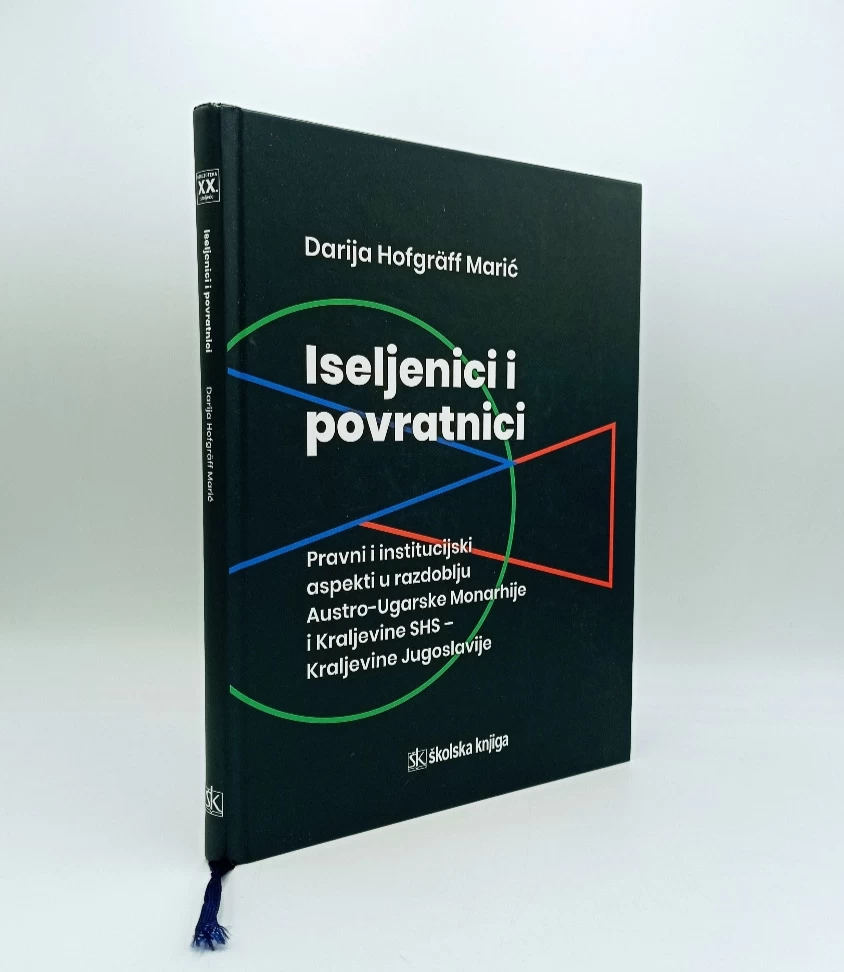
Iseljenici i povratnici
Basic information
- Author: Hofgraff Marić Darija
- Publisher: Školska knjiga
- Availability: Available
- Condition: Excellent
- Code: 66720
Shipping options
Payment methods
Explore more
Iseljenici i povratnici
Hofgraff Marić Darija
Summary
Darija Hofgraff Marić: Emigrants and Returnees
Legal and Institutional Aspects in the Period of the Austro-Hungarian Monarchy and the Kingdom of SHS - Kingdom of Yugoslavia
Previous scientific research on Croatian emigration was mainly based on analyzes of the political dimensions of migration, almost exclusively from the perspective of the countries to which Croatian emigrants immigrated. Therefore, the topic of the book "Emigrants and returnees" is scientifically extremely important because it deals with the hitherto poorly or insufficiently addressed issue of the legal and institutional framework of the protection of emigrants and returnees during the Austro-Hungarian Monarchy and the Kingdom of SHS / Kingdom of Yugoslavia. It shows that both states that sent travelers to the "white world" nevertheless mediated or, rather, regulated the effects of population emigration and return.
Following the continuity between the Habsburg and interwar periods, it is clearly shown that the state did not build a relatively elaborate institutional or legal framework for the protection of emigrants and returnees only with the help of government policy, but also that these were the results of the work of civil society and engaged individuals, especially in Croatia. This proved that in the considered period a large part of Croatian society was concerned about the fate of emigrants and returnees, that is, that already in the period between the two world wars there was what we call a public-private partnership in providing services to emigrants and returnees.
The book "Emigrants and returnees" is a scientific monograph, but it can also be used as a manual or textbook, which is why it can be interesting not only for researchers of migration and social policy with regard to Croatia and interwar relations in Yugoslavia, but also for students of demography (especially when it comes to topics related to Croatian emigration) and the general public. Drawing on experiences from the past, a new policy strategy towards emigration and return can certainly be developed, which is certainly more useful than constantly expressing opinions that population migrations have negative consequences.
Additional information
- Author: Hofgraff Marić Darija
- Publisher: Školska knjiga
- Year of publication:2021
- Place of publication:Zagreb
- Pages:216
- Dimensions:21x27 cm
- Script:Latin script
- Condition:Excellent
- Binding:Hardcover
Reviews
0 reviewsWrite a review
Share your experience and help other readers choose.
This item has no reviews yet. Be the first to share your experience.
More books from Školska knjiga


You may also like