
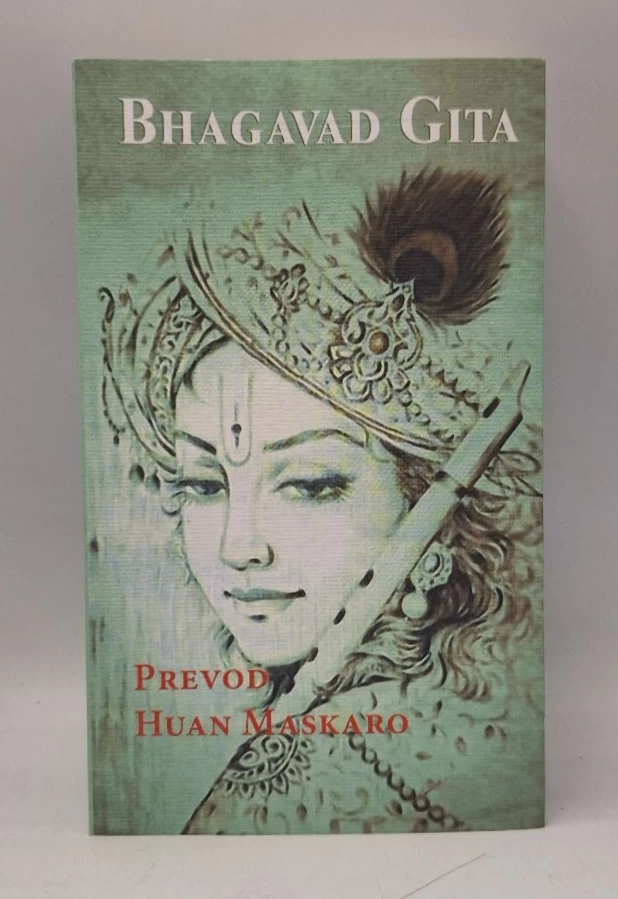
Bhagavad Gita
Basic information
- Publisher: Babun
- Availability: Available
- Condition: Excellent
- Code: 77478
Shipping options
Payment methods
Explore more
Bhagavad Gita
Summary
Bhagavad Gita
If we were to look at the Bhagavad Gita only as an old and valuable literary text, we would still not be able to remain unmoved by the interestingness of its content. In the epic literature of ancient India, the Bhagavad Gita occupies a special place. Most educated Indians know this sacred text by heart. In general, it is considered the best expression of the Indian worldview and the succuss of ancient Indian philosophy.
Bhagavad Gita, or in translation "The Song of the Supreme", is one of the episodes of the Mahabharata epic, "The Great Song of the Bharata Tribe". This huge epic, which is considered the most comprehensive work in world literature, was created from the oldest traditions of the Aryan civilization that were transmitted orally, and its written form known today was created for centuries, in the period from 400 BC. to 400 AD. Mythological and ritual motifs, elements of history and political skills of the Aryan civilization, Brahminical and warrior traditions, theological and philosophical ideas, moral teachings through legends, stories, fables and parables are woven into the content of the Mahabharata.
Bhagavad Gita stands out as an instructive part of the epic. It is more fully called the Bhagavadgita Upanishad, which means "Secret teachings sung by the Supreme". The term bhagavad derives from the epithet bhagvan (exalted, merciful) given to divine beings, while gita means song, divine wisdom that reveals the hidden laws of life. In the Song of the Supreme, the lesson is given by Krishna, represented at the same time as a king, a hero of heroes and the almighty creator of the worlds.
The Bhagavad Gita has been interpreted in many ways. With regard to the symbols contained in the entire epic, the interpretations related to different levels of their meaning in historical, astrological, astronomical, even in mathematical key. However, the psychological interpretation provides the best way of understanding the old Indian teaching about man, through the connection of symbols with the inner characteristics and experiences of a human being.
Additional information
- Publisher: Babun
- Year of publication:2019
- Place of publication:Beograd
- Pages:183
- Dimensions:11x19 cm
- Script:Latin script
- Condition:Excellent
- Binding:Softcover
Reviews
0 reviewsWrite a review
Share your experience and help other readers choose.
This item has no reviews yet. Be the first to share your experience.
More books from Babun











You may also like